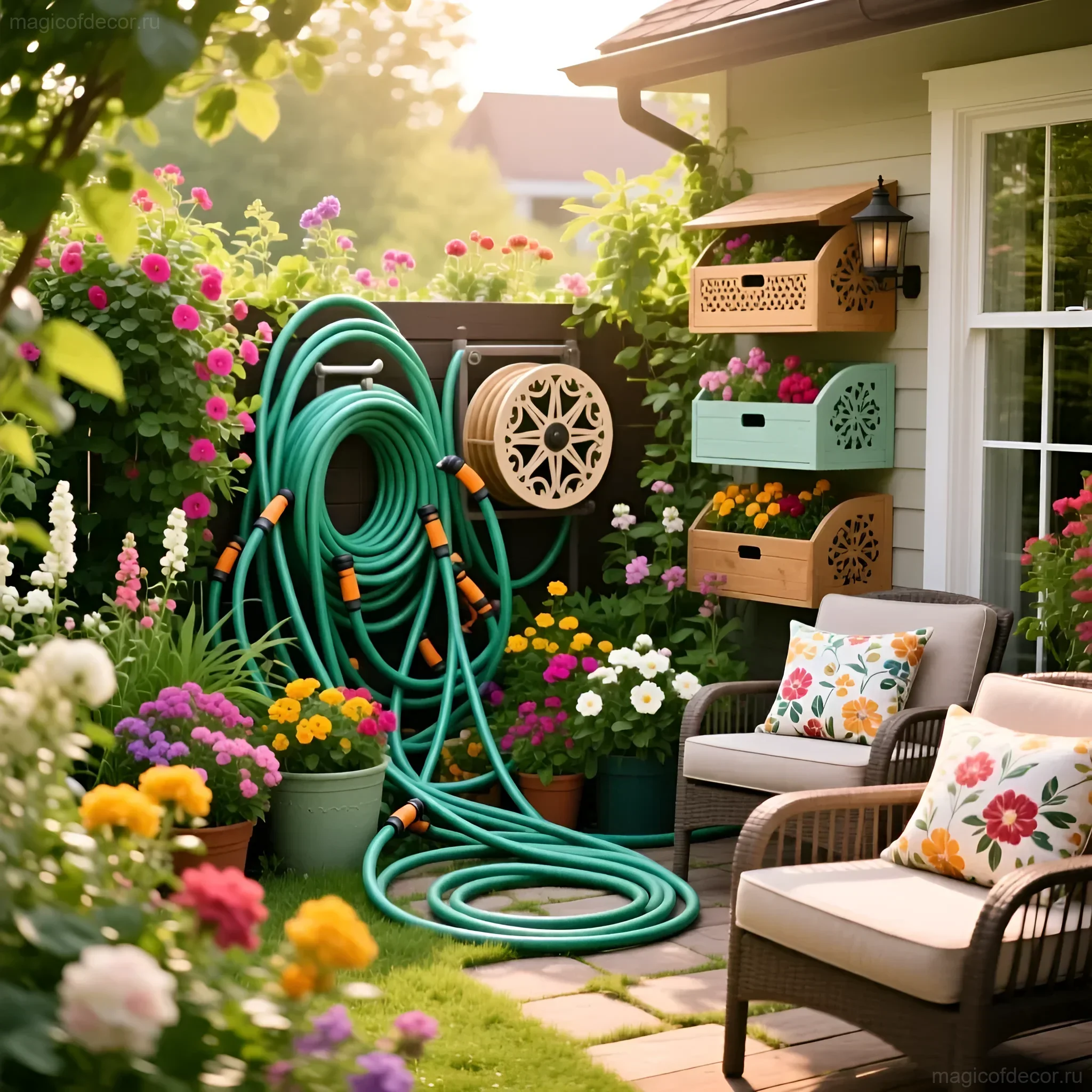
How often, while enjoying the beauty of your garden, do you stumble over a coiled garden hose carelessly thrown on a flowerbed or lawn? Familiar, right? This indispensable assistant in plant care, unfortunately, often becomes a cause of visual chaos on the plot. But don’t despair! There are many ways to organize garden hose storage, turning it from a source of irritation into a stylish element of landscape design. In this article, we will share with you ideas, tips, and step-by-step instructions that will help you create a convenient and beautiful place for hose storage, preserving the harmony and coziness of your garden.
Garden Hose Storage: Getting Rid of Yard Chaos – Ideas and Inspiration
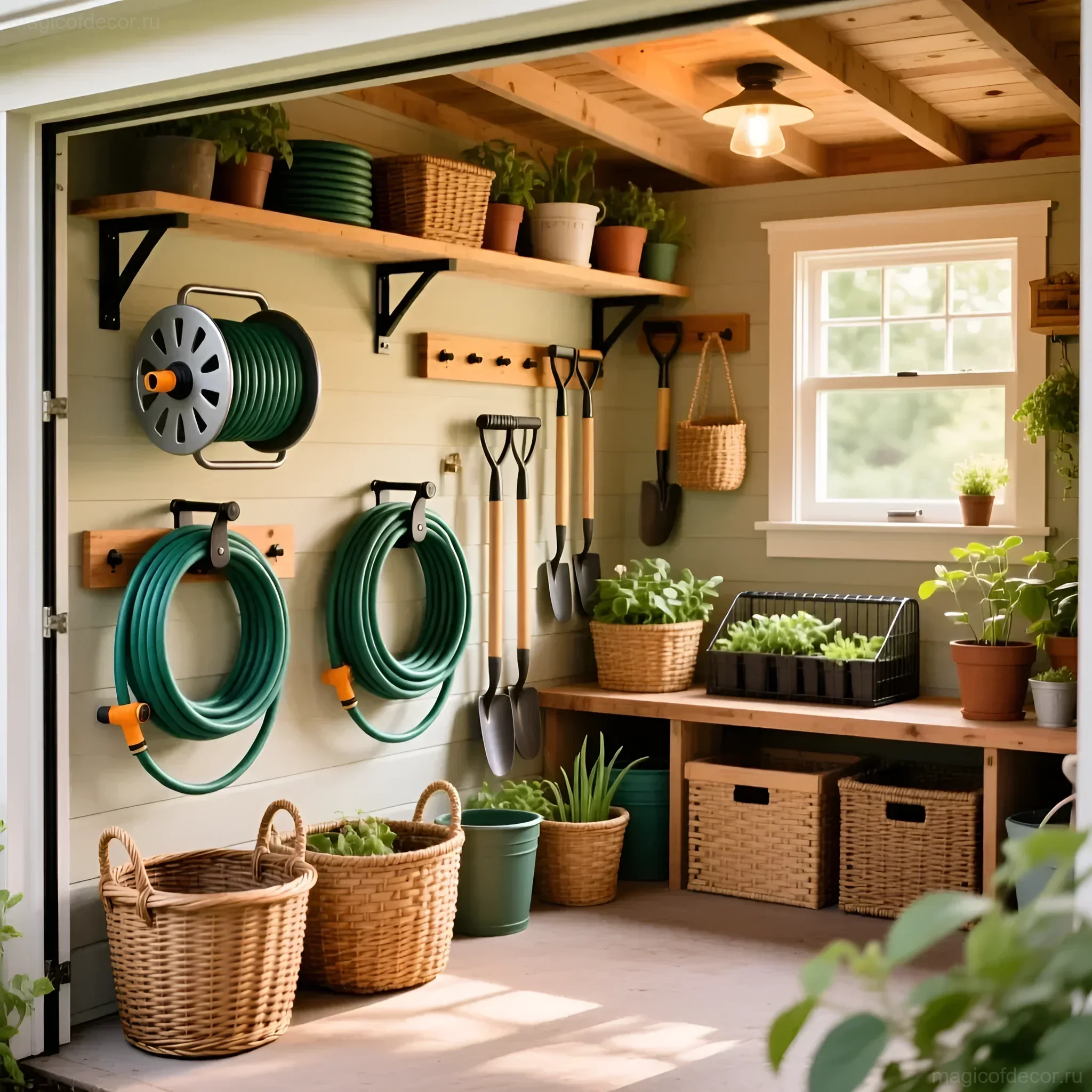
Before we delve into specific solutions, let’s imagine what your ideal plot could look like. No tangled hoses spoiling the view! Only neat flowerbeds, a well-groomed lawn, and a stylish, functional solution for hose storage. Think about how this can improve the overall impression of your garden. This is not just a matter of aesthetics, but also practicality – a neatly stored hose will last longer, will not kink, and will not be damaged by sunlight.
Choosing the Ideal Solution: Types of Garden Hose Storage and Their Advantages
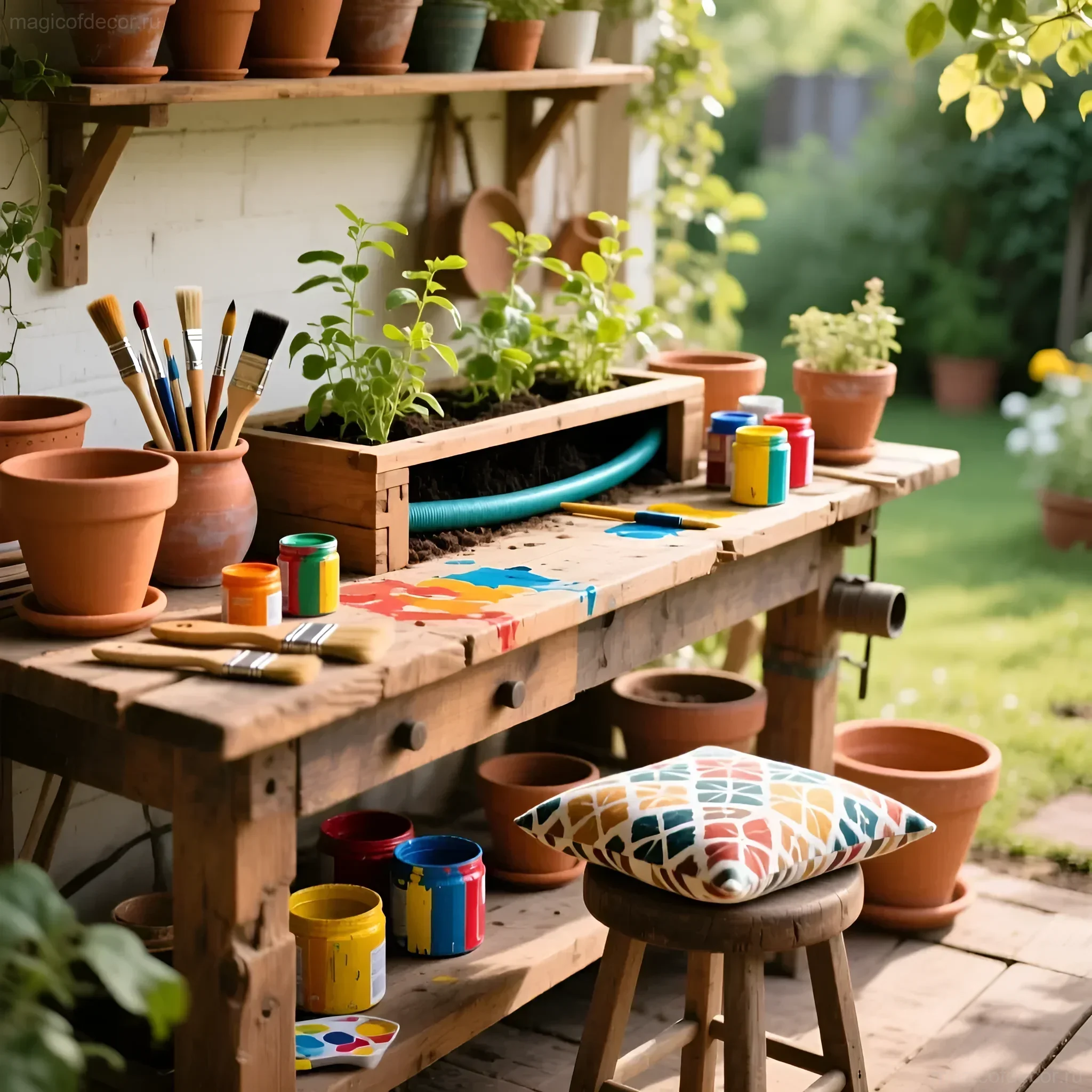
There are several main ways to store a garden hose, each with its own advantages and disadvantages. Let’s consider them:
- Wall-mounted hose holders: This is one of the most popular and affordable options. The holder can be made of metal, plastic, or wood. Advantages: space-saving, easy to install. Disadvantages: may not be the most aesthetically pleasing solution, requires drilling the wall.
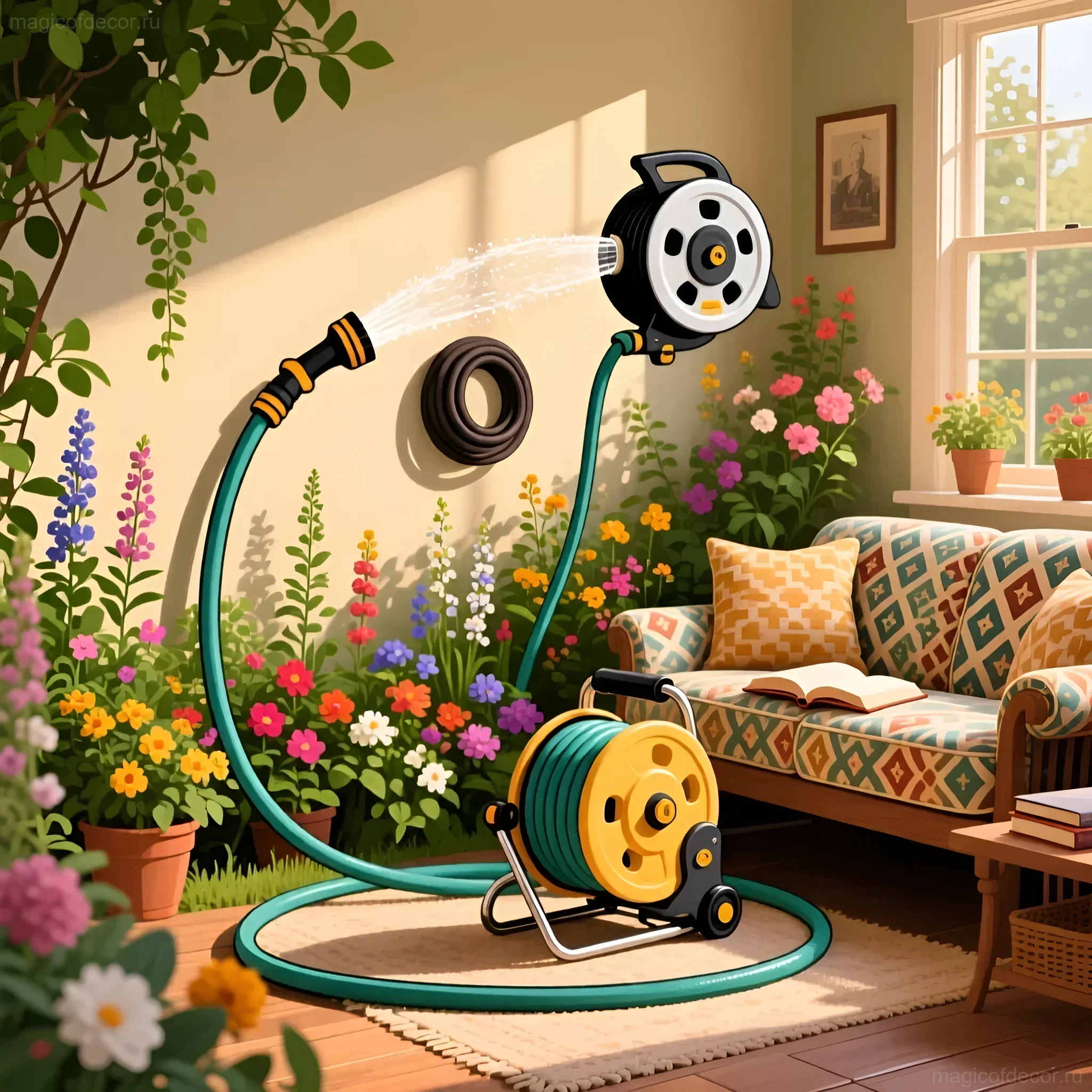
- Hose reels: A reel allows you to neatly wind the hose, protecting it from kinks and damage. There are manual and automatic reels. Advantages: ease of use, hose protection. Disadvantages: automatic reels can be quite expensive.
- Hose cabinets or boxes: This is a more enclosed and aesthetically pleasing storage option. A cabinet or box can be made yourself or bought ready-made. Advantages: protects the hose from weather and prying eyes, allows for hiding other garden tools. Disadvantages: takes up more space than a wall-mounted holder.
- Planter-concealers for hoses: This is an original and stylish solution, which we will discuss in detail in the following sections. Advantages: aesthetic appearance, hose concealment, can be used as a decorative element. Disadvantages: requires certain skills for manufacturing.
DIY: Stylish Planter-Concealer for Garden Hose – Materials and Tools
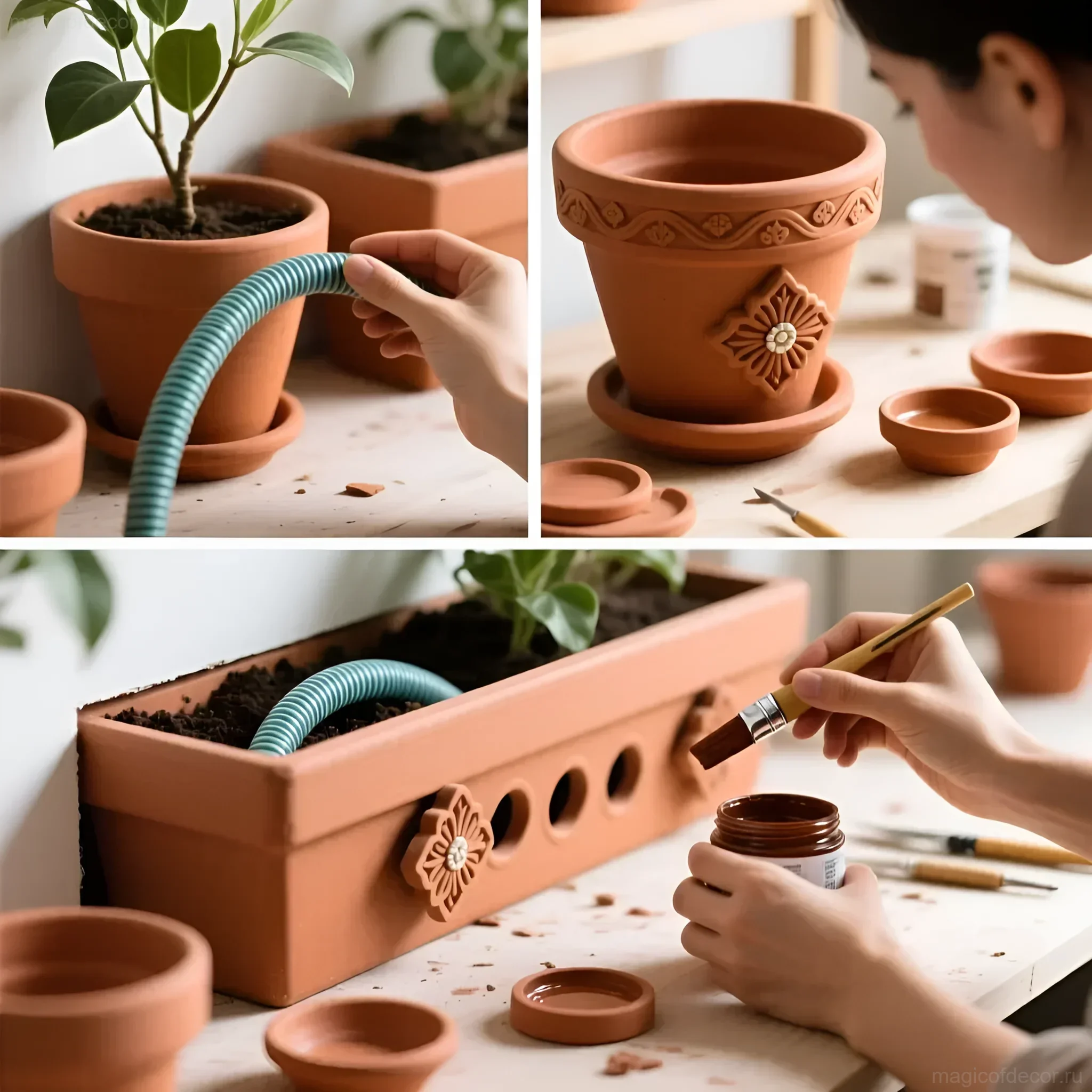
Let’s create our own stylish planter-concealer for the garden hose! This is a great way to show your creativity and add a unique touch to your garden design. You will need:
- Large plastic planter: Choose a planter of appropriate size to fit your garden hose.
- Wooden slats or boards: For creating the frame and decorative finish.
- Screws or nails: For fastening wooden elements.
- Drill or hammer: Depending on the chosen fastening method.
- Saw: For cutting wooden slats or boards.
- Sandpaper: For sanding wooden surfaces.
- Wood stain or paint: For protection and decorative finishing of the wood.
- Measuring tape, pencil, brush: For measurements and applying paint.
- Mesh or fabric: For the bottom of the planter to ensure drainage.
Step-by-Step Instructions: Creating a Planter-Concealer with Your Own Hands
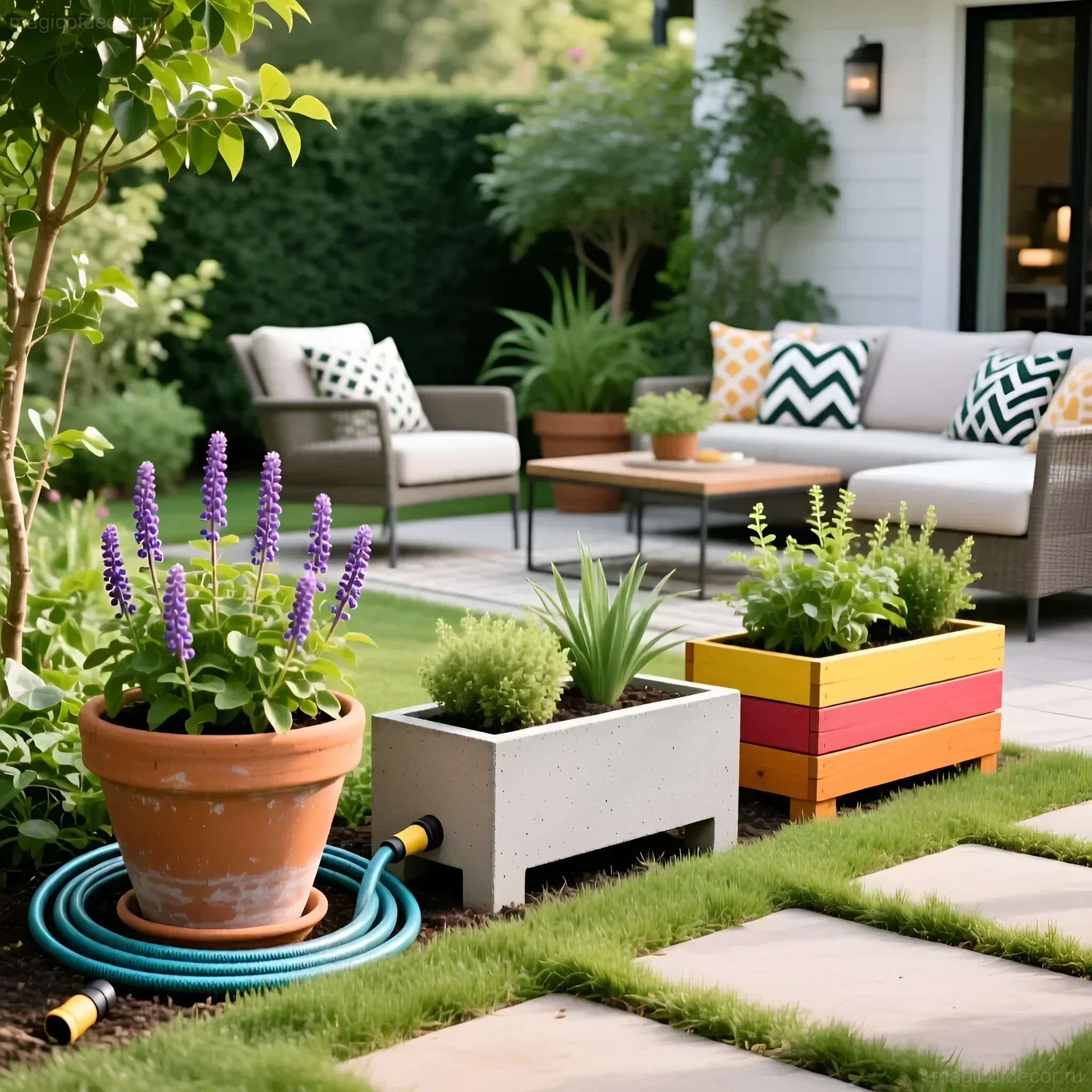
Let’s get started on creating our planter-concealer! Follow these simple steps:
- Prepare the planter: Drill several drainage holes in the bottom of the planter. Place mesh or fabric at the bottom.
- Create the frame: Assemble a frame from wooden slats or boards that will support the decorative finish. The frame should be slightly smaller than the diameter of the planter.
- Attach the frame to the planter: Fasten the frame to the planter using screws or nails. Make sure the frame is securely attached.
- Decorative finish: Cover the frame with wooden slats or boards, creating the desired pattern. You can use various techniques: vertical siding, horizontal siding, diagonal siding, etc.
- Sanding and painting: Sand the wooden surfaces with sandpaper to remove burrs and irregularities. Apply wood stain or paint to protect the wood from moisture and give it the desired color.
- Install the hose: Carefully place the garden hose inside the planter-concealer.
Execution Options: From Rustic Chic to Modern Minimalism
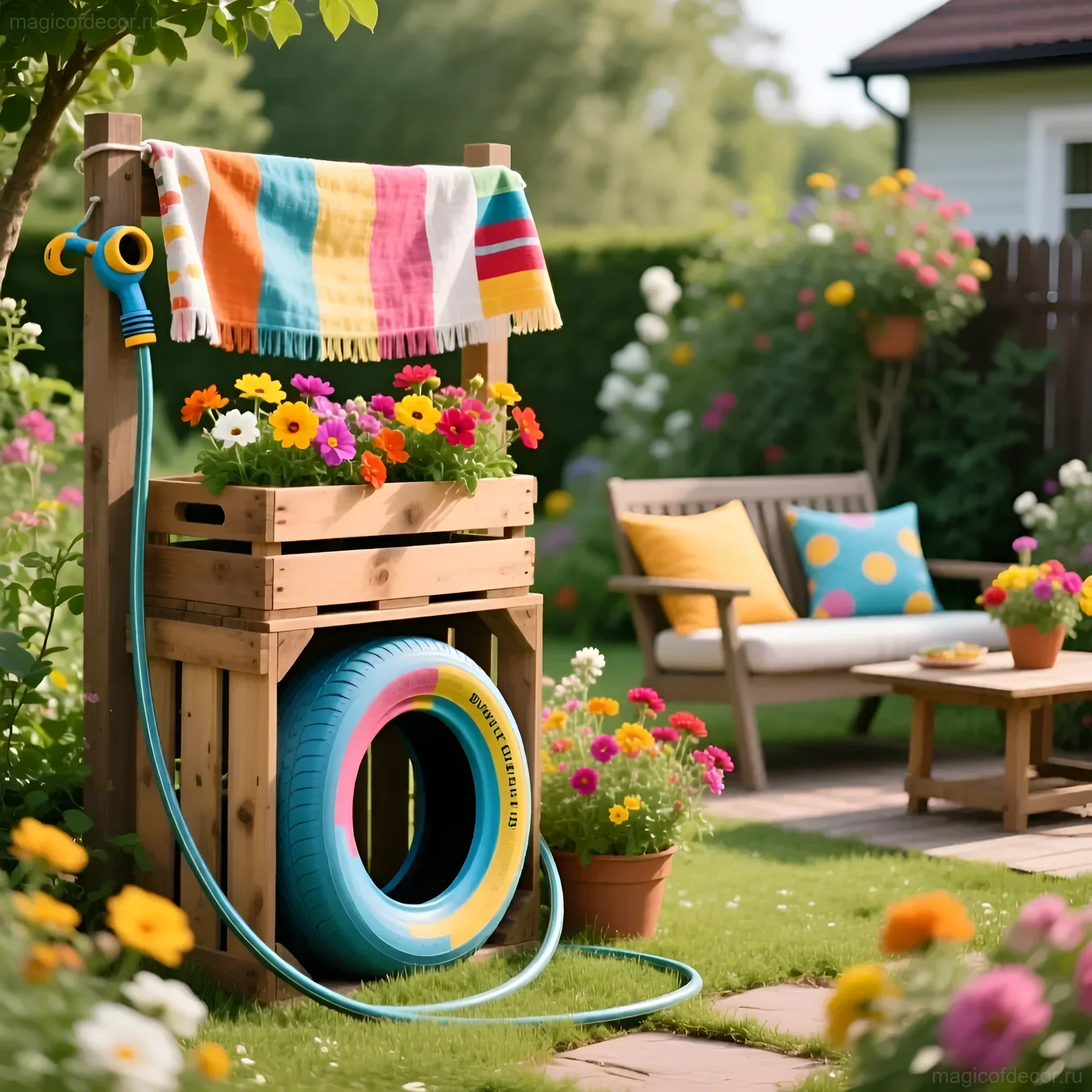
A planter-concealer for a garden hose can be made in various styles, depending on your preferences and the overall design of your garden:
- Rustic style: Use unfinished wooden boards, rough rope, and natural materials. Paint the planter in light, pastel colors.
- Modern minimalism: Use smooth wooden slats painted in dark, neutral colors. Add metal elements for contrast.
- Provence: Use white or cream wooden boards decorated with floral motifs. Add lace elements and vintage accessories.
- Scandinavian style: Use light wood, simple shapes, and functionality. Add green plants for freshness.
Alternative Ideas: Budget-Friendly and Simple Ways to Organize Hose Storage
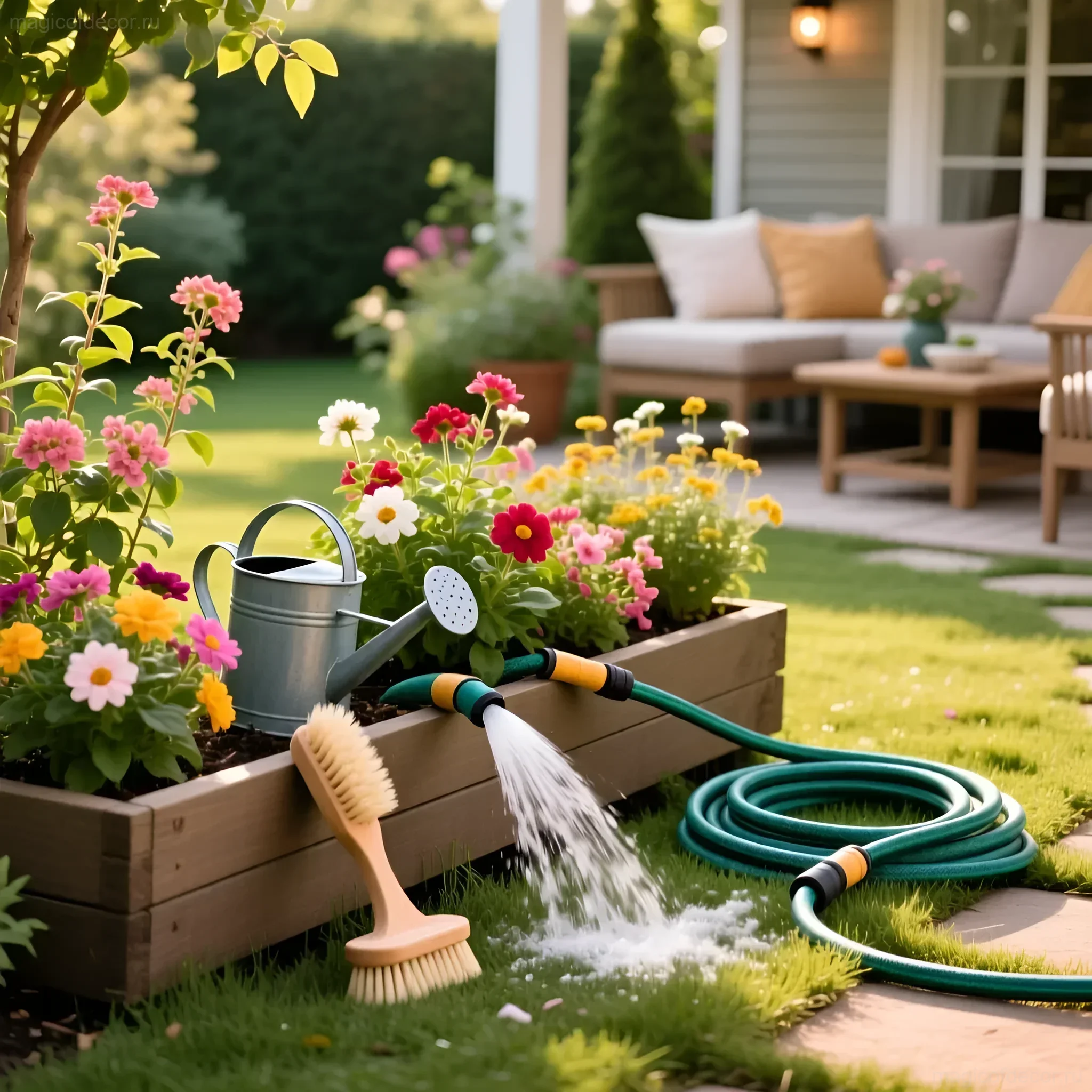
If you don’t have the time or desire to make a planter-concealer, there are many budget-friendly and simple ways to organize garden hose storage:
- Use an old barrel or bucket: Simply drill ventilation holes and place the hose inside.
- Make storage from pallets: Pallets can easily be turned into stylish and functional hose storage.
- Use old tires: Paint the tires in bright colors and coil the hose in them.
- Hide the hose behind bushes or trees: This is the simplest and quickest way, but it’s not always aesthetically pleasing.
Caring for the Planter-Concealer and Garden Hose: Extending Service Life
To ensure your planter-concealer and garden hose serve you for many years, proper care is necessary:
- Regularly clean the planter from dirt and dust.
- Treat wooden elements with protective agents against moisture and pests.
- Store the garden hose in a dry and cool place.
- Avoid kinking and twisting the hose.
- Drain water from the hose after use.
FAQ: Most Popular Questions About Garden Hose Storage
Question: What size planter should I choose for hose storage?
Answer: The size of the planter should match the length and diameter of your garden hose. It’s better to choose a slightly larger planter so the hose fits inside easily.
Question: What materials are best for making a planter-concealer?
Answer: Various materials can be used for making a planter-concealer: wood, plastic, metal. Wood is the most popular and environmentally friendly option.
Question: How to protect a wooden planter from moisture?
Answer: To protect a wooden planter from moisture, use wood stain, paint, or varnish.
Interesting Facts: The History of Garden Hoses and Modern Trends
The first garden hoses appeared in the 19th century and were made of leather. Over time, they began to be made of rubber, and then of plastic. Modern garden hoses are characterized by high strength, flexibility, and resistance to kinks. Today, hoses in bright colors and unusual shapes are in vogue. Hoses with automatic retraction and various watering attachments are also popular.