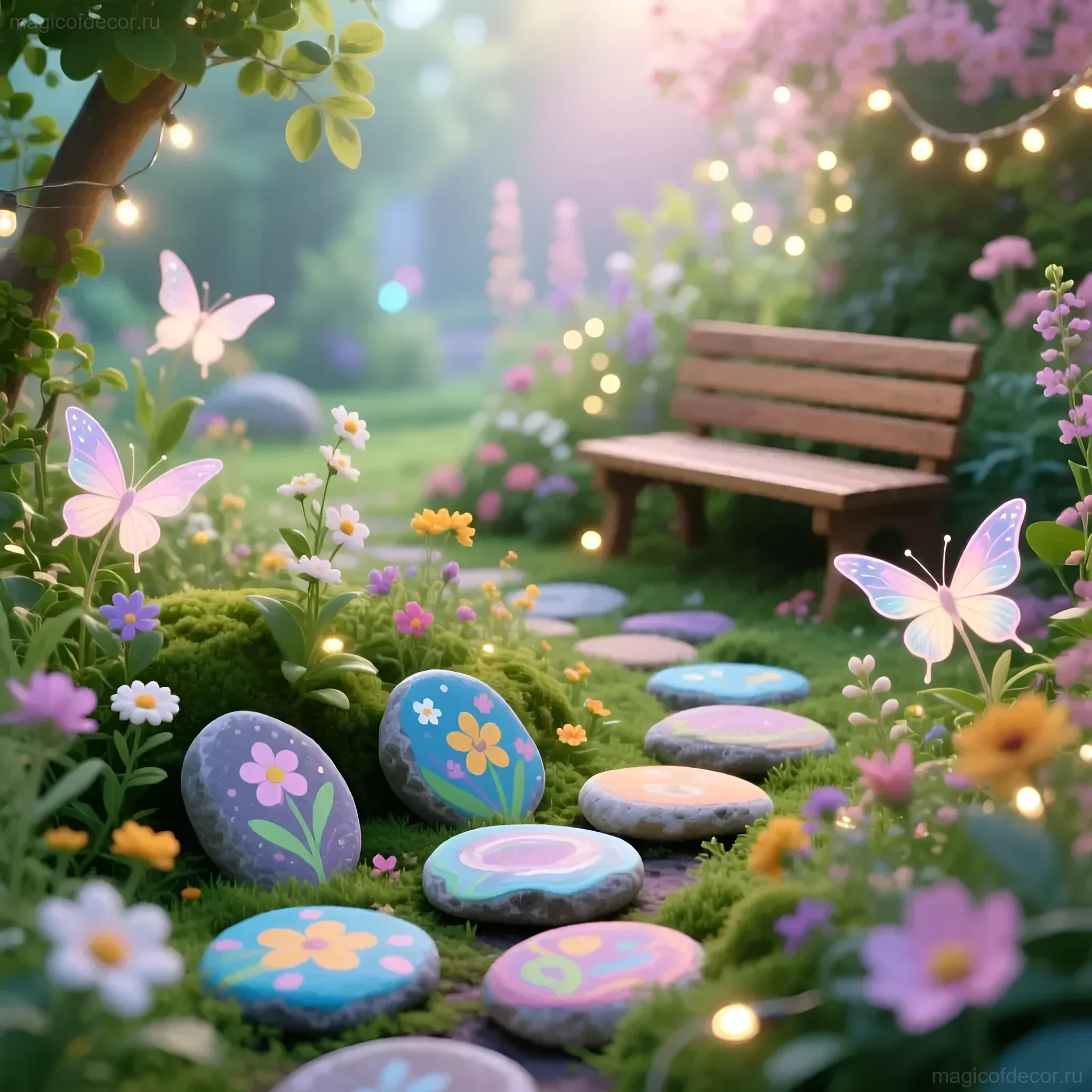
Do you love your dacha? Do you love fairy tales? What if I told you that you can combine these two loves and turn your dacha plot into a real magical kingdom? Sounds tempting, doesn’t it? And it won’t require any complex construction work or huge financial investments. All you need is a little imagination, patience, and… stones! Today we’ll talk about how to create a unique atmosphere at your dacha by painting stones.
Stone Painting for the Dacha: Magic with Your Own Hands ✨
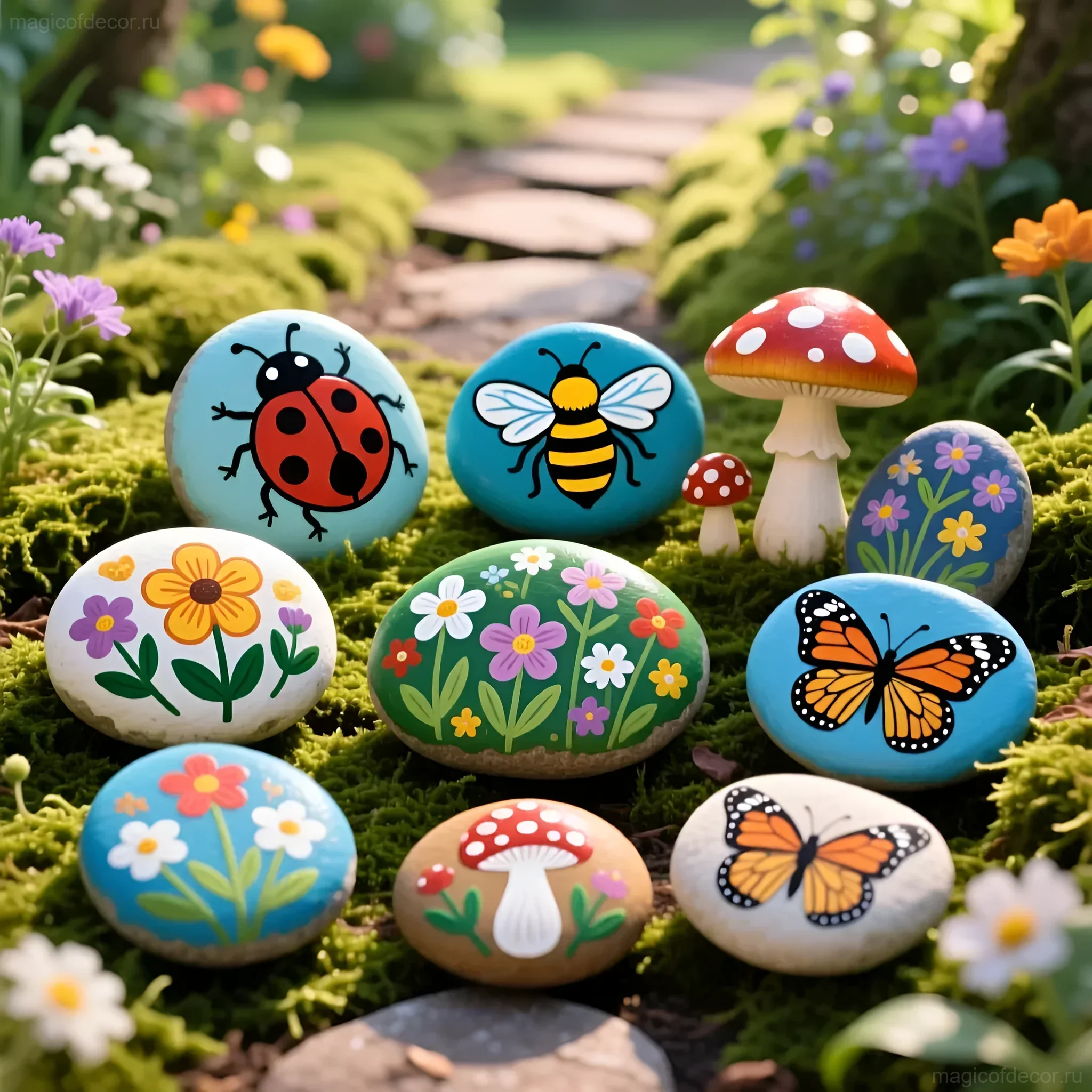
Painting on stones is an incredibly therapeutic activity that allows you not only to express your creativity but also to bring a piece of your soul into your dacha’s interior. Painted stones can become decorations for flower beds, rock gardens, paths, ponds, and even houses. They will add bright colors, create a fairy-tale mood, and simply be a joy to behold. It’s a great way to occupy yourself and your children, as well as to create unique souvenirs and gifts. Imagine how pleasant it will be to admire the little painted ladybugs hiding in the grass, or the funny mushrooms peeking out from under the bushes. This is not just decor; it’s little stories that you create with your own hands.
What We’ll Need: Materials and Tools for Stone Painting 🎨
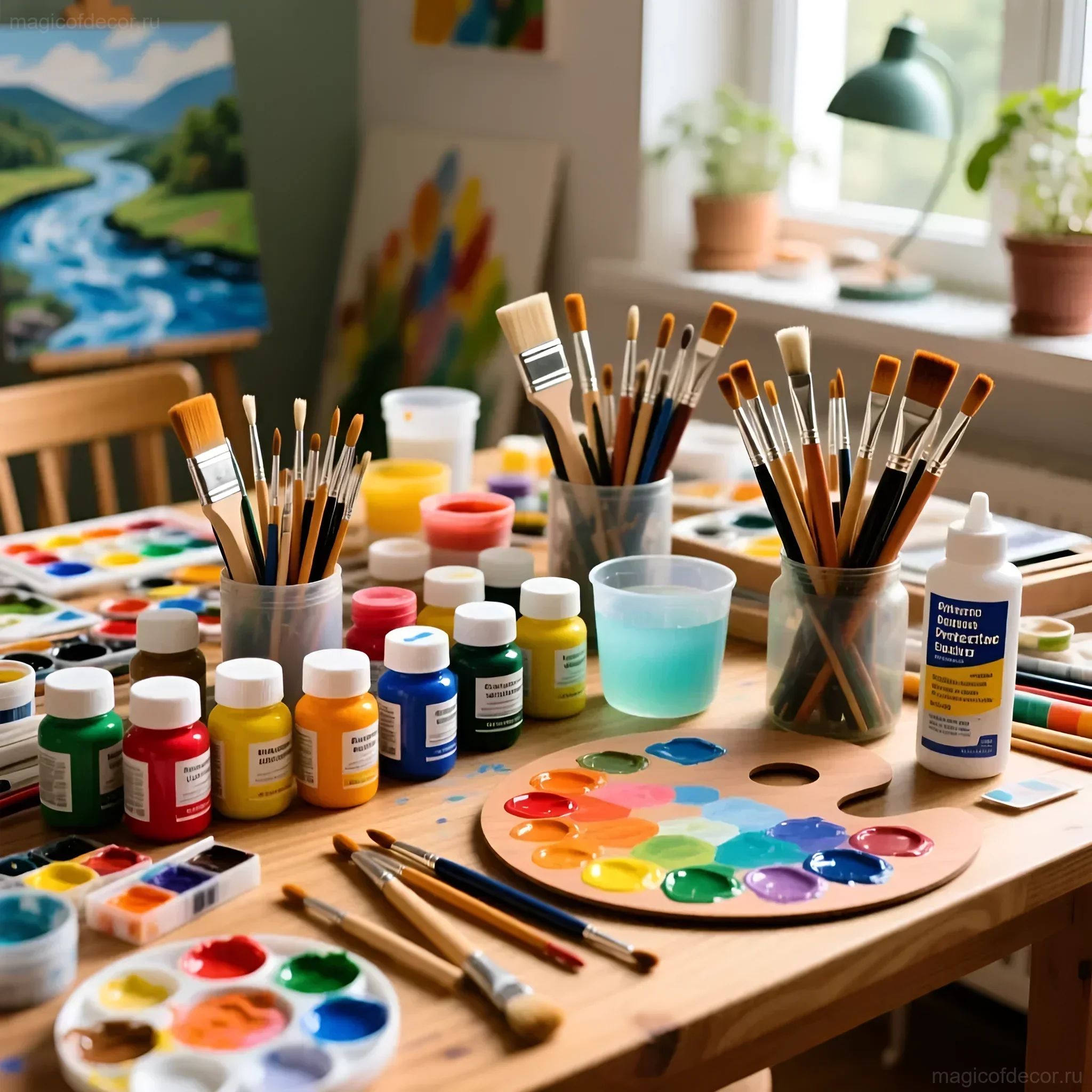
Don’t be intimidated; you won’t need professional art equipment to start. The simplest and most accessible materials will suffice. Here’s what you’ll need:
- Stones. Choose smooth, flat stones of various sizes and shapes. River or sea stones are ideal, but you can also use ordinary pebbles. Before painting, they must be thoroughly washed and dried.
- Acrylic paints. This is the most popular choice for stone painting as they dry quickly, adhere well to the surface, and are moisture-resistant. Choose bright, saturated colors.
- Brushes. You’ll need brushes of different sizes – from fine ones for detailing small elements to wide ones for covering large areas.
- Acrylic varnish. It will protect your designs from fading and damage, and also give them a glossy shine. It’s recommended to use water-based acrylic varnish.
- Pencil. For sketching.
- Palette. For mixing paints. You can use a plastic plate or a special artist’s palette.
- Water. For diluting paints and rinsing brushes.
- Cotton swabs and pads. For correcting mistakes and creating textures.
- Newspaper or oilcloth. To protect your work surface.
Step-by-Step Instructions: From Idea to Finished Masterpiece 🖌️
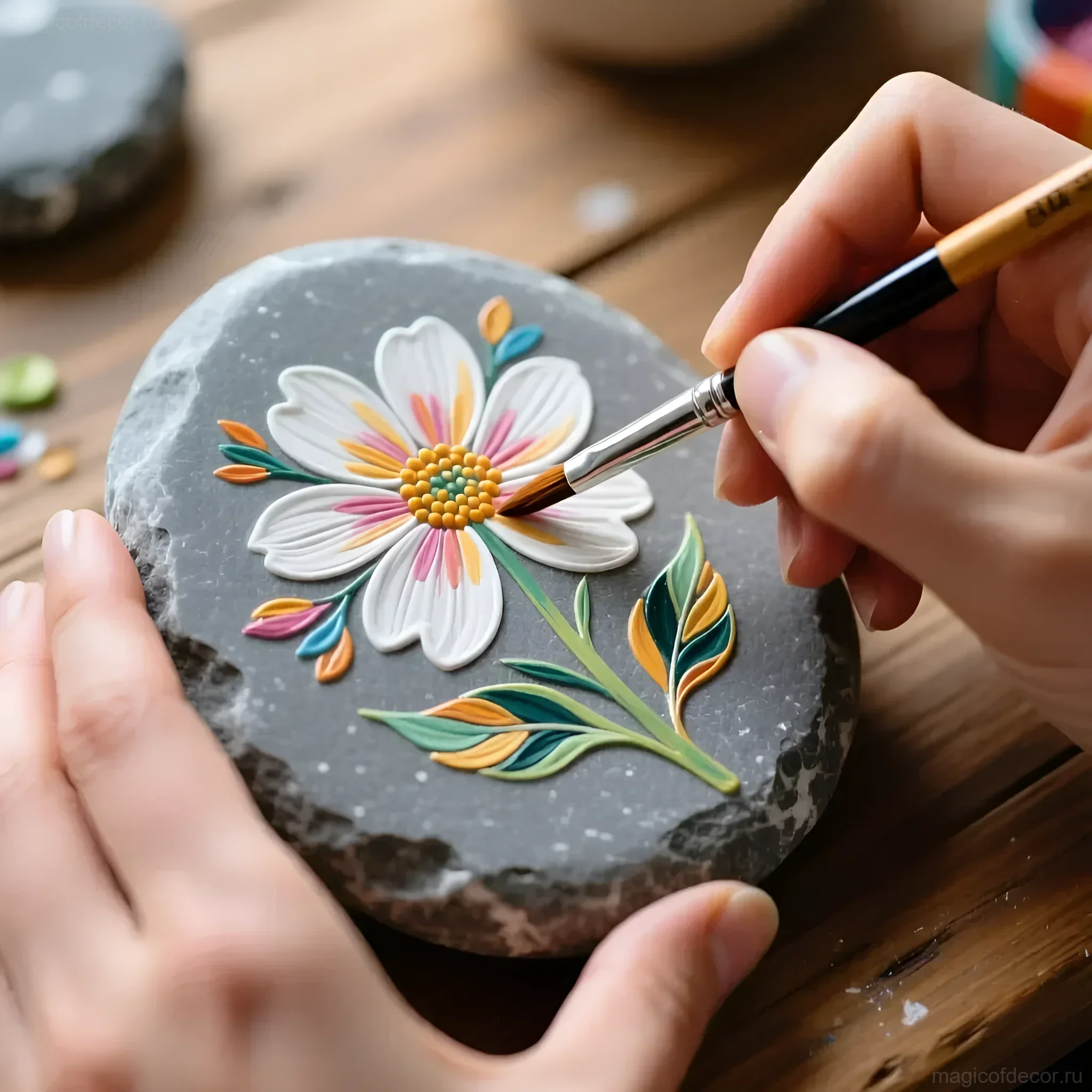
So, everything is ready for work! Let’s break down the stone painting process step by step:
- Stone Preparation. Thoroughly wash and dry the stone. If the stone’s surface is glossy, it can be lightly sanded to help the paint adhere better.
- Sketching. Lightly sketch your future design on the stone with a pencil. Don’t be afraid to make mistakes; pencils are easily erased.
- Painting. Start painting the stone with acrylic paints. Apply the paint in even, thin layers, allowing each layer to dry. Use brushes of different sizes for detailing.
- Detailing. After the main layer of paint has dried, you can proceed to detail the drawing. Use fine brushes and bright colors to create small details and accents.
- Varnishing. When the drawing is completely dry, cover it with acrylic varnish in several layers. Let the varnish dry completely before using the painted stone as decor.
Inspiration Ideas: What to Paint on Stones? 🌸🍄
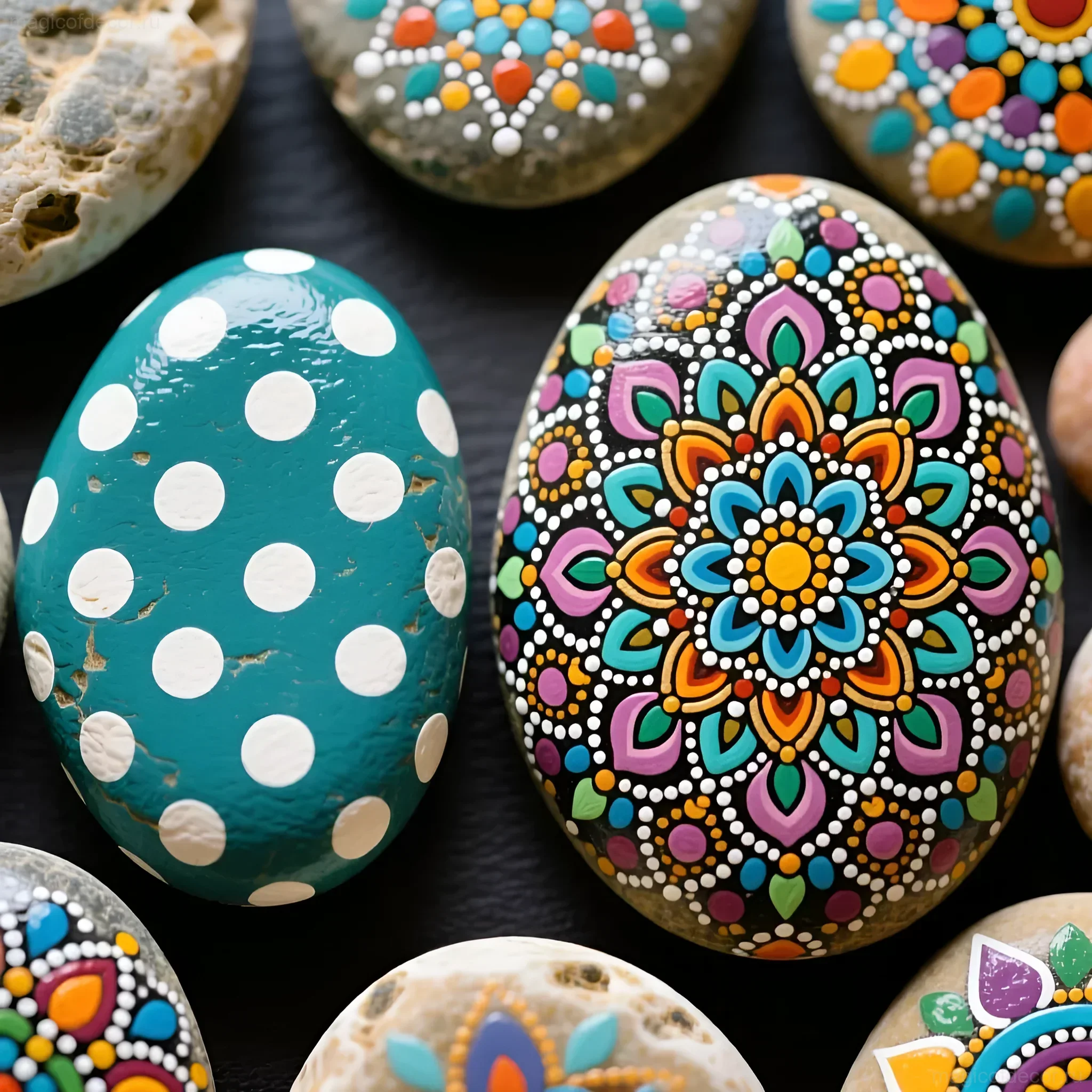
There are countless options for stone paintings! It all depends on your imagination and preferences. Here are a few ideas for inspiration:
- Animals and Birds. Ladybugs, butterflies, snails, frogs, birds, cats, dogs – all these cute creatures look great on stones.
- Flowers and Plants. Daisies, cornflowers, sunflowers, leaves, berries – create your own little flower garden on stones.
- Mushrooms. Fly agarics, birch boletes, chanterelles – add a touch of fairy tale to your dacha.
- Fairy Tale Characters. Gnomes, fairies, dragons, unicorns – bring your favorite fairy tales to life.
- Geometric Patterns and Ornaments. Create abstract compositions using bright colors and unusual shapes.
- Nautical Theme. Shells, starfish, fish, anchors – create a seaside atmosphere at your dacha.
- Miniature Landscapes. Paint small houses, trees, mountains, and lakes on stones.
Execution Options: From Simple to Complex 🌟
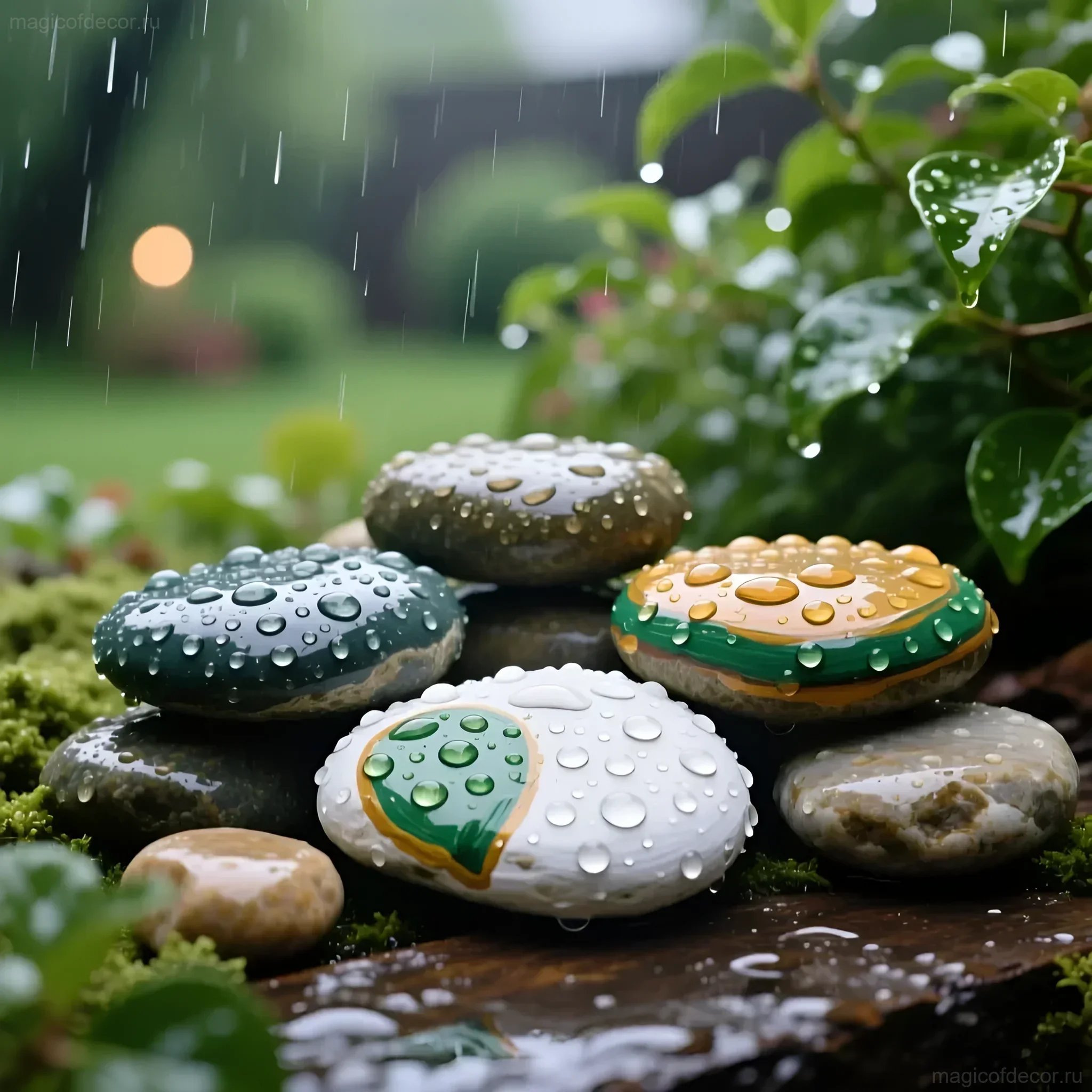
If you’re new to stone painting, start with simple designs. For example, you can paint a simple ladybug or a daisy on a stone. Gradually, as you gain experience, you can move on to more complex and detailed drawings. Don’t be afraid to experiment with different techniques and materials. Here are a few execution options:
- Dot Painting. This technique involves applying dots of acrylic paint to the stone. It allows for the creation of beautiful and original patterns.
- Painting with Stencils. Stencils will help you quickly and easily apply complex designs to the stone.
- Painting with Outlines. Outlines will help you highlight the details of the drawing and make it clearer and more expressive.
- 3D Painting. Use thick layers of acrylic paint or special texture pastes to create volumetric elements.
Caring for Painted Stones: Preserving Beauty for a Long Time 💧
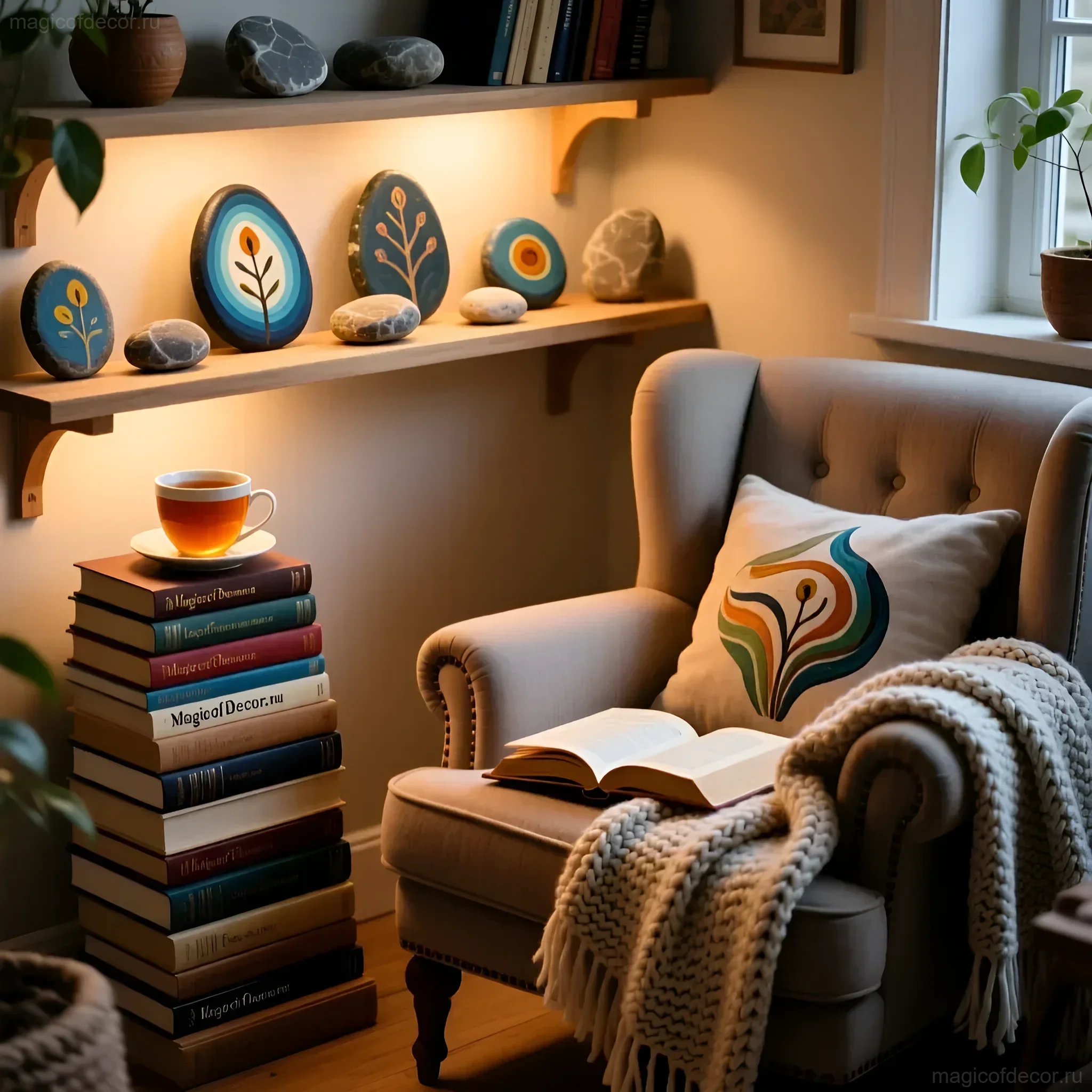
To ensure your painted stones delight you with their beauty for many years, you need to care for them properly. Here are a few tips:
- Moisture Protection. Regularly coat painted stones with acrylic varnish to protect them from moisture and fading.
- Sun Protection. Do not leave painted stones in direct sunlight, as this can lead to fading of the colors.
- Cleaning. To clean painted stones, use a soft cloth dampened with warm soapy water. Do not use abrasive cleaning agents, as they can damage the drawing.
- Storage. During the winter months, it’s best to store painted stones in a dry, cool place.
FAQ: Answering Your Questions About Stone Painting ❓
- Can I paint on stones with oil paints? Oil paints are not recommended for stone painting as they dry slowly and can crack.
- How can I fix the drawing on the stone so it doesn’t rub off? Use acrylic varnish in several layers.
- Can I use glitter and other decorative elements? Yes, of course! Glitter, rhinestones, beads – all of these can be used to decorate painted stones.
- How to choose a suitable stone for painting? Choose smooth, flat stones without cracks or chips.
Interesting Facts About Stone Painting: History and Traditions 📜
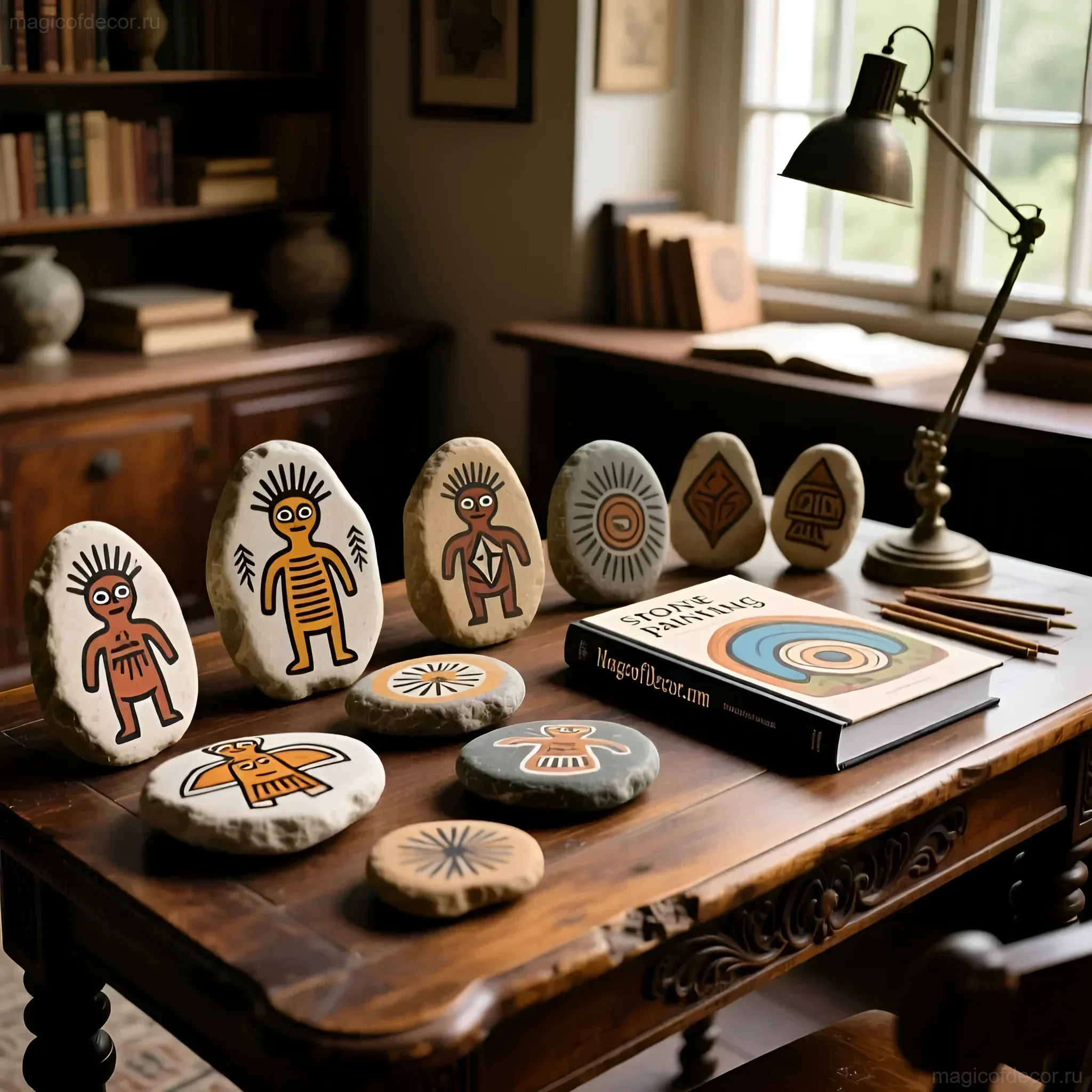
Stone painting is an ancient art that has its roots in various cultures around the world. In ancient times, people believed that stones possessed magical power and decorated them with drawings to attract good luck and protect themselves from evil spirits. In Japan, stone painting is known as Ishi-e and is a traditional art form. In Australia, Aboriginal people painted stones to pass on their knowledge and stories. Today, stone painting is experiencing a renaissance and becoming an increasingly popular hobby. It’s a wonderful way to connect with history and traditions, as well as to express your creativity and create unique works of art.