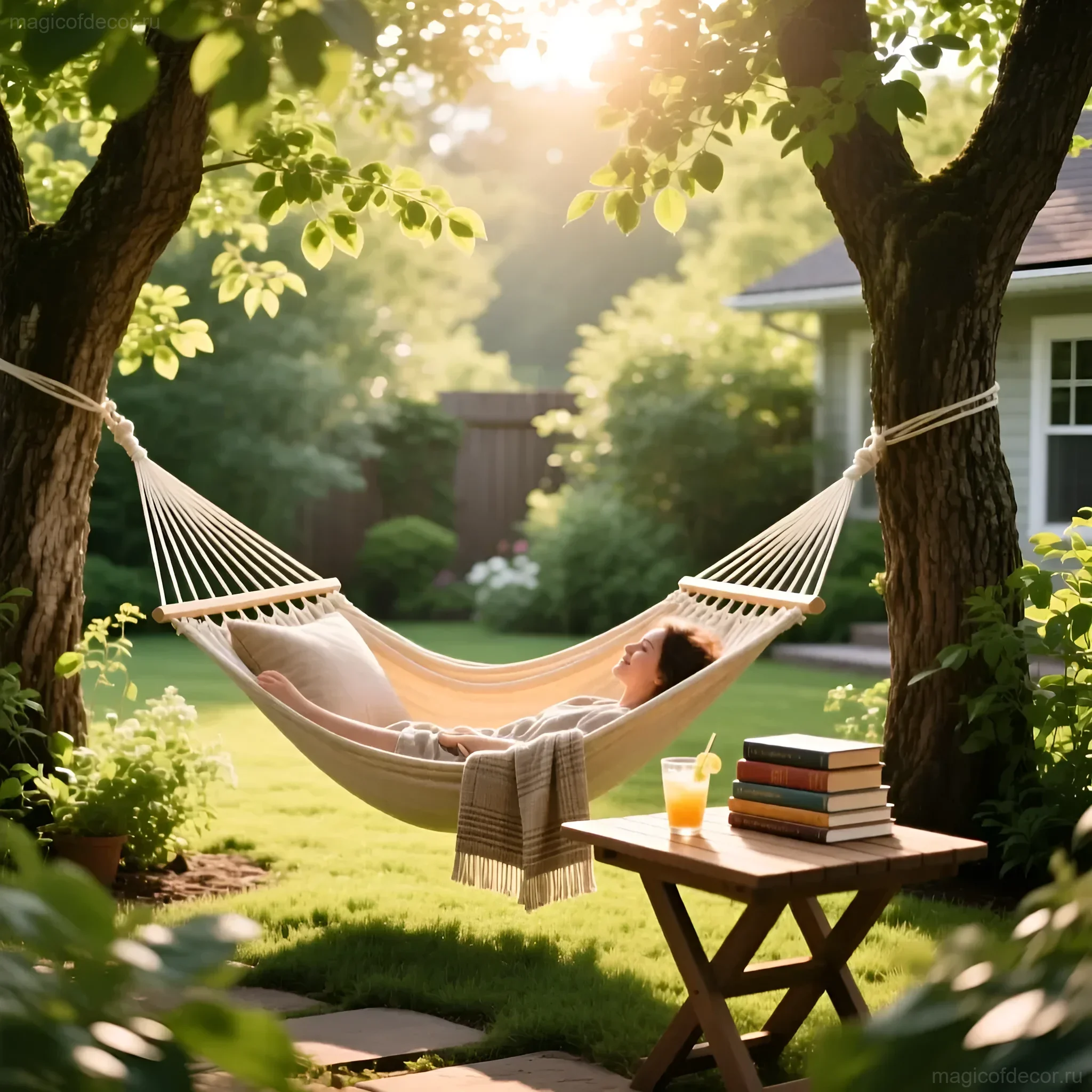
Hello, my dear connoisseurs of coziness! Today we will talk about what symbolizes absolute relaxation, summer bliss, and an escape from the hustle and bustle – the hammock. A hammock is not just a piece of furniture; it’s a portal to a world of serenity. But for this portal to work perfectly, you need to know how to choose the right spot for it and, most importantly, how to hang it securely. Don’t worry, we won’t be breaking walls or doing heavy renovations; we’ll work with what we have, creating beauty and safety with our own hands.
A Dream of Relaxation: Inspiration and Ideas for a Hammock Spot

The first and most important step is choosing the location. A hammock requires not only physical space but also the right atmosphere. When choosing a spot, imagine yourself in it: what do you see, what do you hear, and how long do you want to stay there?
Practical considerations when choosing a spot:
- Sun or shade? Ideally, the hammock should be in partial shade. Direct scorching sun will quickly overheat you and damage the fabric. If there’s no shade, consider installing an awning or a large umbrella.
- Privacy. Do you want neighbors or passersby to watch you relax? If not, choose a spot behind a hedge, a screen, or use tall potted plants as a natural barrier.
- Ground cover. There should be no dirt or puddles under the hammock. Ideally, grass, a wooden deck, tiles, or at least a layer of mulch.
- Accessibility. How easy is it to bring a cup of coffee, a book, or a blanket to the hammock? The relaxation area should be convenient and logically integrated into your landscape.
Hammocks in Different Locations:
1. Hammock in the Garden or at the Dacha:
This is a classic. Look for strong, healthy trees spaced 3–4.5 meters apart. If there are no trees, wooden or metal posts dug into the ground work perfectly.
2. Hammock on the Balcony or Loggia:
Even on a small balcony, you can create a relaxation corner! Here, hammocks with spreader bars (to save space) or hammock chairs (cocoons) that require only one attachment point are most commonly used. The main thing is to ensure the load-bearing wall or ceiling is reliable.
3. Hammock Indoors:
Yes, you can hang a hammock indoors too! This is an ideal solution for an attic room, a spacious living room, or even a child’s room. Special anchor bolts screwed into floor joists or load-bearing walls are needed here. An indoor hammock is a cozy, non-trivial solution that instantly changes the atmosphere of the room.
Choosing the Perfect Hammock: Types, Materials, and Sizes

The choice of hammock directly depends on where and how often you plan to use it.
Types of Hammocks:
- Classic (Brazilian) Hammock: A single piece of fabric without spreader bars. It hugs the body, creating a cocoon effect. Ideal for: sleeping and deep relaxation. Requires more width.
- Hammock with Spreader Bar (American): Has wooden or metal bars at the ends that keep the fabric taut. It looks more “formal” and doesn’t envelop you as much. Ideal for: reading, sunbathing, decoration.
- Net Hammock (Mayan or Nicaraguan): Lightweight, compact, and excellent airflow. The weave is very soft and comfortable. Ideal for: hot climates.
- Hammock Chair (Cocoon): Requires only one attachment point. Ideal for small spaces (balconies, terraces) or for creating a cozy corner in a room.
Materials and Their Properties:
| Material | Pros | Cons and Care Tips |
|---|---|---|
| Cotton | Extremely pleasant to the touch, breathable, eco-friendly. | Absorbs moisture easily, dries slowly, prone to mold. Must be stored in a dry place. |
| Polyester / Nylon | Dries quickly, resistant to UV rays and mold, durable. | May be less soft to the touch. Ideal for year-round outdoor use. |
| Blended Fabrics (Cotton + Polyester) | A compromise between comfort and practicality. | A good choice for a covered terrace. |
Size: Always choose a hammock that is slightly larger than you think you need. A single hammock should be at least 120 cm wide, and a double hammock 160–180 cm. The wider the fabric, the more comfortable and secure you will feel in it.
Safety First: Materials and Tools for Secure Installation
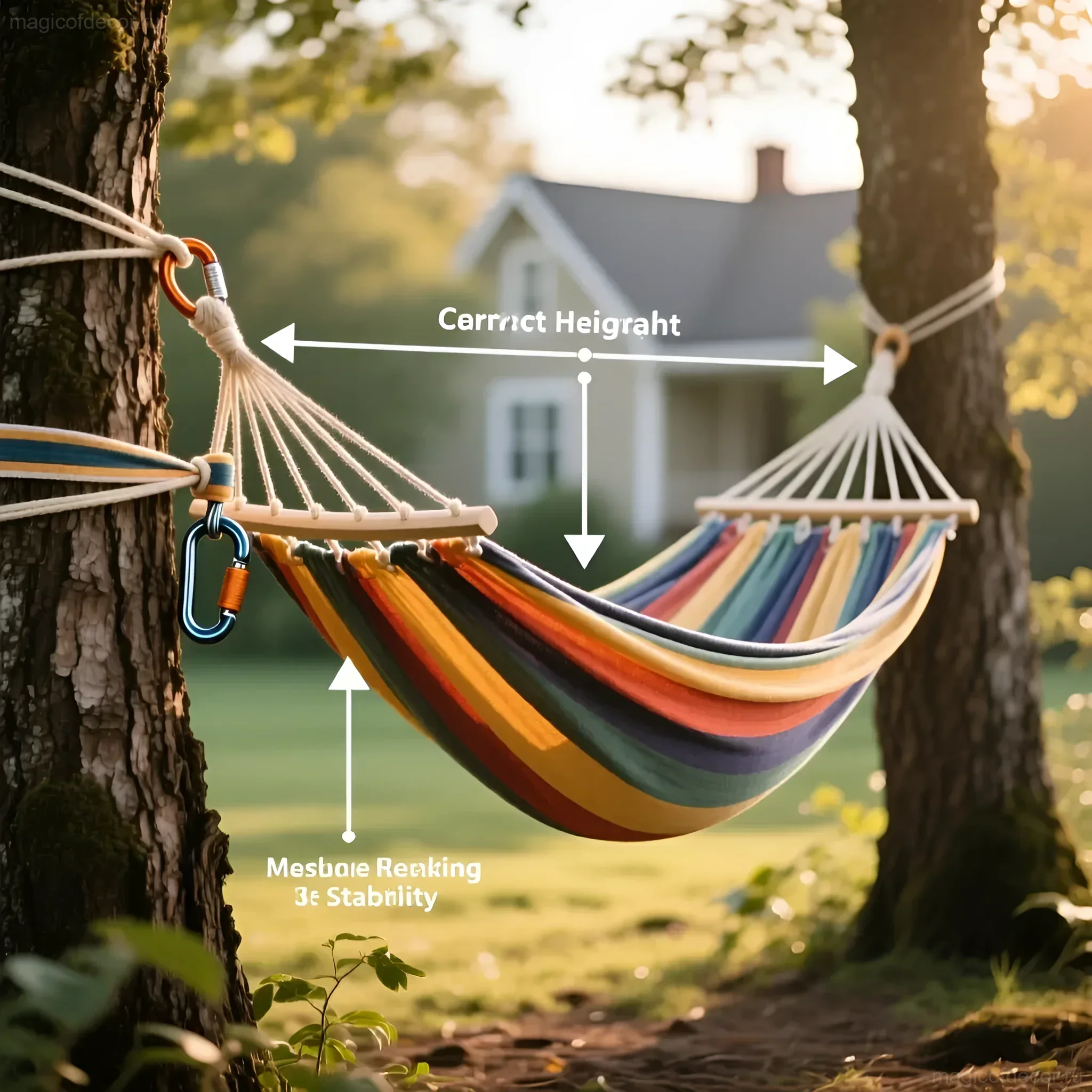
Choosing a hammock is only half the battle. The most important thing is to ensure secure fastening that can support your weight and won’t damage the supports. Remember: secure fastening is the key to your peace of mind.
What We’ll Need:
- Tree Straps: This is the most eco-friendly and safe way to attach to a tree. They are wide, don’t cut into the bark, and distribute the load evenly. Never use thin ropes or wire!
- Carabiners and S-hooks: Must be steel, with a high load capacity (indicated by the manufacturer).
- Chains or ropes: Needed for adjusting length and tension. For ropes, choose marine or climbing cords that are resistant to UV rays and wear.
- Fasteners for walls/ceilings: Anchor bolts (for concrete, brick) or eye bolts (for wooden beams). Choose fasteners with a safety margin 2–3 times your maximum weight.
- Tools: Drill, drill bits for wood/concrete, tape measure, level.
Assessing Supports:
Trees: The support must be healthy and have a trunk diameter of at least 30 cm (for reliability). The distance between supports should be approximately 50–100 cm longer than the hammock itself (including attachments).
Walls/Ceiling: You can only attach to load-bearing structures (concrete, solid brick, strong wooden beams). Drywall is not suitable for this load. If you are unsure about the type of wall, it’s best to consult a specialist.
Step-by-Step Instructions: How to Hang a Hammock Correctly for Longevity
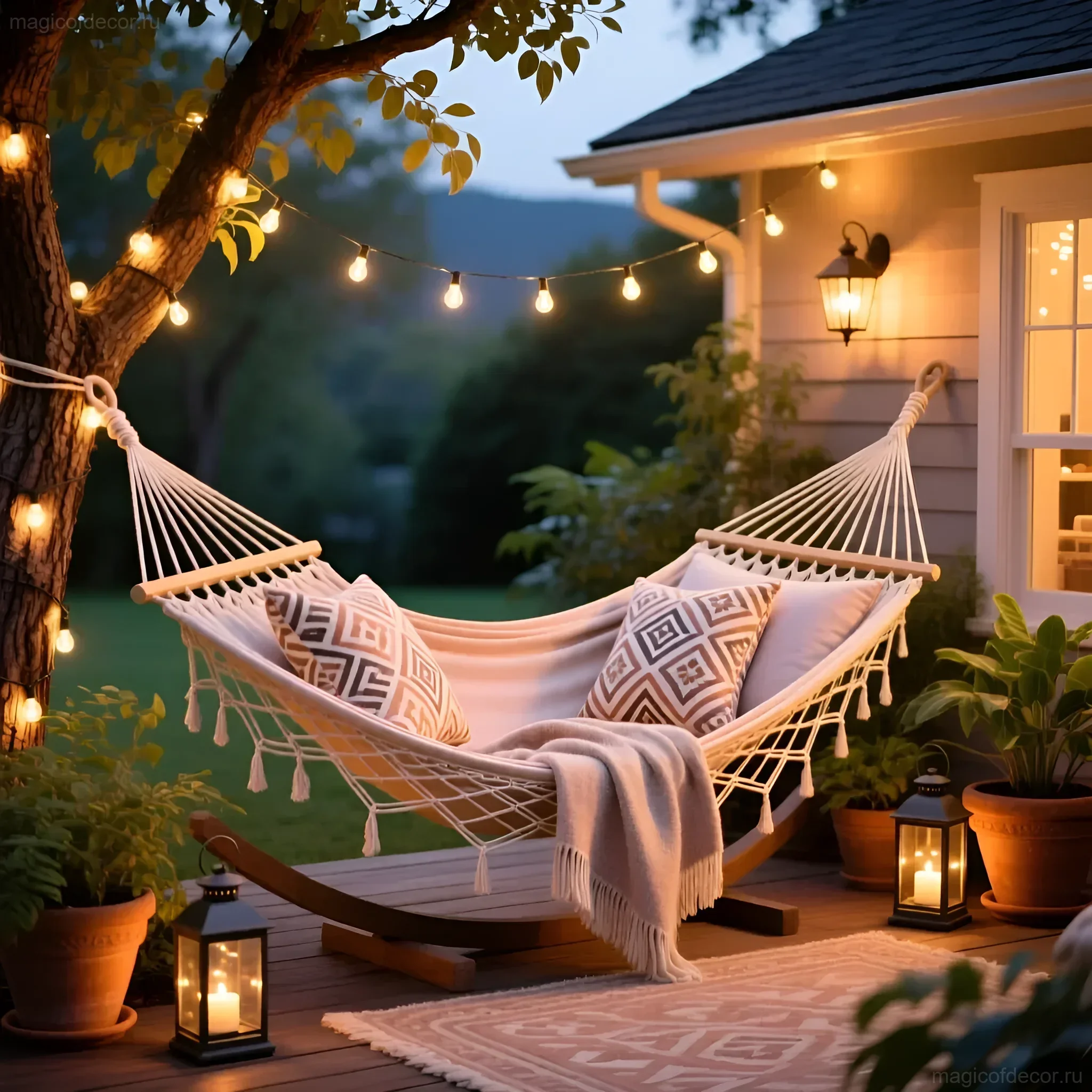
The key to installing a hammock is not the tension, but the height and angle. An ideal hammock should sag, forming a “banana” shape, not be stretched taut like a string. This ensures maximum comfort and prevents tipping.
Step 1: Determine the Ideal Height and Distance
Typically, the attachment points should be 1.5–1.8 meters from the ground. The distance between supports should be approximately 3–4.5 meters. If the distance is less, you’ll need to hang the hammock higher; if it’s more, use extension chains or ropes.
Step 2: Install the Mounts
Attaching to a Tree (the most popular option):
- Wrap the strap around the trunk (without twisting).
- Thread one end of the strap through the loop on the other end, tightening it.
- Adjust the height of the strap on the trunk to achieve the desired angle (approximately 30 degrees to the horizon).
- Attach a carabiner to the strap loop.
Attaching to a Wall/Ceiling (for indoors or balconies):
- Mark the attachment points. Use a level to ensure they are at the same height.
- Drill holes and install anchor bolts or eye bolts, strictly following the fastener manufacturer’s instructions.
- Ensure the bolts are tightened as securely as possible.
Step 3: Tension and Test
Attach the hammock to the carabiners. Ideally, when you sit in the hammock, the lowest point of sag should be 40–50 cm from the ground (this is convenient for getting in and out).
Important angle rule: The angle between the rope/strap and the ground should be approximately 30 degrees. The smaller the angle, the greater the horizontal load on the supports. If the angle is too sharp (e.g., 60 degrees), the hammock will sag too much.
Test: Before relaxing, gently press down on the hammock, then sit in it. If nothing creaks and the fastening doesn’t shift, your relaxation zone is ready!
Harmony with Nature: Color Combinations and Textiles for a Hammock Relaxation Area
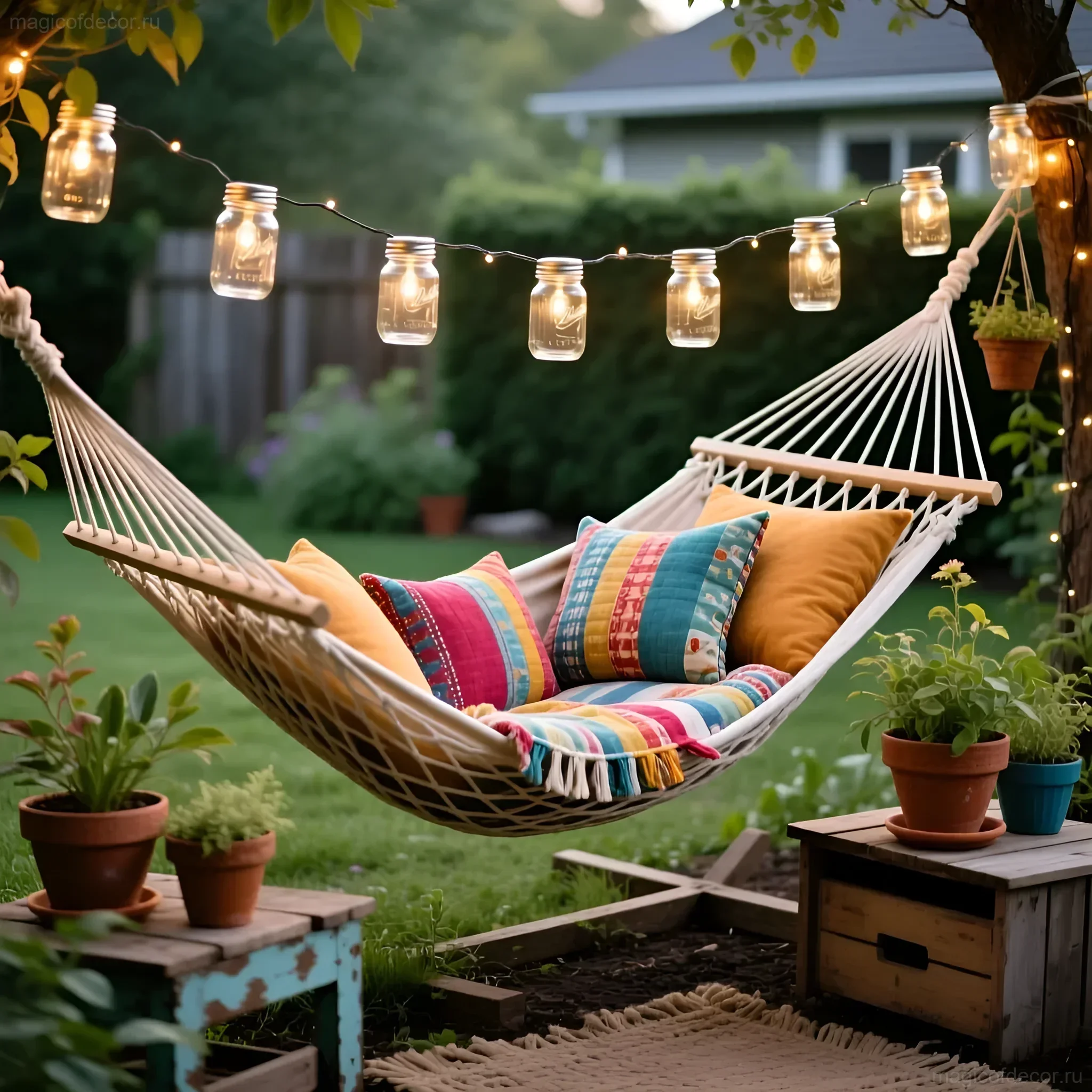
Now that the hammock is securely hung, it’s time to decorate! After all, the hammock is the centerpiece of the composition, and its surroundings should enhance the feeling of coziness and relaxation.
Color and Style
If your hammock is in the garden, choose colors that harmonize with the greenery:
- Natural and earthy tones: Beige, ivory, terracotta, olive. They create a sense of calm and blend with nature.
- Nautical style: White and blue. Ideal if you have a pool or want to create a vacation atmosphere.
- Boho and ethnic: Bright, rich colors (fuchsia, turquoise, orange) with geometric or ethnic patterns. Add tassels and macrame.
Textile Accents
Textiles make the hammock truly soft and inviting. Remember that for outdoor use, you need to choose water-resistant, quick-drying materials.
Pillows: Several small pillows (30×30 cm) or one large bolster pillow for neck support. Choose covers made of Oxford or acrylic fabric if the hammock is exposed to the elements.
Throws: Even in summer, evenings can be cool. A light knitted cotton throw or a cozy fleece blanket, rolled up in a basket nearby, will be the perfect addition. In autumn, replace it with a wool or cashmere option.
Budget Paradise: How to Create a Cozy Hammock Spot Without Spending a Lot

You don’t need to spend a fortune on landscaping to create the perfect hammock spot. We, as decorators, know that magic lies in the details and budget-friendly solutions.
Mood-Setting Lighting
Lighting is the easiest and most effective way to transform any space after sunset.
- Solar-powered string lights: Hang them around the perimeter of the hammock or wrap them around tree trunks. They don’t require a power connection and are completely safe. Choose warm yellow light.
- Candles and lanterns: Place several lanterns on a small side table or on the ground. Use LED candles if you’re afraid of open flames (especially important in dry weather).
- Path lighting: Small ground lights leading to the hammock will add functionality and charm.
Functional Decor
To avoid constantly running for small items, organize storage:
- Stump side table: Saw off an old stump, sand it, and varnish it. This is the most budget-friendly and stylish table for your drinks and books.
- Basket for odds and ends: A large woven basket (made of rattan or jute) serves for storing blankets and collecting magazines.
- Container gardening: Use old buckets painted in bright colors or wooden crates to create mobile flower beds around the hammock. This will add color and won’t require complex soil work.
DIY Projects: Creating a Unique Hammock Space
And now for the most interesting part – creativity! These projects won’t take much time but will make your relaxation area absolutely unique.
1. Hanging Hammock Organizer
Idea: Sew or weave a small pocket organizer that attaches directly to the edge of the hammock or to one of the supports.
What you’ll need: Dense water-repellent fabric (old tablecloth, jeans) or thick jute cord, scissors, sewing machine (or fabric glue).
How to make:
- Cut out two rectangles (e.g., 40×30 cm).
- Sew them on three sides, leaving the top open.
- Sew on two loops or make holes for attaching to the hammock rope.
- This pocket is convenient for storing your phone, glasses, and sunscreen.
2. Decorative Wind Chimes
Idea: Create a gentle, relaxing sound to accompany your rest.
What you’ll need: Old keys, beads, seashells, strong fishing line or thin wire, a beautiful snag or wooden circle.
How to make: Tie decorative elements at different heights to the snag. Hang above the hammock or on a nearby branch. The sound should be quiet and melodious, not irritating.
3. Painted Plant Pots
Idea: Surround the hammock with bright, individual elements. The relaxation area will immediately become more lively and colorful.
What you’ll need: Plain terracotta pots, outdoor acrylic paints, stencils or masking tape.
How to make: Paint the pots in bright, contrasting colors or create geometric patterns using masking tape. Plant fragrant herbs (mint, lavender) or bright petunias in them.
Hammock Through the Seasons: Seasonal Decor and Care
A hammock is undoubtedly a summer item, but with the right approach, it can be used in cooler months and ensure its longevity.
Autumn and Spring Decor
As the temperature drops, your hammock can become an incredibly cozy spot for watching the autumn colors.
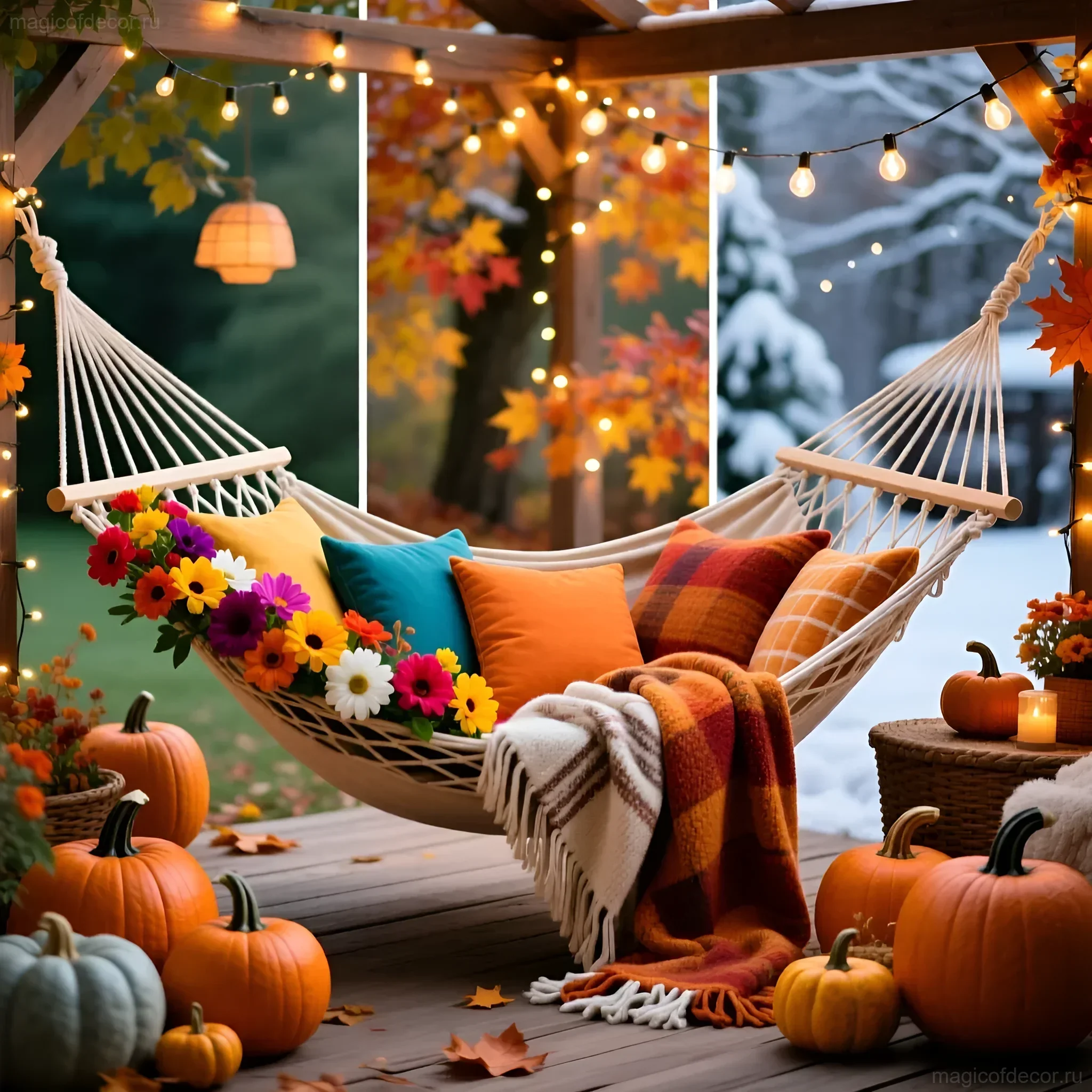
- Warm textiles: Replace light cotton pillows with velvet or knitted ones. Add a thick wool throw.
- Color palette: Use autumn colors – burgundy, mustard, dark green, copper.
- Surrounding decor: Place pumpkins nearby, use branches with berries or dried flowers. If the hammock is on a terrace, add an outdoor heater for maximum comfort.
Care and Storage
To ensure your hammock serves you faithfully for many years, it needs proper care.
Regular care:
- If the hammock is cotton, always bring it indoors or under a canopy during rain.
- Periodically wash the fabric (follow the manufacturer’s instructions). If washing is not possible, clean it with a soft brush and a mild soapy solution.
- Check the fastenings every 2–3 months. Ropes can stretch, and carabiners can wear out.
Winter storage:
Before the frost sets in, the hammock must be taken down. Wash and dry the fabric thoroughly. Store in a dry, ventilated room (attic, pantry) in a special cover or a dense bag. This will protect the fabric from rodents, mold, and sudden temperature changes.
FAQ: Quick Questions About Hammock Installation
1. Can I hang a hammock on one post and one wall?
Yes, of course! The main thing is that both supports are reliable. If you are using a post (e.g., on a terrace), make sure it is dug in deep enough and can withstand lateral load. This is absolutely normal practice.
2. What is the minimum distance between supports?
The minimum distance should be equal to the length of your hammock plus 30–50 cm for attachments. For example, for a 3-meter hammock, you will need at least 3.5 meters between supports.
3. How can I prevent the hammock from collecting water?
If the hammock is hung without a canopy, choose synthetic, quick-drying materials (polyester). If the hammock is cotton, the only solution is to remove it after use or stretch a small waterproof tent over it.
4. Do I need a special knot for attaching the rope?
If you are not using special straps, the “Constrictor Knot” or “Bowline Knot” are excellent for attaching a rope to a tree. They are reliable and easy to untie without damaging the rope. But the safest method is using carabiners and wide straps.
Creating the perfect hammock spot is a creative process that brings joy even at the planning stage. Choose a location with love, hang it with intelligence, decorate with soul, and let your hammock become the most beloved corner in your home or garden!