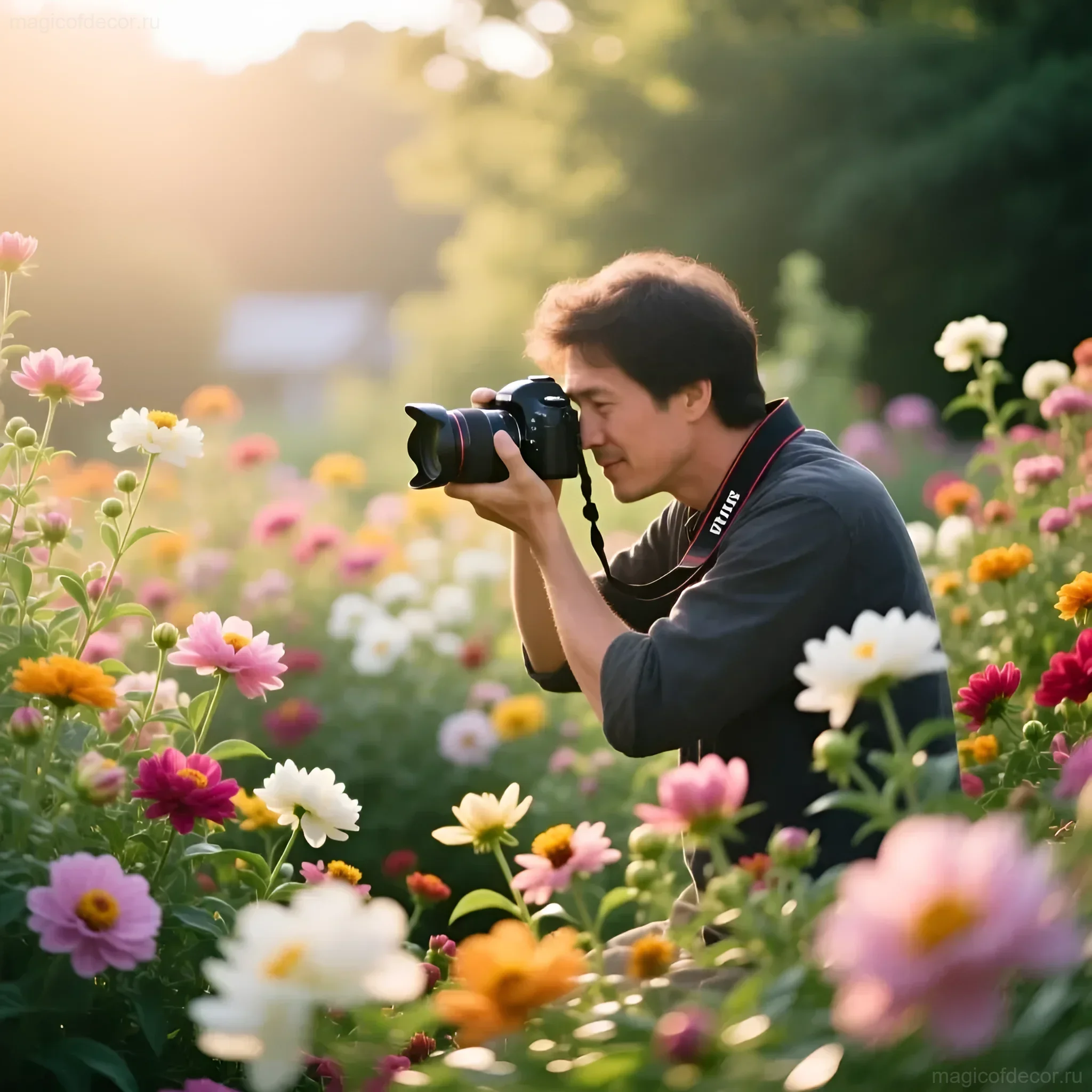
Creating a garden is an act of love for nature, and creating a garden of scents is an investment in your own emotional well-being and, no less importantly for a creative person, in an inexhaustible source of inspiration. The sense of smell is directly linked to the limbic system of the brain, responsible for emotions and memory. Aromas can instantly transport us to the past, evoke strong feelings, and stimulate the creative process. For a photographer seeking unique subjects and deep emotional shots, their own fragrant oasis becomes not just a backdrop, but a full-fledged open-air studio, where each frame is filled with an invisible yet palpable story.
The specialists at bur4ik.ru have prepared a detailed guide that will help not only design a fragrant corner but also maximize its potential for creating high-quality, atmospheric photographs.
Planning a Garden of Scents: Choosing Plants by Scent and Blooming Time
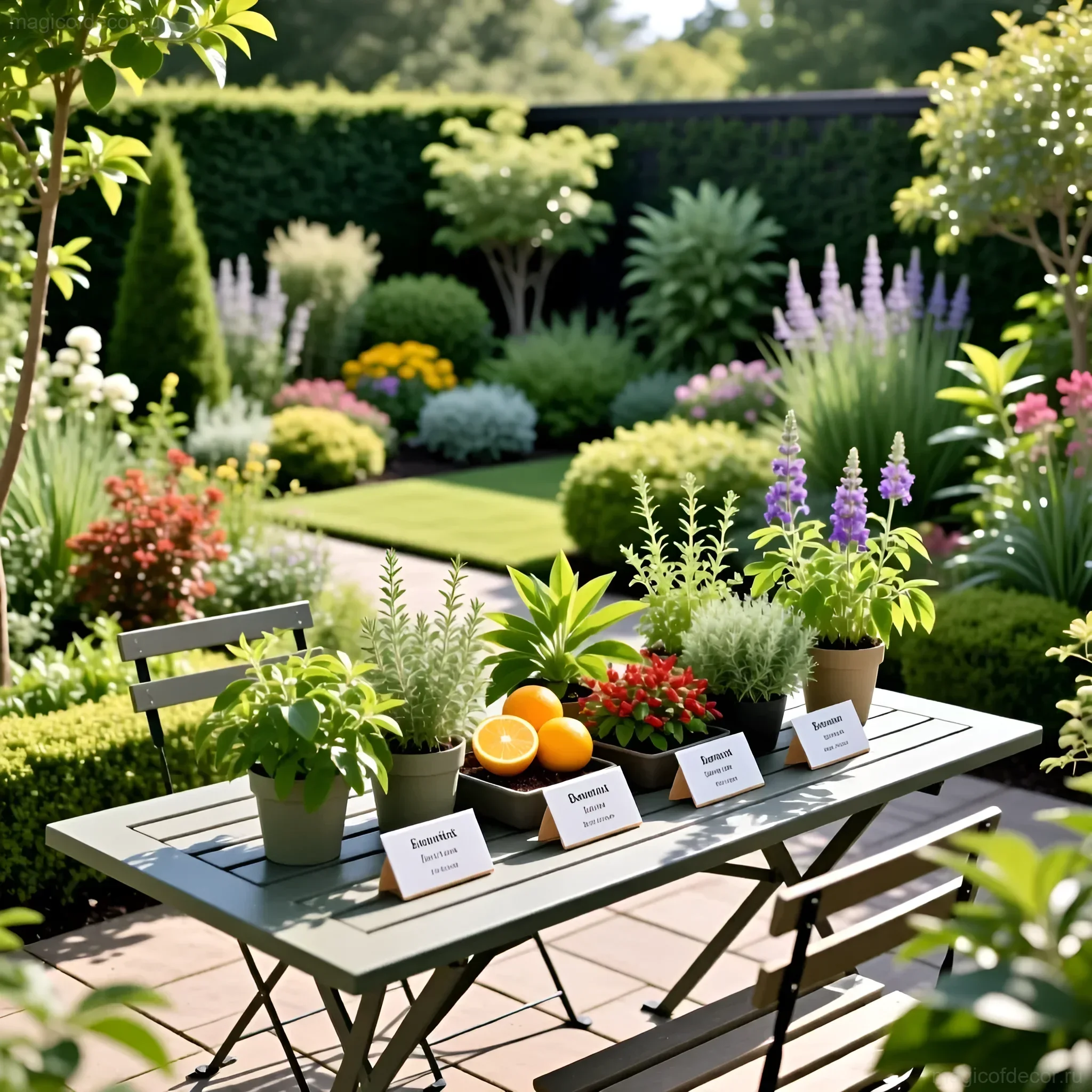
The first step to creating a fragrant garden is careful planning. It is necessary to consider not only the intensity of the scent but also its character, blooming time, and the plant’s visual appeal for photography. A competent combination will allow you to have blooming and fragrant plants from early spring to late autumn.
Plants for Spring Awakening (March – May)
Spring scents are usually light, fresh, and piercing. These plants are ideal for macro photography of the first signs of life.
- Hyacinths (Hyacinthus): Possess a rich, sweet aroma. Their dense inflorescences look great from a low angle.
- Lily of the Valley (Convallaria): A classic, delicate, and recognizable scent. Ideal for creating an atmosphere of mystery and soft light.
- Lilac (Syringa): A powerful yet elegant scent. Lush clusters serve as a beautiful background for portraits or an object for detailed texture photography.
Summer Splendor (June – August)
Summer is the peak of fragrances. Spicy, honeyed, and deep floral notes predominate here.
- Roses (Rosa): Indispensable. Choose old varieties, such as Damask or Bourbon roses, for their rich, multifaceted aroma. Ideal for classic, studio macro photography.
- Lavender (Lavandula): A spicy, calming scent. Its purple fields (even small ones) create stunning perspective and rhythm for landscape photography.
- Mint and Lemon Balm (Mentha, Melissa): Citrusy and refreshing notes. Their leaves with interesting texture are an excellent object for focusing and creating a green background.
Autumn Accents and Evening Scents
To create an atmosphere of mystery and drama, it is necessary to include plants whose scents are revealed with the onset of twilight.
- Sweet Pea (Lathyrus odoratus): A sweet, vanilla-like scent that intensifies in the evening. Its delicate petals require soft, diffused light.
- Flowering Tobacco (Nicotiana alata): A powerful, evening scent, often with white or pale green flowers that look spectacular when photographed using backlight or a flashlight.
- Chrysanthemums (Chrysanthemum): Although their scent is often earthy and tart, they provide a magnificent color palette for autumn photo shoots.
Lighting and Composition in a Garden of Scents: Creating Ideal Conditions for Photography
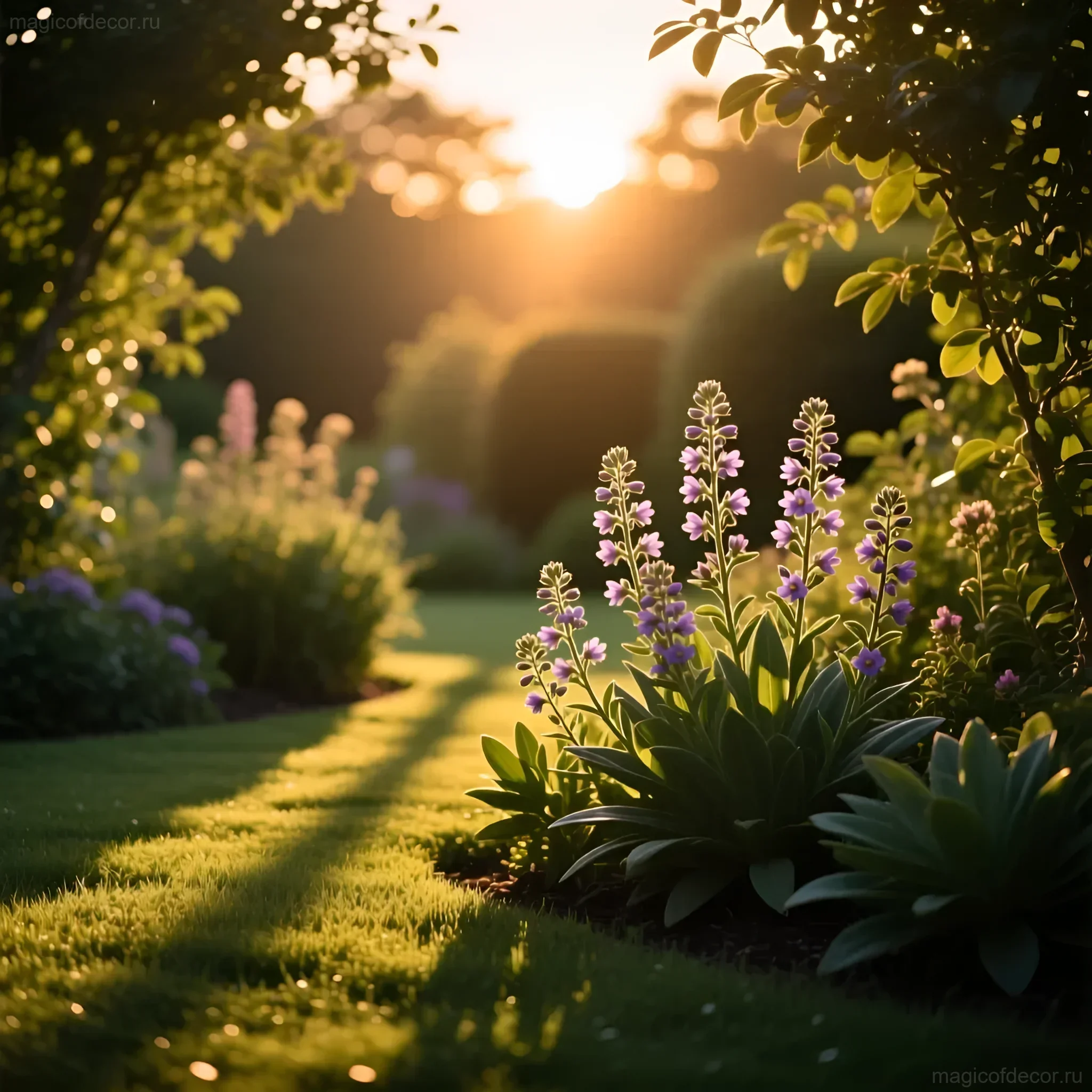
A garden of scents should be designed not only for enjoying the aroma but also for optimal work with natural light. The photographer should think about how the light will fall on the objects and how the background will serve as a “frame” for the fragrant stars.
Composition Principles for Photographers
The design of zones in the garden should consider depth of field and the ability to isolate the subject.
- Creating “light traps”: Place tall, translucent plants (e.g., ornamental grasses or fennel) so that they diffuse harsh midday light, turning it into soft light, ideal for photographing flowers.
- Using the background: Plant species with small, unobtrusive leaves (e.g., heuchera or hosta) behind the fragrant accents. This will provide a clean, uniform background that will help highlight the main subject, even when shooting with a shallow depth of field.
- Paths and rhythm: Winding paths, framed by lavender or thyme, create visual rhythm and lead the viewer’s eye into the frame, which is ideal for landscape or genre photography.
Working with Lighting
Two types of lighting work best in a fragrant garden:
- Soft side light (Morning hours): Ideal for highlighting the texture of petals and dew drops. Morning light passing through fog or dew gives the frame a sense of freshness and purity, perfectly conveying the “morning” aroma.
- Backlight (Evening hours): The sun positioned behind the object creates a rim light effect. This looks especially advantageous when photographing translucent petals (e.g., poppies or sweet peas), making them luminous and ethereal. This is best suited for conveying deep, evening scents.
Photography Techniques in a Garden of Scents: Macro, Portraits, and Landscapes
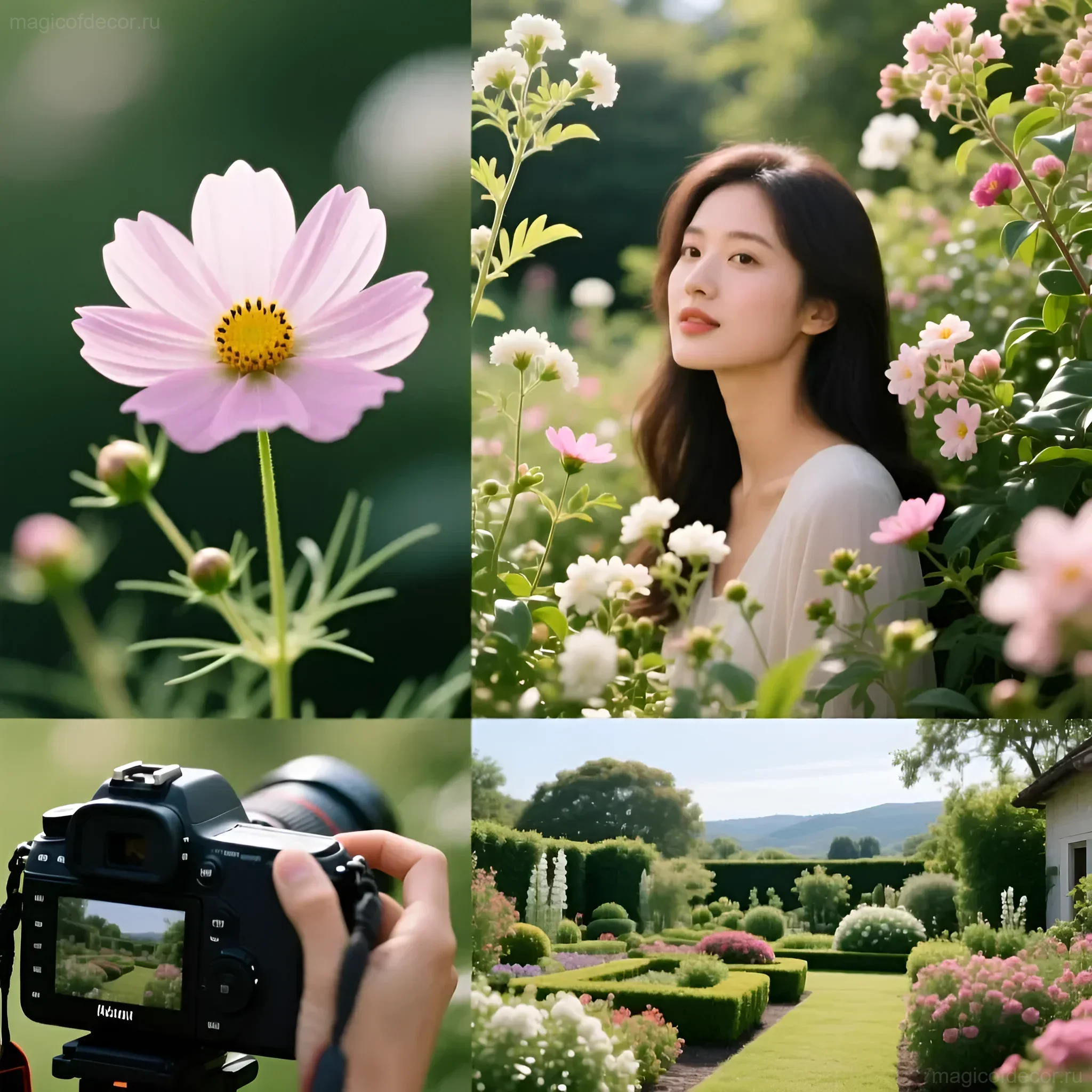
Shooting in a garden of scents requires a special approach, as the goal is not just to capture a flower, but to convey its invisible quality – its scent.
Macro Photography: Focusing on the Details of Aroma
Macro photography is a key tool for working in a fragrant garden. It allows you to show the viewer the tiny details that are the source of the scent: stamens, nectaries, the velvety surface of petals.
Technical Tips:
- Subject isolation: Use lenses with a focal length of 90–105 mm and the widest aperture (f/2.8 – f/4). This will create creamy, blurred bokeh, completely isolating the fragrant flower from the distracting background.
- Fighting the wind: Flowers often move. Use high ISO values (if necessary) and a fast shutter speed (1/250 sec or faster). As a last resort, use garden stakes and clips to gently secure the stem.
- Depth of Field (Focus Stacking): For photographing complex, multi-layered subjects (e.g., a lush rose), consider focus stacking to achieve perfect sharpness from the front edge of the petal to the center of the bud.
Portraits in a Fragrant Environment
A fragrant garden is an ideal backdrop for creating emotional portraits. Scents help models relax and evoke genuine emotions.
- Interaction with the plant: Ask the model not just to pose nearby, but to interact with the plant: inhale the scent of a rose, touch mint leaves. This will add naturalness to the shot and a sense of the presence of the scent.
- Focus on emotions: Since the scent is invisible, photograph the reaction to it – closed eyes, a slight smile, thoughtfulness.
Processing Photos of a Garden of Scents: Enhancing Beauty and Aroma in Images
Processing should serve the main goal: to enhance the emotional perception of the frame and “hint” to the viewer about the presence of the scent.
Color Correction and Tone
Color is a powerful tool for conveying an invisible aroma. Different scent groups require different color palettes:
- Fresh, citrusy scents (mint, verbena): Use cooler tones, increase the saturation of green and yellow colors. Increase exposure to create a sense of purity and freshness.
- Sweet, honeyed scents (roses, honeysuckle): Apply warm tones, slightly shifting the white balance towards yellow and orange. Add vignetting to focus attention on the center of the flower and create an intimate atmosphere.
- Spicy, earthy scents (lavender, rosemary): Increase contrast and detail. Use deep purples, blues, and muted greens to give the frame a sense of density and richness.
Texture and Detail
Since the viewer cannot smell, they must see how velvety, moist, or delicate the flower is. Enhancing micro-contrast (the “Clarity” or “Texture” slider) will help make the petals tangible.
Important nuance: Do not overdo the sharpness. Overly sharp images can look digital and rob the frame of the natural softness associated with the tenderness of the aroma.
Inspiration and Ideas for Photo Projects in a Garden of Scents
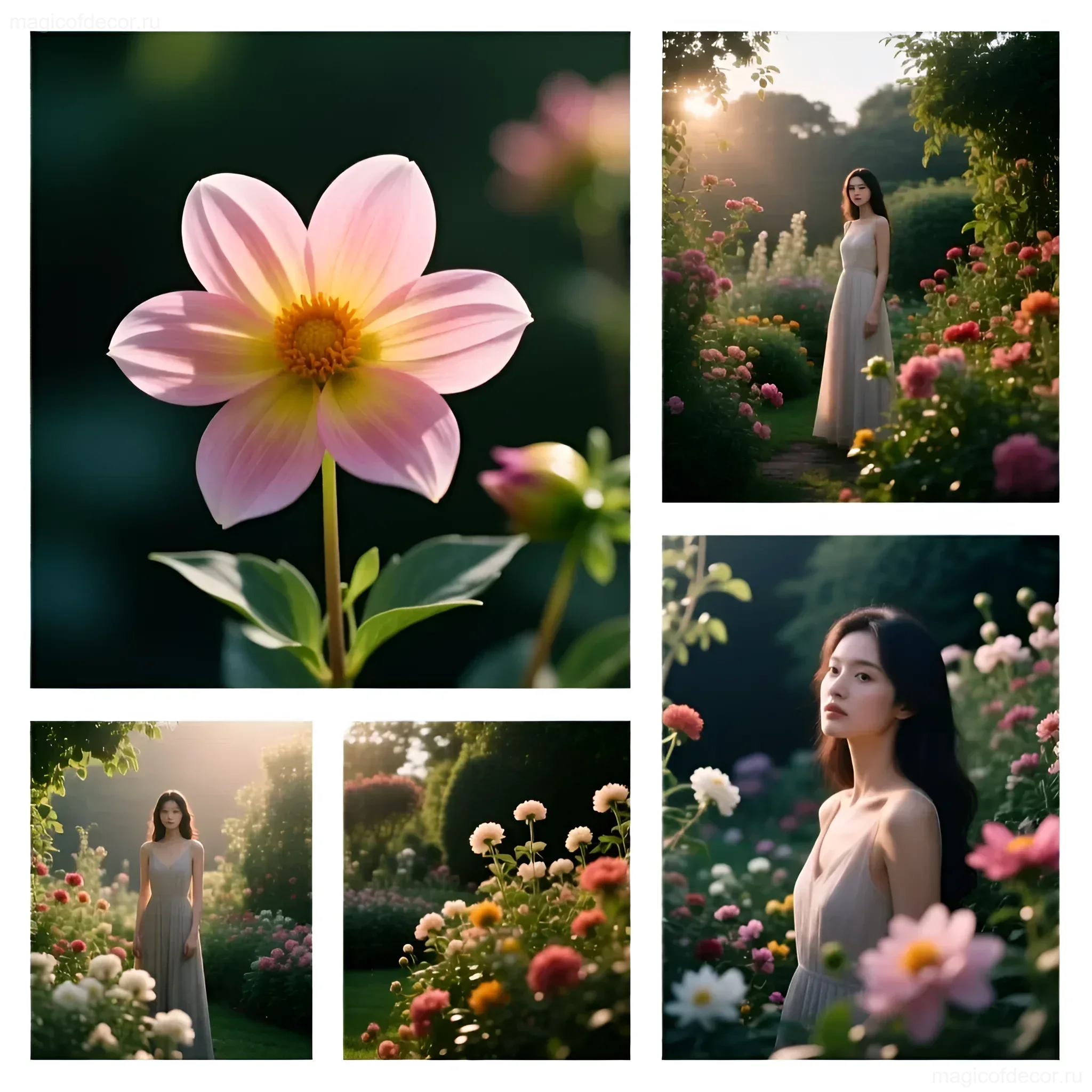
Creating a garden is a long-term project that can provide a photographer with material for an entire season or even a year. Use your fragrant oasis to realize conceptual series.
Ideas for Photo Series
Create a series that tells the story of scent:
- “Scent Calendar”: A series of shots capturing the same area of the garden in different months. Focus on the change of dominant scents (from the freshness of narcissus to the heaviness of chrysanthemums).
- “Night Scent”: Photographing plants that reveal their scent and flowers after sunset (flowering tobacco, honesty). Use long exposures and soft lighting.
- “Perfumer’s Laboratory”: Focusing on raw materials. Photograph not only flowers but also leaves, stems, roots – sources of essential oils. Use a still life approach, adding tools (mortars, beakers).
- “Bee Symphony”: Photograph insects attracted by the scent. This is dynamic macro photography that requires patience and quick focusing.
FAQ: Answers to Frequently Asked Questions About Photography in a Garden of Scents
Q: How to shoot in windy weather to avoid blurry shots?
A: Wind is the main enemy of macro photography. The solution lies in three planes: speed, stabilization, and protection. Set the shortest possible shutter speed (1/500 sec or faster). Use a tripod or monopod to stabilize the camera. For large objects (lilac bushes), you can use a windbreak or simply wait for the wind to subside slightly.
Q: What time of day is best for conveying scent in a photo?
A: It depends on the type of scent. Early morning (before 9:00 AM) is ideal for fresh, dewy scents and soft light. Evening twilight (after 6:00 PM) is best for deep, sweet, or spicy scents that become more intense in the cool, and for creating dramatic backlight.
Q: How to ensure the background doesn’t distract from the flower?
A: Use the widest possible aperture (low f-number). This will reduce the depth of field. It is also useful to physically move the subject away from the background. If this is not possible, use a reflector or black/white cardboard to create an artificial, clean background behind the flower.
Interesting Facts About Plants and Their Scents: Amazing Properties and Legends
Knowing the history and properties of plants can inspire the creation of new, deeper subjects.
- Rose – symbol and food: Ancient Romans believed that the rose was born from the foam that washed Aphrodite. Today, we know that the scent of a rose contains up to 400 different chemical compounds, making it one of the most complex and multifaceted in nature.
- Lavender as an anti-stress agent: The name lavender comes from the Latin word lavare – to wash. Romans used it to scent water. Scientific studies confirm that the scent of lavender reduces cortisol levels (the stress hormone) – a great fact to describe the atmosphere when photographing lavender fields.
- Jasmine – King of the Night: Jasmine is called the “king of the night” because its scent reaches its peak intensity after sunset. In India, its flowers are traditionally harvested only at night to preserve the maximum concentration of essential oils. This inspires the creation of mystical, nocturnal shots.
- Mint and memory: It is believed that the scent of mint improves concentration. Ancient Greek scientists and philosophers often wore wreaths of mint during discussions. This fact can be used when photographing mint in a minimalist or still life style, emphasizing its rigor and usefulness.
Creating a garden of scents is not just gardening; it is creating a living, breathing art object. It gives the photographer not only visual beauty but also a powerful emotional anchor that allows them to create images that appeal to all the viewer’s senses.