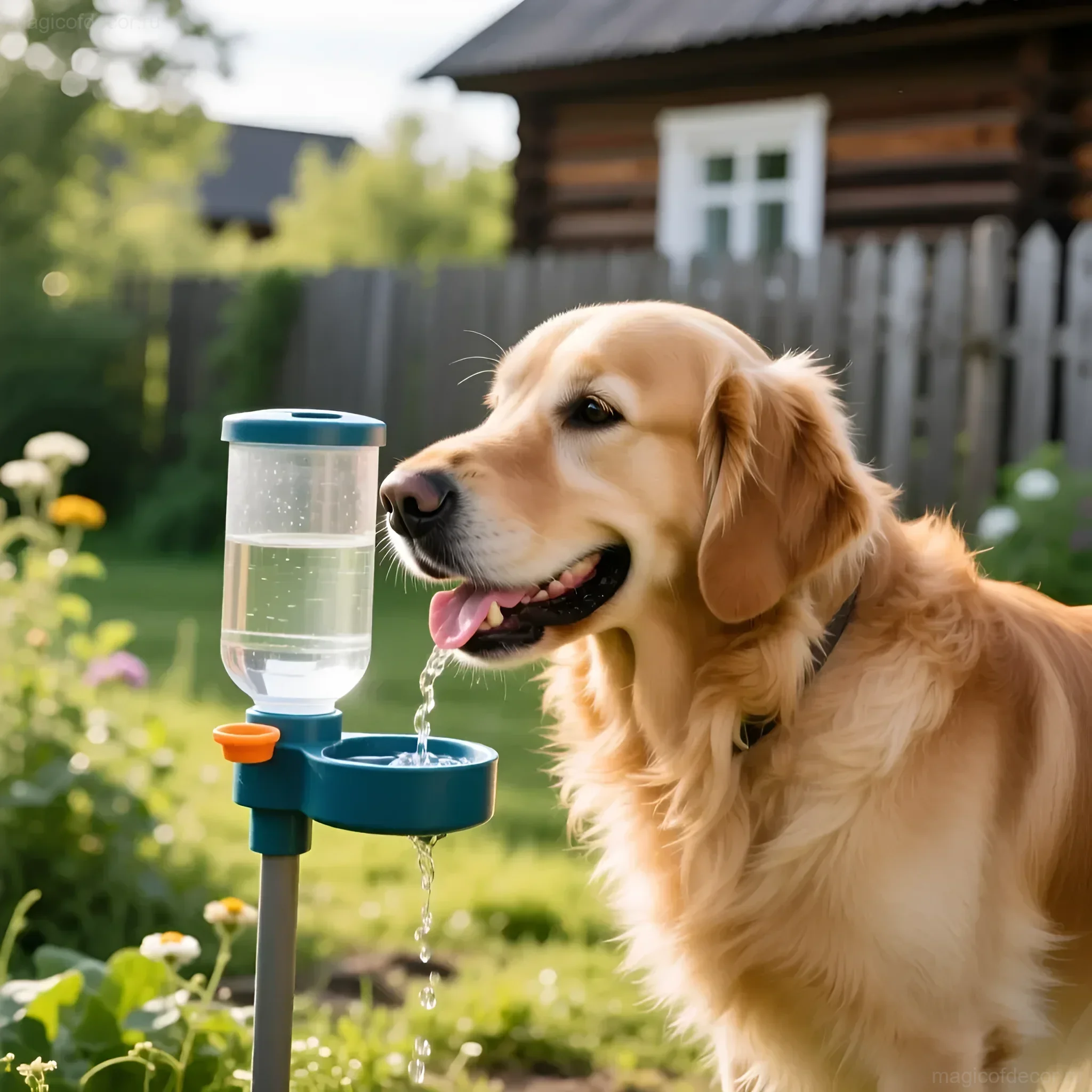
The summer season at the dacha is a time of joy and freedom not only for people but also for their four-legged friends. However, with rising temperatures and frequent owner absences, the issue of providing pets with constant access to clean and cool water becomes acute. Dehydration is a serious threat, especially on hot days. That is why an automatic waterer ceases to be a luxury and becomes a necessary element of care for the health of cats and dogs left in the country. A correctly chosen and installed automatic waterer ensures that the animal will not suffer from thirst, even if the owners are away for the whole day or weekend.
Automatic Pet Waterer for the Dacha: Why It’s Important and How to Choose?
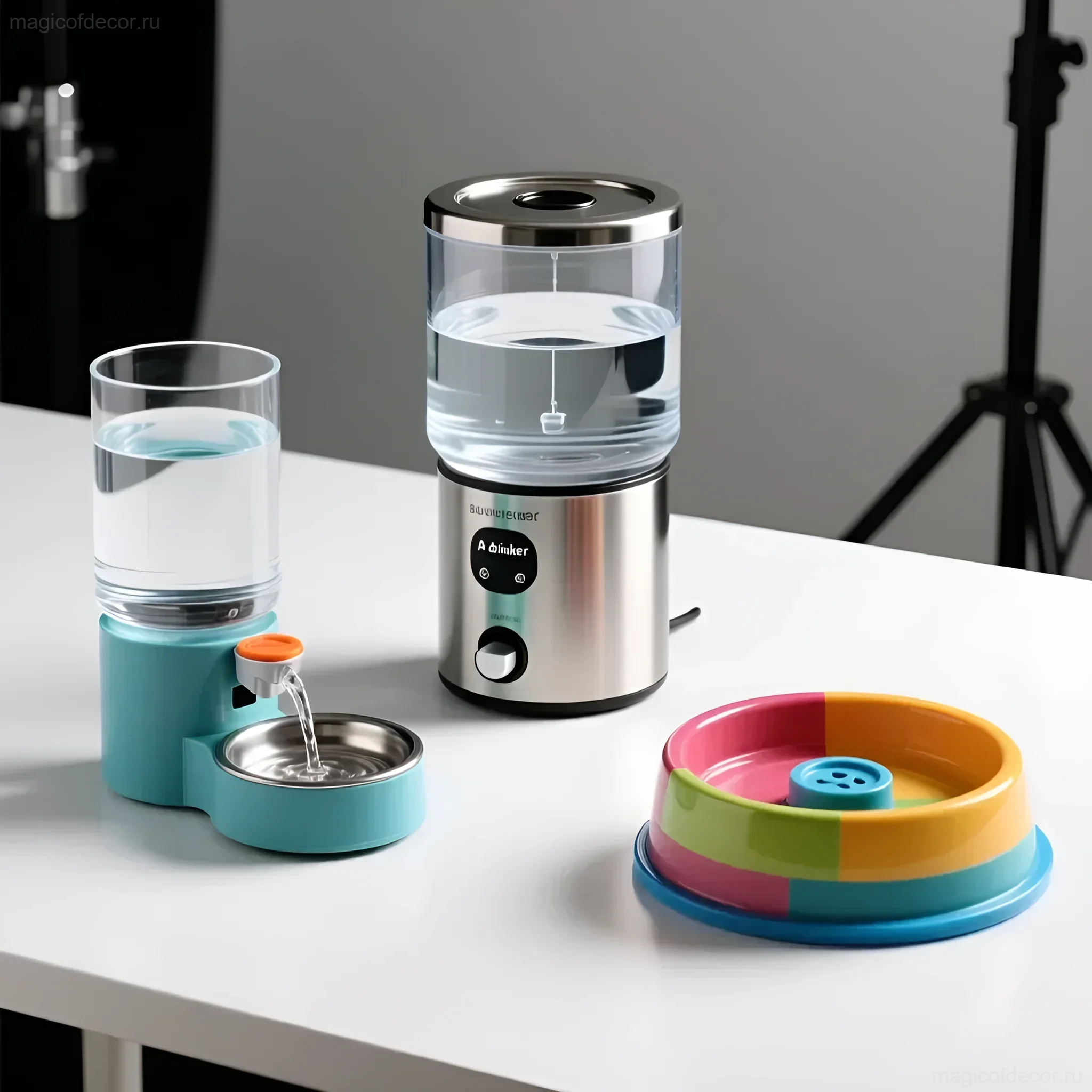
Caring for a pet in a country house setting requires special attention to detail. Leaving a bowl of water outside does not solve the problem, as the water quickly heats up, gets contaminated with insects, dust, and leaves, and also evaporates. An automatic waterer solves these critical issues by providing a constant supply of liquid.
Key Reasons for Installing an Automatic Waterer:
- Preventing Dehydration: In hot weather, animals need more water. An automatic waterer ensures that the source does not run dry.
- Hygiene: Most models protect water from direct debris and sunlight, slowing down the growth of bacteria and algae.
- Time Saving: The owner does not need to constantly check and refill bowls, which is especially valuable when away for extended periods.
- Stimulating Drinking: Flowing or fountain waterers often attract cats and dogs, encouraging them to drink more than from still water.
Main Criteria for Choosing an Automatic Waterer for the Dacha:
The choice of the optimal model depends on the operating conditions (availability of electricity, duration of owner absence) and the type of pet.
- Reservoir Volume: For small cats, 2–3 liters for 2–3 days is sufficient. For a large dog (e.g., a Labrador) for the same period, at least 8–10 liters will be needed. Always calculate a reserve, considering increased consumption in hot weather.
- Material: Preference should be given to durable, non-toxic material that is resistant to external conditions.
Plastic:
Lightweight, affordable, but can scratch and absorb odors. Choose food-grade, durable plastic without BPA.Ceramics:
Heavy, stable, keeps cool well, but fragile.Stainless Steel:
The most hygienic and durable option, easy to clean and does not react with water.- Power Source: Gravity-fed models do not require electricity. Electric (fountains) provide circulation but require access to an outlet or solar panel.
- Stability: The waterer should be heavy enough or have a non-slip base so that a large dog cannot tip it over.
Types of Automatic Waterers for the Dacha: Pros and Cons of Each
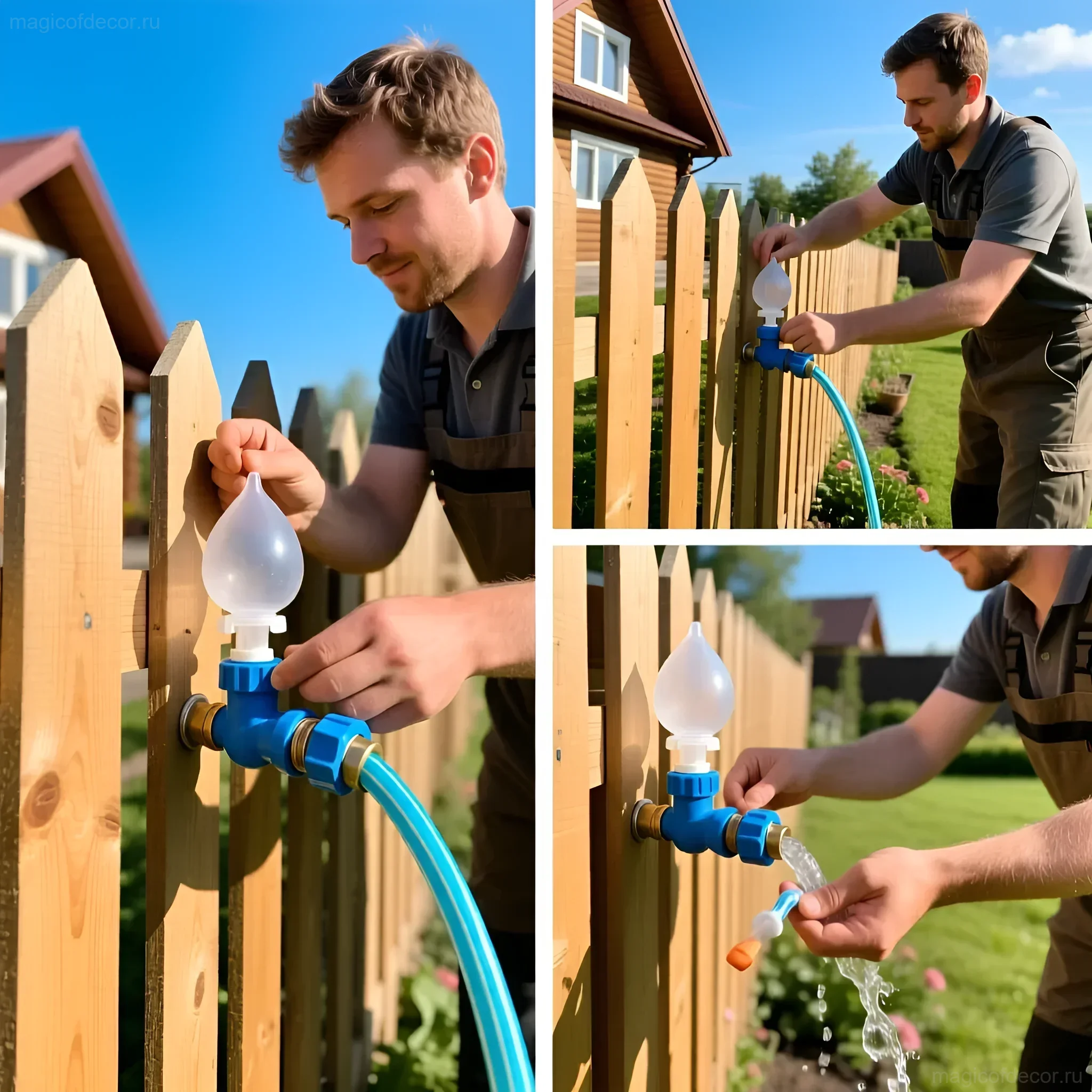
Several fundamentally different designs of automatic waterers are available on the market. Experts recommend choosing a type based on the location of the waterer (indoors or outdoors) and the requirements for water freshness.
1. Gravity-Fed (Storage) Waterers
This is the simplest and most reliable type. Water from a sealed reservoir flows into the bowl as it empties, due to gravity. No electricity is required.
- Pros:
- Reliability: Works without electricity, ideal for outdoor placement.
- Large Volume: Often have reservoirs up to 10–15 liters.
- Simplicity: Easy to clean and refill.
- Cons:
- Lack of Filtration: Water in the bowl is stagnant, which promotes bacterial growth.
- Heating: If the reservoir is in the sun, the water heats up quickly.
2. Electric (Fountain) Waterers
Equipped with a pump that constantly circulates water, passing it through filters (carbon or ion-exchange). They create water movement, which cats really like.
- Pros:
- High Hygiene: Constant filtration removes hair, debris, and odors.
- Cooling: Circulation slightly cools the water.
- Stimulation: The sound and movement of water encourage the animal to drink.
- Cons:
- Dependence on Electricity: Requires an outlet, which complicates outdoor placement (a waterproof extension cord is needed).
- Maintenance: Requires regular cleaning of the pump and replacement of filters.
3. Specialized Outdoor Systems (for the Dacha)
These include waterers specifically designed for outdoor use.
- Insulated Waterers: Have double walls or foam filling that helps keep water cool in summer and prevents freezing in mild frost (if equipped with heating).
- Waterline-Connected Waterers: Rarely used in private country houses, but provide an endless supply of water. Require professional installation.
- Solar-Powered Automatic Waterers: Use solar energy to power the pump or UV sterilizer. Important: ensure the model has a sufficient battery to operate at night or in cloudy weather.
How to Properly Install an Automatic Waterer at the Dacha: Step-by-Step Instructions
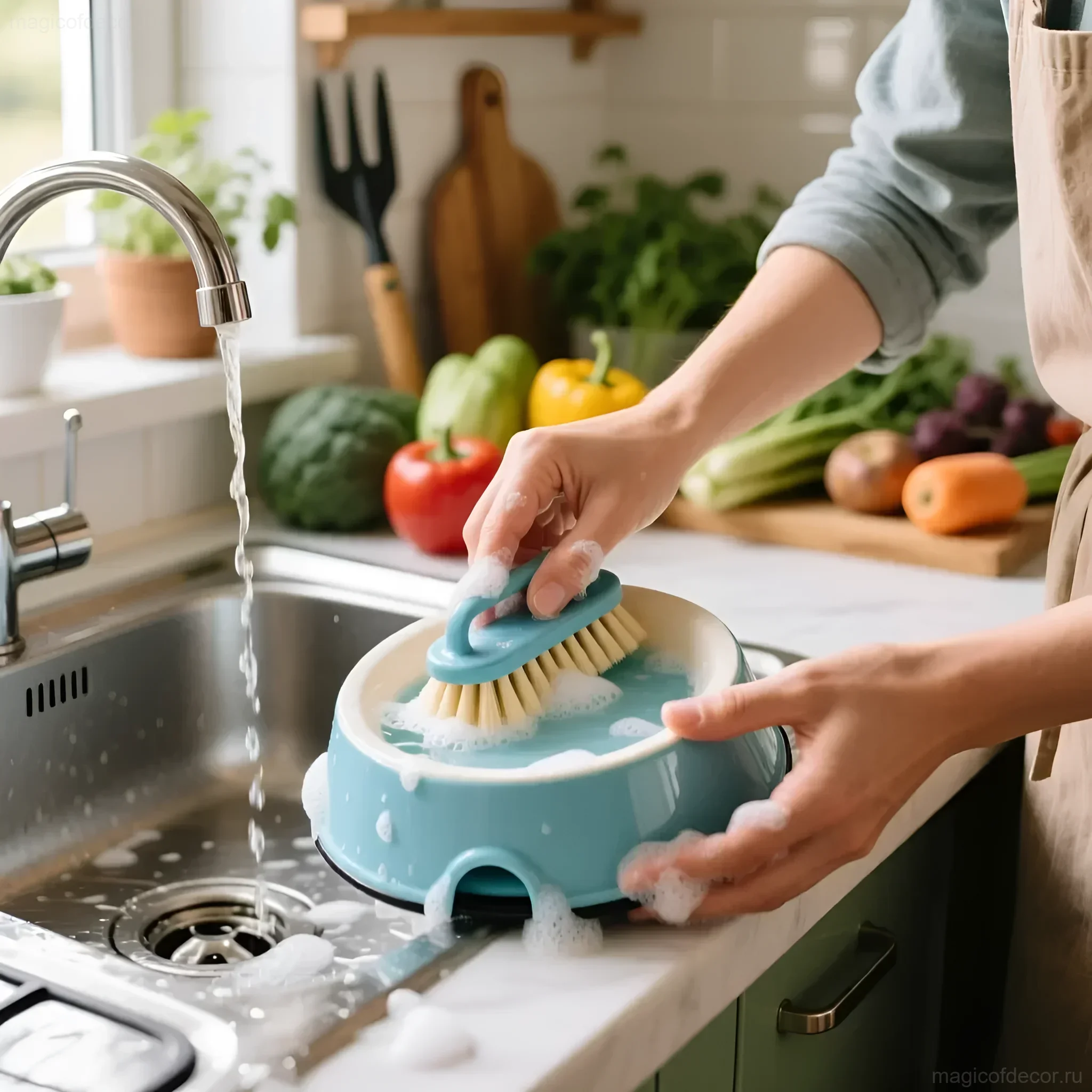
Incorrect placement can negate all the benefits of an automatic waterer. The goal is to ensure accessibility, coolness, and safety.
Step 1: Choosing the Optimal Location
The location should be easily accessible to the pet, but protected from direct sunlight and strong winds (which can blow debris into it).
- Shade is the main condition: Place the waterer under an awning, in a gazebo, or under a dense tree. Sun is the main enemy of water freshness.
- Stability: Place the waterer on a level, firm surface (concrete, tile). Avoid loose soil where the waterer can tilt.
- Distance from food: Water should be at some distance from the food bowl (especially dry food) to avoid contaminating the bowl with crumbs and grease.
Step 2: Ensuring Safety (for Electric Models)
When using electric fountains outdoors, strict safety precautions related to water and electricity must be observed.
- Use only waterproof extension cords (IP44 and higher) and outlets with moisture protection.
- The cable should be securely hidden or fastened so that the animal cannot chew through it. It is recommended to use special protective conduits.
- The pump must be designed for continuous operation and have a low-voltage power supply (usually 12V).
Step 3: Testing and Adaptation
After installation, fill the waterer and give your pet time to get used to it.
- Acclimation: Do not remove the old bowl immediately. Place the new automatic waterer nearby. When the animal starts actively using the new one, the old one can be removed.
- Functionality Check: Ensure that the gravity waterer’s valve works correctly and water flows without overflowing. If it’s an electric model, check the noise level – a too-loud pump can scare away a timid pet.
Automatic Waterer Maintenance: How to Ensure Clean and Safe Water
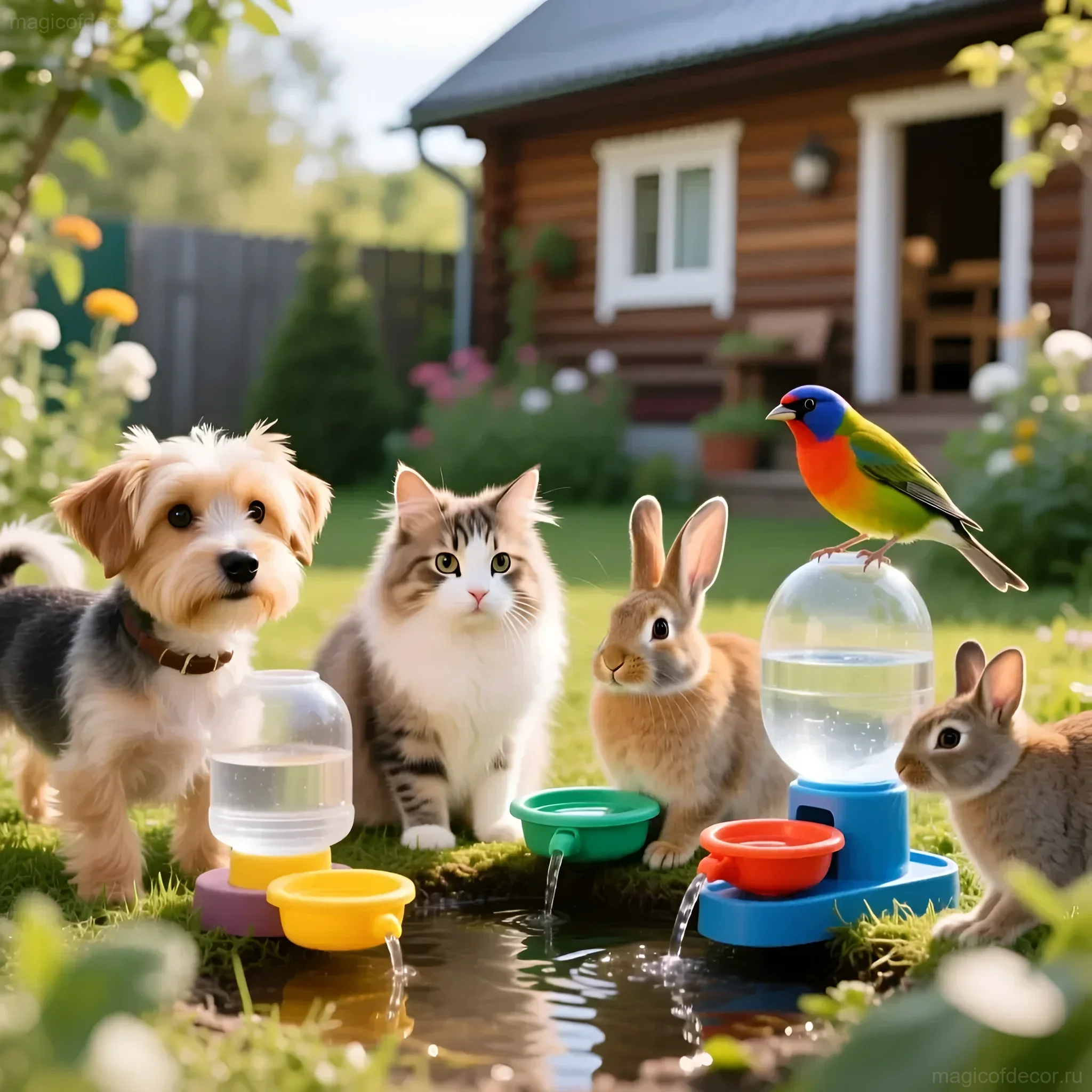
The most common mistake owners make is believing that the filtration system completely eliminates the need for manual cleaning. On the contrary, an automatic waterer requires more thorough regular care than a regular bowl.
Cleaning Schedule and Methods:
- Daily Inspection: Check the water level, remove large debris (leaves, insects) from the bowl.
- Weekly Full Cleaning (minimum): Once a week, the waterer must be completely disassembled, and the reservoir and bowl washed.
Washing:
Use warm water and a mild detergent intended for dishes, or a weak solution of baking soda. Never use harsh chemicals or bleach.Biofilm Control:
A slippery film (biofilm) is colonies of bacteria. It forms very quickly. To remove it, use a brush or sponge, thoroughly wiping all internal surfaces and tubes.
Maintenance of Electric Components:
- Pump Cleaning: The pump is the heart of a fountain waterer. It should be disassembled and cleaned every 2–4 weeks, removing accumulated hair and slime. A clogged pump will quickly fail and start making loud noises.
- Filter Replacement: Carbon filters typically last 2–4 weeks. Using filters longer than the specified period is not only ineffective but also harmful, as the filter itself becomes a breeding ground for bacteria.
- Descaling: If you use hard water, limescale can form on the pump components. To remove it, use a vinegar solution (1 part vinegar to 3 parts water) and run the pump in this solution for 15 minutes. Then rinse thoroughly with clean water.
Important Tip: If the waterer is outdoors, try to change the water in the reservoir more often than once a week, especially if the air temperature exceeds +25°C.
Automatic Waterers for Different Animals: What to Consider When Choosing?
Although the principle of operation of automatic waterers is universal, the needs of a cat, a small dog, and a large dog at the dacha differ significantly.
Specifics of Choosing for Dogs:
- Size and Height: For large breeds (shepherds, Great Danes), a waterer installed on a slight elevation is necessary so that the animal does not have to bend down too much. This is important for preventing joint problems.
- Durability: Dogs often play with bowls. Choose heavy, stable models made of stainless steel or heavy plastic that cannot be moved or tipped over.
- Volume: For a dog that spends a lot of time at the dacha, the reservoir should be at least 5 liters per 24 hours.
- “Anti-Contamination”: For dogs with long ears (spaniels) or long fur (collies), models with a narrow or deep bowl are better to minimize wetting of the fur.
Specifics of Choosing for Cats:
- Fountain Type: Cats instinctively prefer running water to still water. Fountain waterers are an ideal choice, especially if the animal drinks little.
- Material: Many cats are sensitive to odors and tastes. Ceramic or steel fountains are preferable to plastic ones.
- Quiet Pump: Cats are very skittish. A loudly humming pump can completely discourage them from approaching the waterer.
Solution for Multi-Pet Households:
If both cats and dogs live at the dacha, a universal system or two separate waterers will be needed. If one is chosen, it should have a large volume and be high enough for the dog, but still easily accessible for the cat (e.g., a multi-level design).
FAQ: Answers to the Most Popular Questions About Automatic Waterers for the Dacha
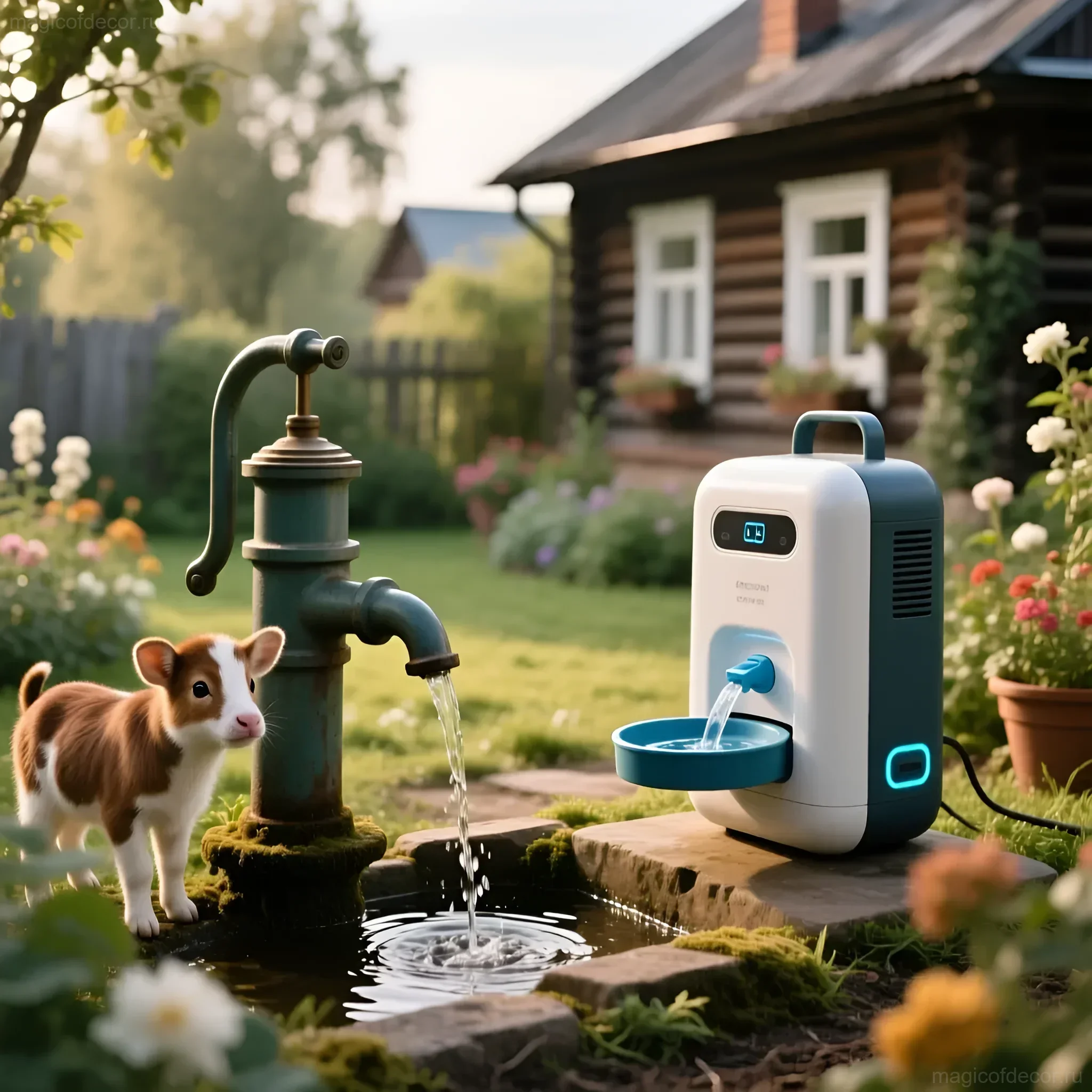
1. What to do if electricity is frequently turned off at the dacha?
In this case, experts strongly recommend using gravity-fed waterers. If you still prefer a fountain, choose models with the option to connect an external battery (Power Bank) or use the fountain as an addition, leaving a large bowl of clean water nearby in case of power outages.
2. How to prevent algae growth in the reservoir during summer?
Algae growth is provoked by sunlight and heat. To minimize this process, you need to:
- Place the waterer only in deep shade.
- Use opaque or dark reservoirs (light ones let more UV radiation through).
- Increase the cleaning frequency to twice a week.
3. Can an automatic waterer be used in winter at the dacha?
If the temperature drops below zero, a standard waterer will freeze. For winter use, models with heating are required. They are equipped with a thermostat that maintains the water temperature slightly above zero. Such models require constant connection to the mains and must be designed for outdoor use.
4. Do automatic waterers attract insects?
Any water source attracts mosquitoes and wasps. Fountain waterers, due to the constant movement of water, are less attractive to mosquitoes, which cannot lay eggs in running water. For gravity-fed waterers, it is important to tightly close the reservoir and regularly clean the bowl.
Interesting Facts About Automatic Waterers and Pet Care at the Dacha
The concern for the comfort and health of pets has led to a number of curious solutions and research related to water consumption.
- “Running Water” Effect: Studies show that the ancestors of domestic cats in deserts avoided stagnant water, fearing contamination. This instinct has been preserved, and many cats prefer to drink from a tap or fountain.
- Water Temperature: The optimal water temperature for dogs and cats on a hot day is 10–15°C. Water that is too cold (with ice) can cause stomach spasms, and warm water is off-putting to the animal. Insulated waterers help maintain this balance.
- Innovations: Modern expensive automatic waterer models can be equipped with UV sterilizers. Ultraviolet radiation kills up to 99% of bacteria and viruses, making water maximally safe without the use of chemicals.
- “Vandal-Proof” Waterers: For farms or dachas where animals can be particularly active, there are waterers that attach to the ground or wall. They are made of solid plastic or thick steel that can withstand significant loads.
Conclusion: An automatic waterer is an investment in your pet’s health and peace of mind. Choosing the right model, its proper installation in the shade, and regular, thorough maintenance ensure that your four-legged friend will enjoy the dacha season without suffering from thirst in your absence.