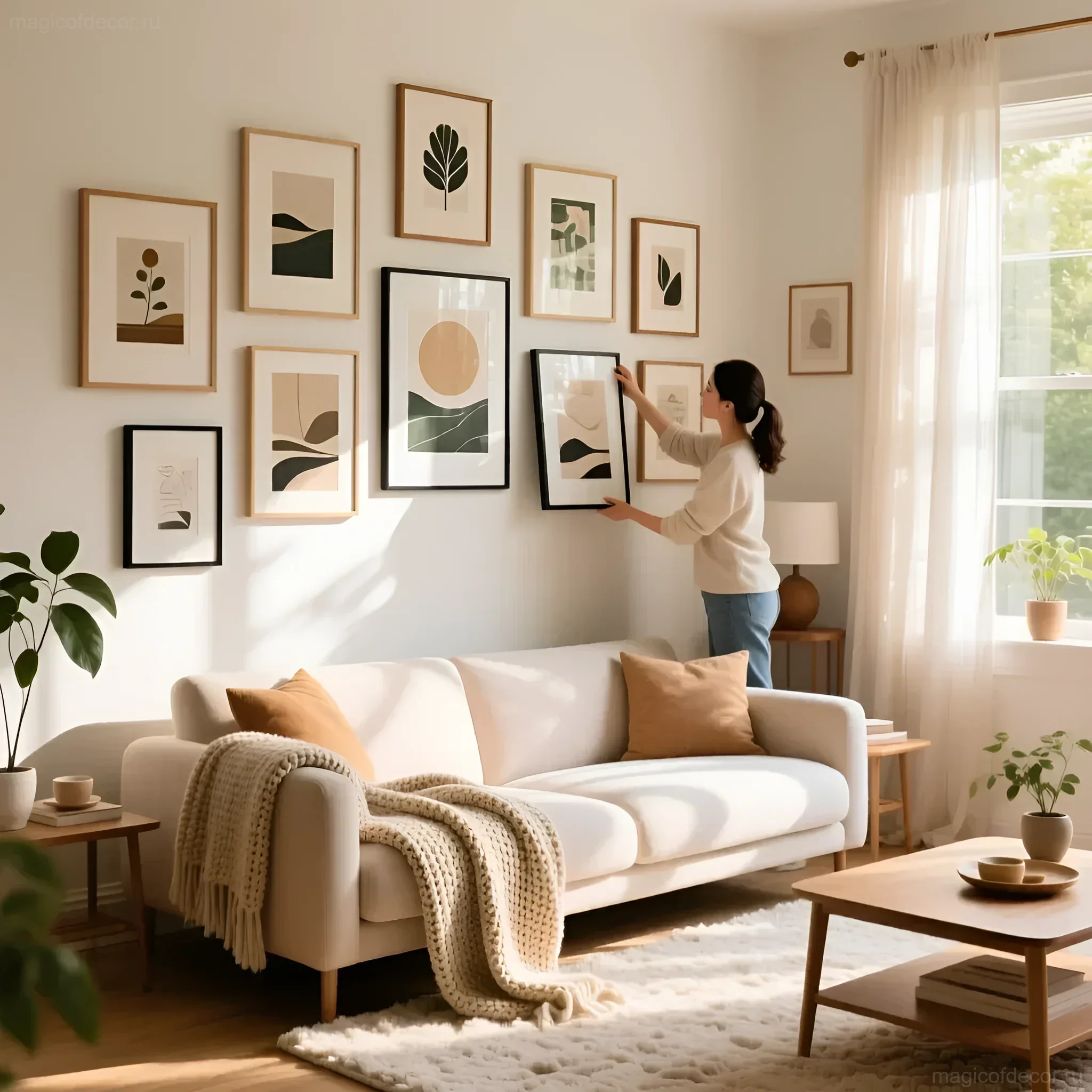
Walls are not just vertical surfaces; they are a canvas awaiting your inspiration. If you love your home but feel that the interior sometimes “gets stuck,” know this: the soul of a space craves change. And the simplest, yet most effective, changes don’t require renovations or large investments. They lie in the details—in textiles, accessories, and, of course, in what adorns your walls. Today, we’ll talk about the magic of seasonal transformation: how to easily and joyfully change posters and paintings so that your home always breathes freshness and matches the mood outside your window.
Revitalizing the Interior: Why Change Posters and Paintings Seasonally?
Many of us are accustomed to considering paintings and posters as static decorative elements, hung “once and for all.” But imagine how boring it would be to wear the same clothes all year round! Our homes, similarly, need a “seasonal wardrobe.”
Changing wall decor is a quick way to alter a room’s atmosphere without moving furniture or re-pasting wallpaper. It’s a form of visual therapy that helps synchronize your inner state with the rhythms of nature.
- Psychological effect of freshness: Even a small change in the familiar wall landscape makes the brain perceive the space as renewed, preventing a sense of routine.
- Relevance and mood: In winter, we crave coziness and monochrome; in spring, lightness and pastels; in summer, brightness and sunshine. Seasonal decor allows you to instantly tune the room to the right wavelength.
- Budget-friendly solution: Unlike buying new furniture, posters and prints are the most affordable way for a significant transformation. You can print them yourself or buy digital files for a minimal price.
- Opportunity to experiment: If you’re hesitant about bright colors or bold themes in your permanent decor, seasonal rotation gives you the freedom to try something completely new for a short period.
Choosing a Seasonal Palette: What Colors and Themes are Relevant?
The key to successful seasonal decor is a well-chosen color palette and theme that harmonize with the overall mood of the season. It’s important that the posters not only reflect nature but also coordinate with your existing textiles (pillows, throws).
Spring: Awakening and Lightness
Spring calls for tenderness, freshness, and a sense of new beginnings. Forget heavy, dark colors.
- Palette: Soft pastel tones—mint, pale pink, lavender, peach, light yellow. Lots of white and light gray for a feeling of “airiness.”
- Themes: Watercolor flowers (tulips, peonies, mimosa), minimalist lines, birds, botanical sketches, abstractions with smooth color transitions.
- DIY Idea: Create posters from pressed flowers. Take beautiful spring leaves or flowers, dry them, and carefully arrange them between two panes of glass in a sandwich frame.
Summer: Brightness and Carefreeness
Summer decor should be vibrant, energetic, and reminiscent of vacations.
- Palette: Juicy and deep colors—turquoise, coral, rich blue (sea color), lemon yellow, emerald green.
- Themes: Seascapes, tropical leaves (palms, monstera), citrus fruits, bright abstracts, architectural sketches of summer cities, minimalist sun imagery.
- Tip: Use black and white photos from your summer travels to add a personal yet stylish touch.
Autumn: Warmth and Depth
Autumn is a time for coziness, enveloping textures, and rich, warm hues.
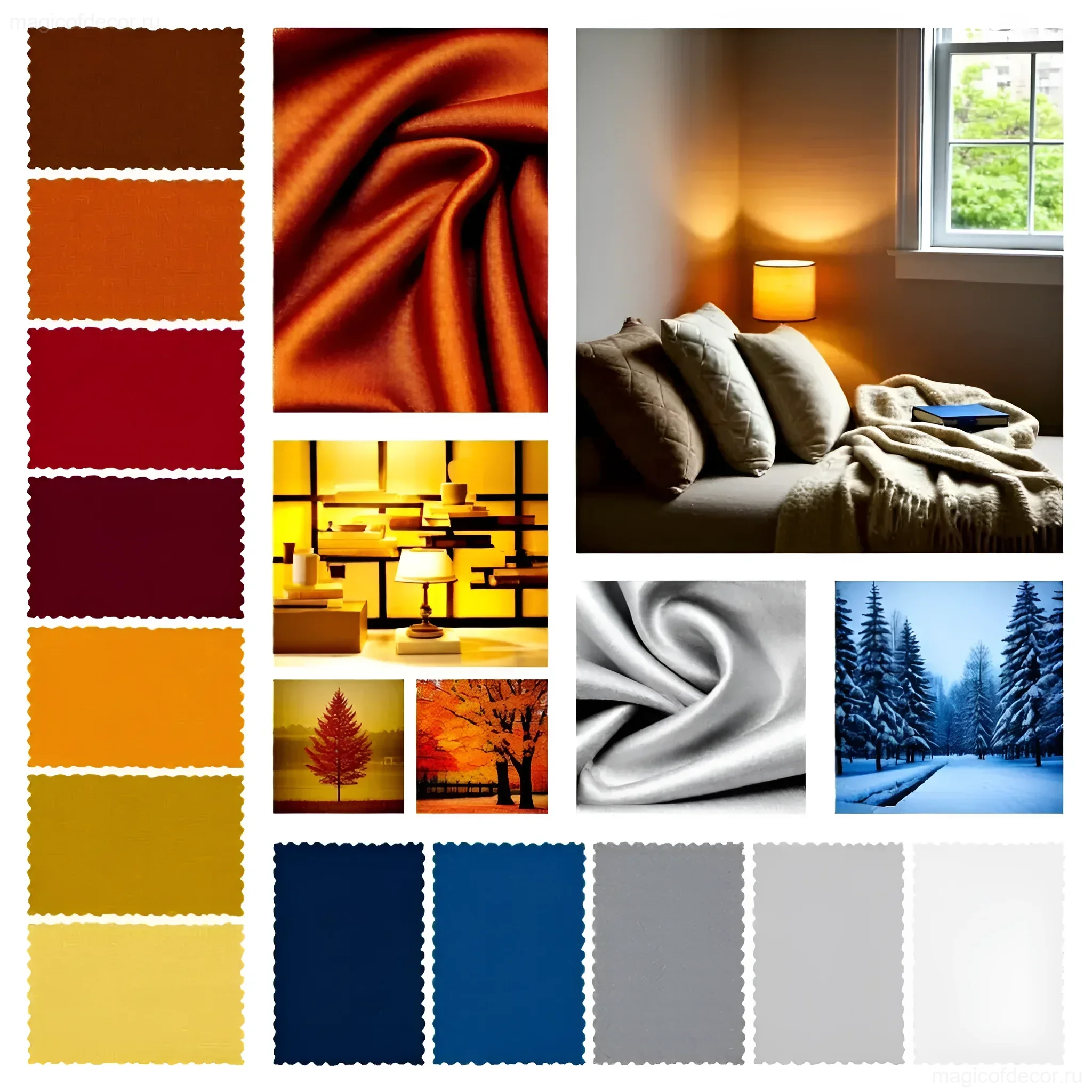
- Palette: Deep earthy tones—ochre, terracotta, burgundy, mustard, dark green, rust, and cinnamon.
- Themes: Classic still lifes with pumpkins or fruits, forest landscapes in fog, textured abstracts mimicking wool or tree bark, vintage maps, and illustrations.
- DIY Idea: Print old engravings or illustrations from public domain sources in the Dark Academia style. Frame them in dark wooden frames (you can paint old frames with stain).
Winter: Peace and Radiance
Winter decor, especially after the holidays, should be calming yet evoke a sense of purity and light.
- Palette: Cool, pure shades—white, silver, deep gray, cool blue, champagne. Add metallic accents (gold/silver) for sparkle.
- Themes: Minimalist winter landscapes, graphics, abstractions with snowflakes or ice, mountain imagery, animal engravings, Scandinavian patterns.
- Tip: If you don’t want to remove your favorite year-round posters, simply change their matting from white to dark blue or silver for winter.
Materials and Tools: What Do We Need for Quick Decor Changes?
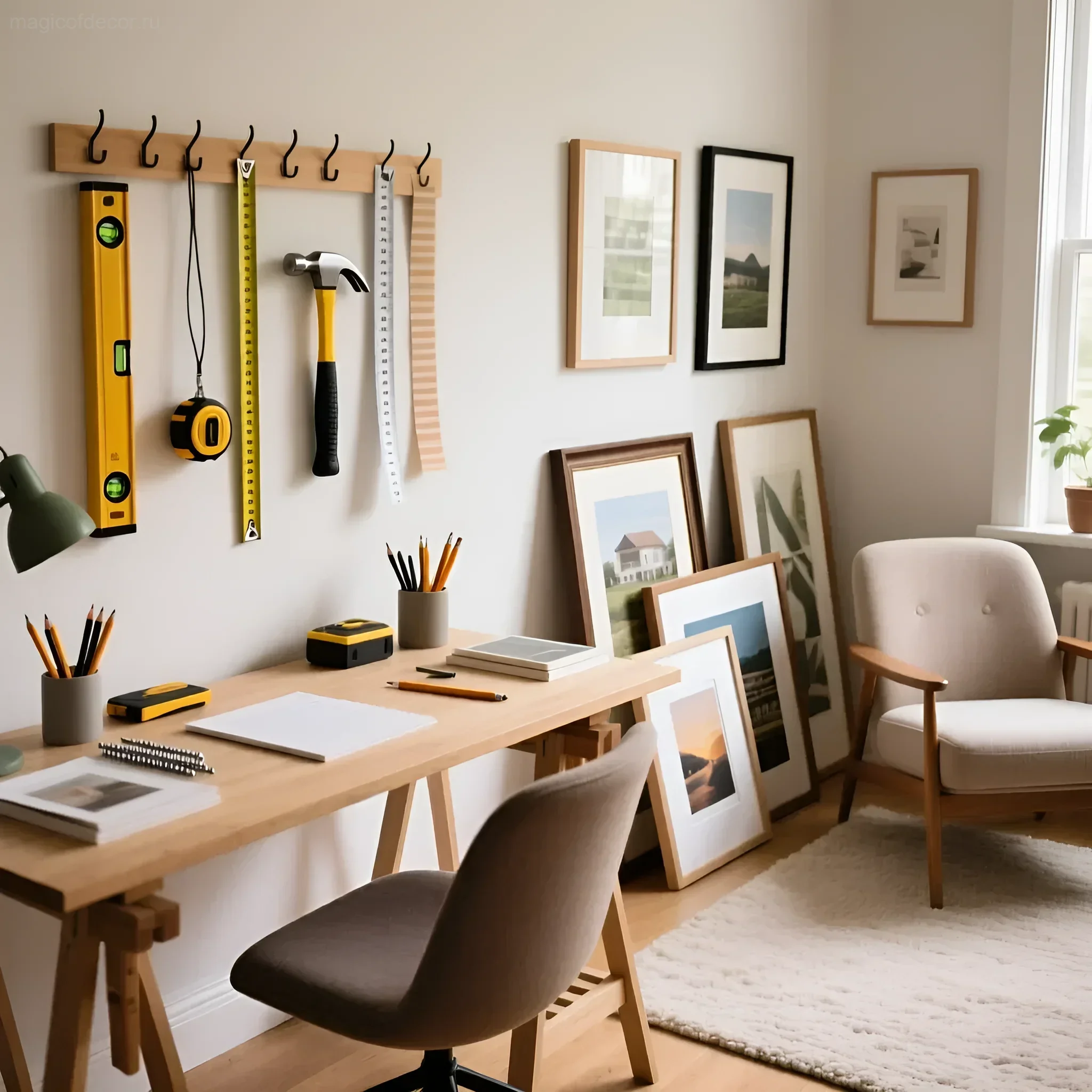
The secret to successful seasonal rotation is a system that allows you to change the content, not the entire structure. Our goal: minimize drilling and simplify the process as much as possible.
1. Universal Frames
Invest in a set of identical frames (e.g., 30×40 cm or A3) in neutral colors—white, black, or natural wood. The key is that they have a convenient backing mechanism that opens easily without tools.
2. Gallery Wall System
For quick composition changes, a “Gallery Wall” mounted on special systems is ideal:
- Command Hooks (or similar): Perfect for lightweight posters. They leave no marks and allow you to easily reposition a frame if you decide to change the composition.
- Rail Systems: If you have paintings you frequently change (e.g., above a sofa), install a decorative rail. Paintings are hung on wires and can be easily moved horizontally and vertically.
3. DIY Solutions for Quick Changes
These solutions look stylish and allow you to change posters in literally seconds:
- Clipboards (Plates): Buy wooden or metal clipboard plates. Hang them on the wall and simply attach the new poster on top. This gives the interior a bohemian, effortlessly chic look.
- Magnetic Hangers: Two wooden strips with built-in magnets that clamp the poster from the top and bottom. Posters can be changed instantly without needing to unpack the frame.
- Using Washi Tape: For lightweight prints and postcards, you can use decorative paper tape. It doesn’t damage walls and allows for a temporary but very cozy composition.
Step-by-Step Guide: Changing Pictures Easily and Quickly!
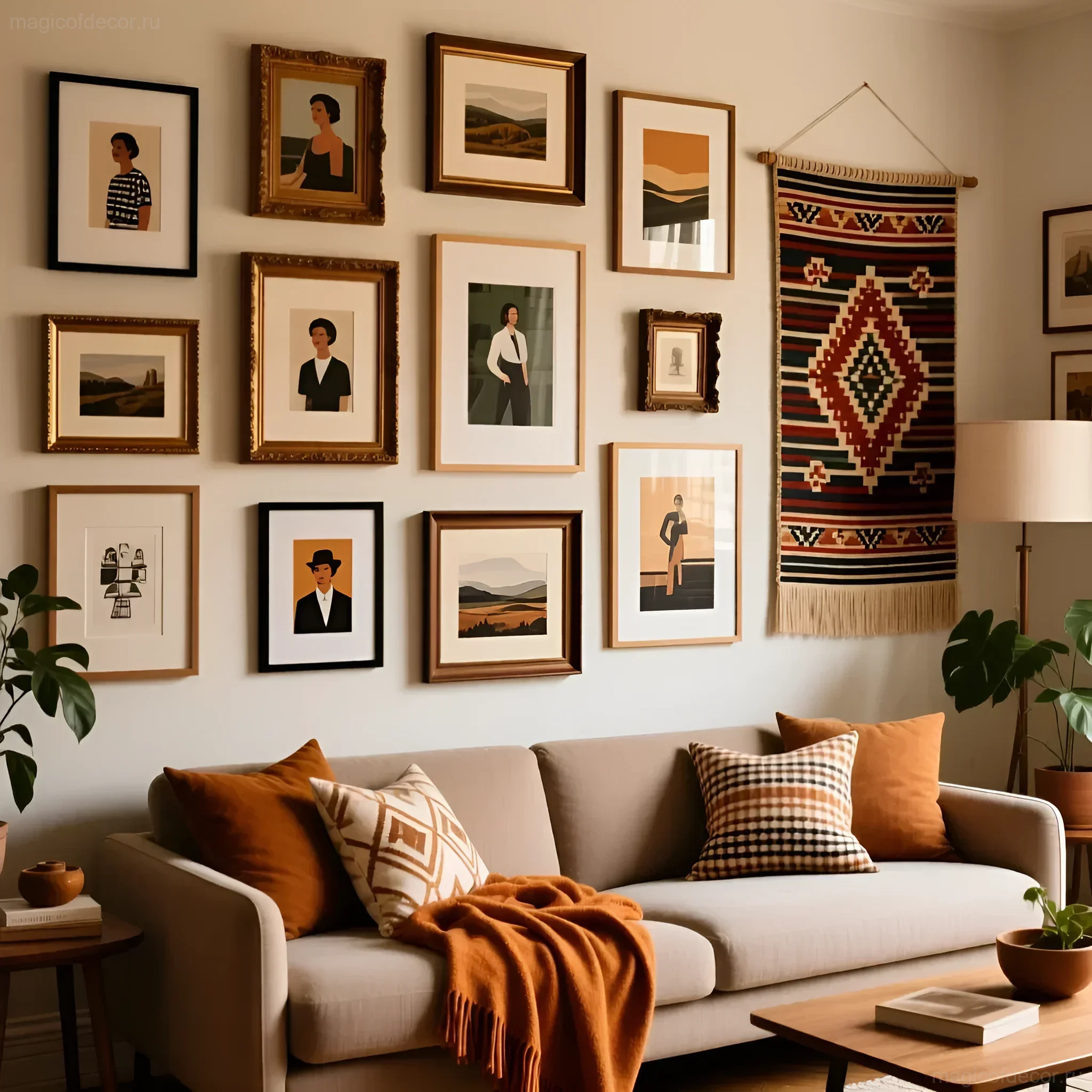
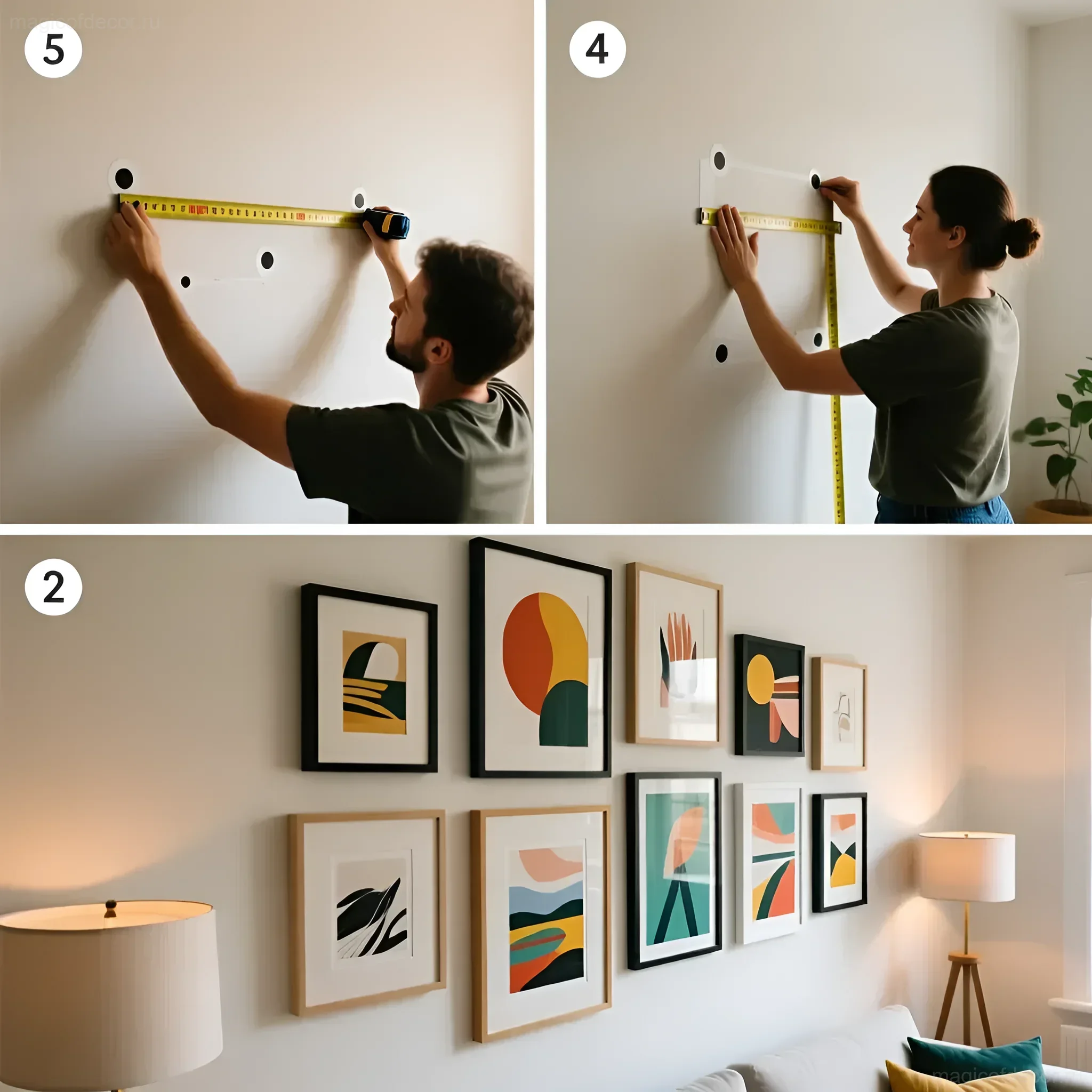
Let’s break down the seasonal transformation process using a gallery wall of six frames as an example.
Preparation: Creating a “Seasonal Folder”
Before the season begins (e.g., at the end of February for spring), gather all new posters and prints. If you’re printing yourself, ensure the paper is suitable (matte photo paper 200-250 g/m² is ideal). Place them in a folder labeled “Spring 2024.”