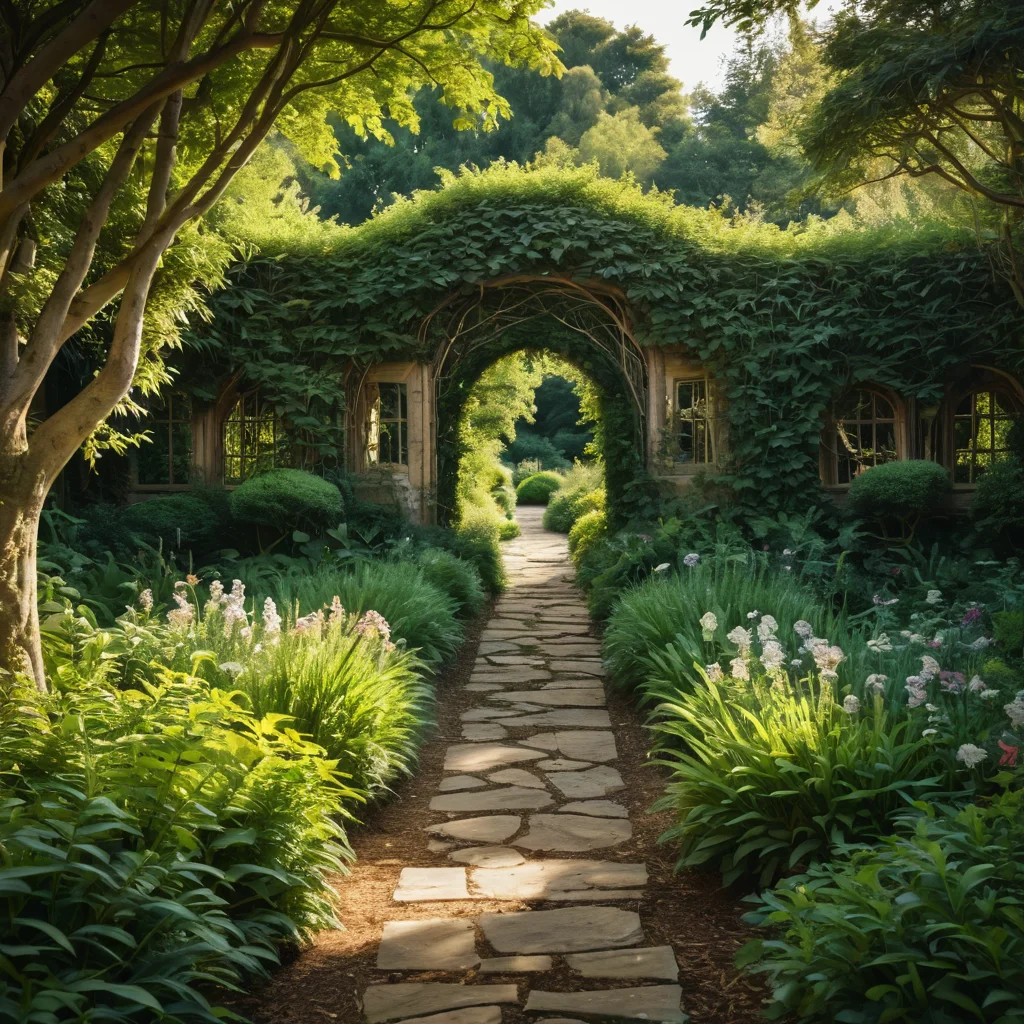
I remember how, as children, my friends and I loved playing hide-and-seek in the dense raspberry bushes at my grandmother’s dacha. The sense of mystery, the slight thrill of the unknown of where the next path would lead, and the joy of an unexpected discovery – all of this created a unique atmosphere of adventure. What if you could bring this magic to your own plot by creating a real living maze? It’s not just a trendy landscape design element, but an opportunity to bring a special magic to your garden, a place for games, solitude, and reflection. Your garden can become not just beautiful, but also an interactive space full of surprises and hidden corners.
Why Create a Living Maze in Your Garden: Ideas for Inspiration
Have you ever wondered why mazes are so captivating? The secret lies in the combination of simplicity and complexity, order and mystery. A living maze in your garden is more than just a decorative element. It is:
- A Space for Games and Adventures: An ideal place for children’s games, quests, or simply a fun time with friends. Imagine how great it would be to organize treasure hunts or hide-and-seek here!
- A Zone for Solitude and Relaxation: Inside the maze, you can create a secluded corner for reading, meditation, or simply a peaceful escape from the hustle and bustle. It’s your personal oasis of tranquility amidst the greenery.
- An Element of Surprise and Intrigue: Peek around the next corner – what’s there? Perhaps a hidden bench, a beautiful vase of flowers, or simply a new, unexpected view of your garden.
- Improved Navigation and Zoning: A maze can serve not only for entertainment but also for more logical division of space into functional zones. For example, it can lead from the front part of the garden to the relaxation area or the vegetable patch.
- Development of Creativity and Imagination: Creating a maze is a creative process, and being in it stimulates the imagination. It can be a source of inspiration for poets, artists, or simply dreamers.
- Aesthetic Appeal: A well-maintained living maze looks incredibly impressive and adds a special sophistication and structure to the plot. It’s a true work of art created by nature and your own hands.
Don’t be afraid to experiment! A maze can be both strict and geometric, or more free and natural. The main thing is that it brings you joy and matches your vision of an ideal garden.
Types of Living Mazes: From Classic to Modern
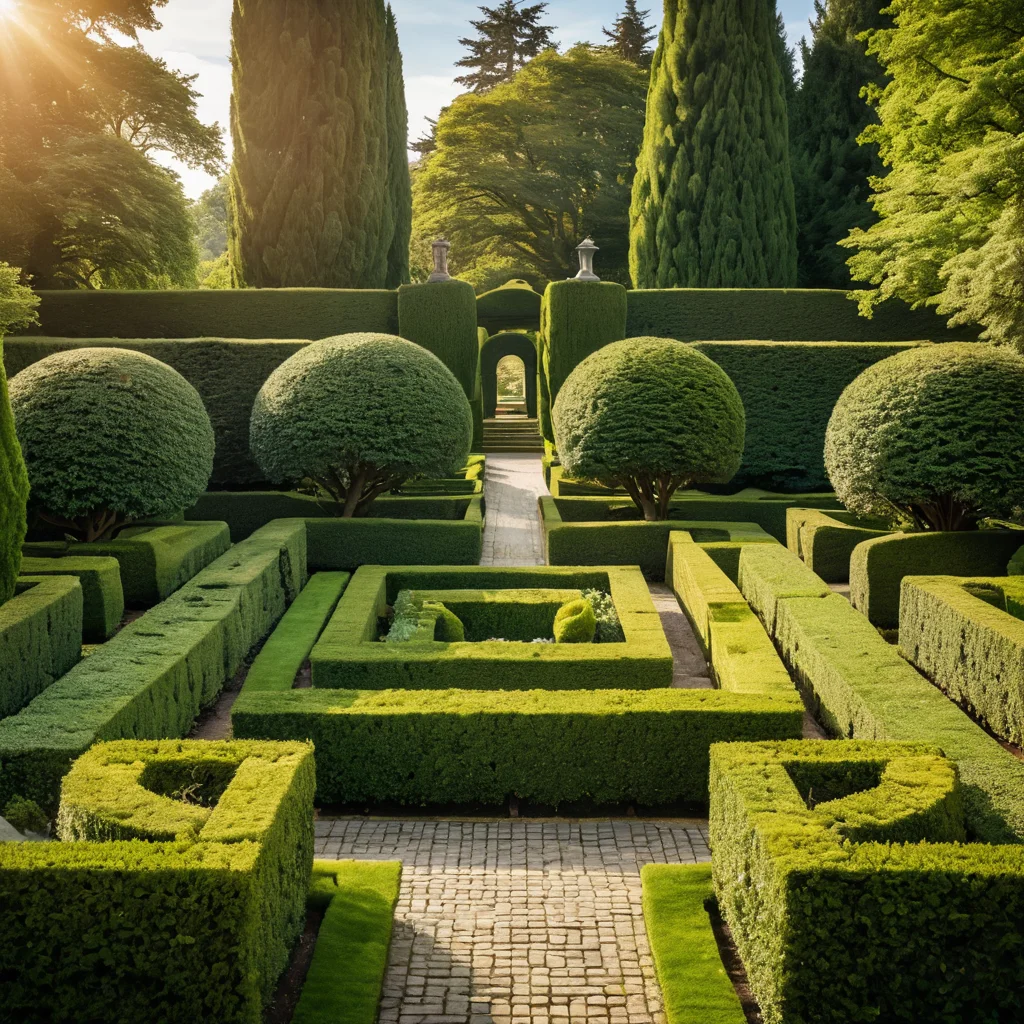
The world of living mazes is surprisingly diverse. The choice of shape and style depends on your preferences, the size of the plot, and the overall concept of your garden. Let me tell you about the most popular options:
- Classic (Greek) Maze: This is a unicursal maze, having only one entrance and one exit, leading directly to the center. It has no forks or dead ends; it rather symbolizes the path to a goal, a meditative journey. An excellent option for those seeking peace and disliking complexity. Such mazes are often made from low borders or flowers, but hedges also work well.
- Multicursal Maze: This is where the real adventure begins! These are mazes with many intersections, forks, and dead ends, as we are used to seeing in movies. The goal is to find the exit or reach the center, overcoming all obstacles. They require taller and denser hedges to create.
- Serpentine (Spiral) Maze: This type of maze is a winding path that gradually approaches the central point. It’s simpler to implement than a multicursal maze but no less engaging. It’s great for small plots.
- Themed Maze: Here you can let your imagination run wild! A maze in the shape of a star, an animal, a letter, or even an abstract figure. The main thing is that the chosen shape harmoniously fits into the overall garden style.
- Multi-level Maze: For those who want to create something truly unique. You can use plants of different heights to create an effect of volume and layering. For example, low shrubs on the outer perimeter and taller ones closer to the center.
- “Green Corridor”: This is the simplest option, which can be called a maze with a stretch. Just a few rows of plants creating a straight or slightly curved corridor. It’s great for beginners and for decorating long alleys.
When choosing the type of maze, consider who it is primarily intended for: children, quiet walks, or fun games. This will help you decide on the level of complexity and size.
Choosing Plants for a Garden Maze: The Best Options
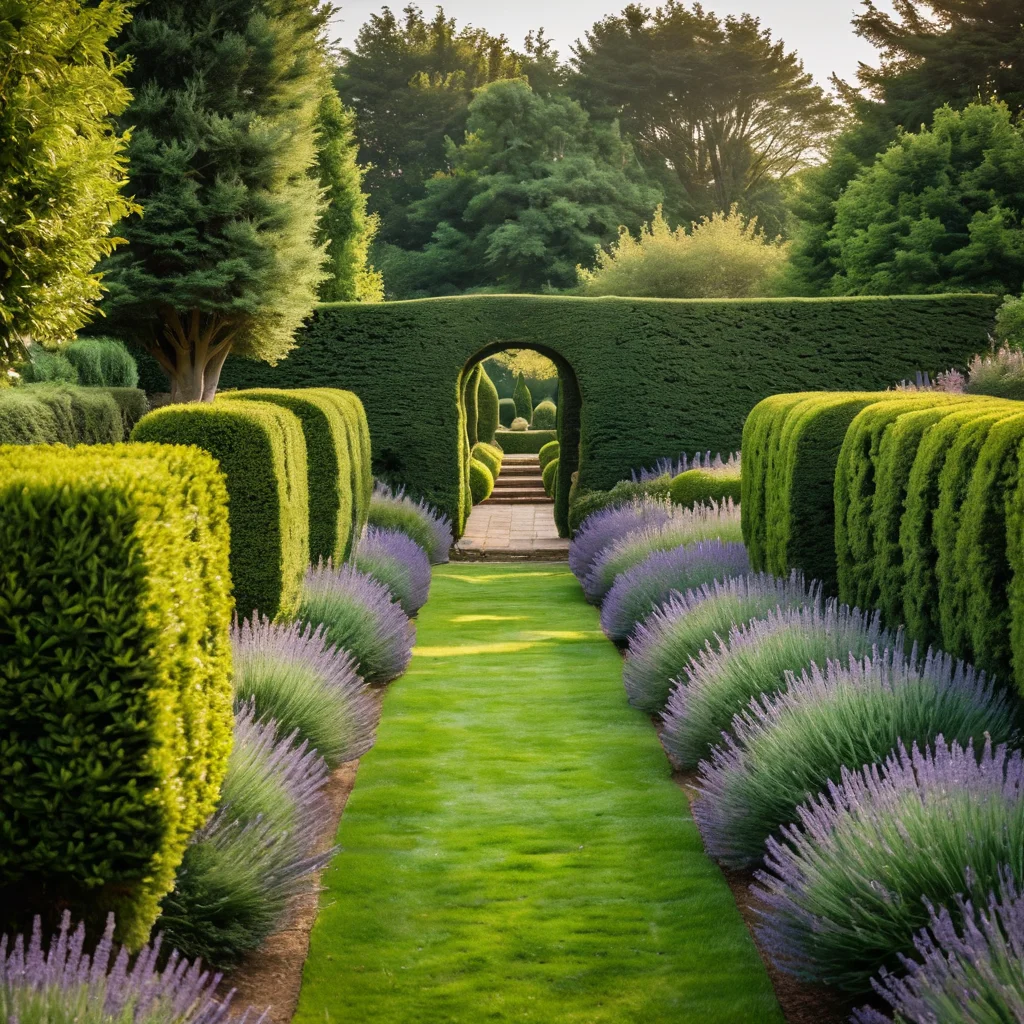
The heart of any living maze is, of course, the plants. Their choice determines not only the appearance but also the longevity and ease of care. I always advise choosing plants that:
- Tolerate pruning well: This is the key! The plants should be dense and easy to shape.
- Grow quickly: So that your maze takes on the desired shape as soon as possible.
- Are frost-resistant: If you live in a region with cold winters.
- Are unpretentious: So that caring for the maze doesn’t turn into hard labor.
So, which plants are best suited?
- Thuja: Perhaps the most popular choice. Western thuja (‘Smaragd’, ‘Brabant’) prunes well, forms a dense green wall, overwinters well, and is relatively unpretentious. Believe my experience, thuja is a win-win option for creating classic mazes.
- Juniper: Especially columnar varieties. Junipers create a looser but very decorative hedge. Some varieties have beautiful bluish needles. They require a sunny spot and good drainage.
- Cotoneaster: An excellent choice for low mazes and borders. Shiny cotoneaster and Dammer’s cotoneaster form dense, green walls, and in autumn, they delight with bright red berries. They prune easily and grow quickly.
- Physocarpus: If you want to add color! Ninebark (Physocarpus opulifolius) (‘Diablo’, ‘Lemon Dream’) has decorative leaves in various shades – from purple to golden. It prunes easily, but it’s important to remember that it retains its bright color best in the sun.
- Spirea: There are many varieties of spirea with different bush shapes and leaf colors. Many of them tolerate pruning well and create voluminous, fluffy hedges.
- Japanese Barberry: Another option for a colorful maze. Its varieties with purple, red, or yellow leaves look very impressive. It’s important to remember that barberry is thorny, so be careful when pruning and walking.
- Lavender: For creating an aromatic and very beautiful maze in a Mediterranean style. Lavender requires a sunny spot, well-drained soil, and regular pruning after flowering.
- Yew: An evergreen tree that is ideal for creating strict, classic mazes. Yew grows slowly but is very long-lived and prunes excellently. However, it’s worth remembering that all parts of the yew are poisonous.
Important! If you are planning a multicursal maze, choose plants that can grow tall and dense enough. For low borders, cotoneaster, boxwood (although it is more capricious and prone to diseases), and low-growing spirea varieties are suitable.
Planning and Marking the Plot for the Maze: First Steps
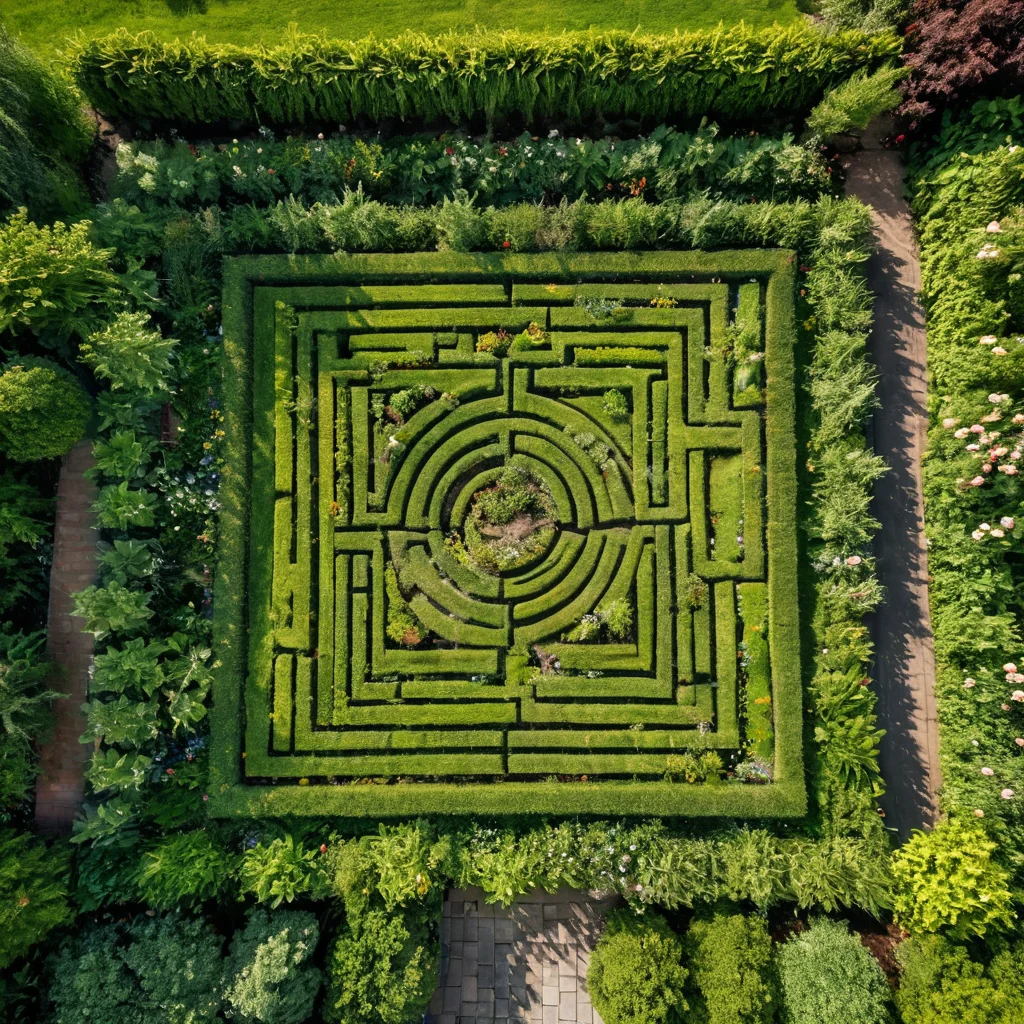
Before you grab a shovel and secateurs, you need to carefully plan your future creation. This stage is the key to the success of the entire undertaking. Here’s what to consider:
- Decide on the shape and size: Think about what kind of maze you want – classic, modern, complex, or simple. Consider the size of your plot. For a first attempt, it might be worth choosing a more compact option.
- Choose a location: It’s best to place the maze in an open, well-lit area. Avoid shady spots, especially if you plan to use light-loving plants. Also, make sure the location is not too windy.
- Plan the entrance and exit: They should be convenient and wide enough. If the maze is intended for children, the entrance should be attractive and clear.
- Determine the width of the paths: The paths should be wide enough to walk comfortably, and if necessary, to drive a wheelbarrow or lawnmower. Usually, the optimal width is from 60 cm to 1 meter.
- Consider the height of the hedge: The complexity of the maze and the degree of privacy inside depend on the height. For children’s games, low hedges (up to 1-1.2 m) are suitable; for adults, up to 1.5-2 meters.
- Make a drawing: Draw a plan of your plot and schematically depict the future maze. Mark the location of the paths, the entrance, the exit, and, if planned, the central area. This will help visualize the result and avoid mistakes during marking.
Marking the plot:
- Use stakes and string: After you have decided on the shape, mark the contours of the maze on the ground using stakes driven at the perimeter and corners, and string stretched between them.
- Mark the paths: Then, using the same principle, mark the boundaries of the future paths. You can use sand, lime, or bright string for this.
- Check the geometry: Make sure all corners are right angles (if necessary) and the lines are straight. Use a tape measure and a builder’s square for accuracy.
Don’t rush this stage. Thorough planning and accurate marking are 70% of the success of your future living maze.
How to Plant a Living Maze: Step-by-Step Instructions
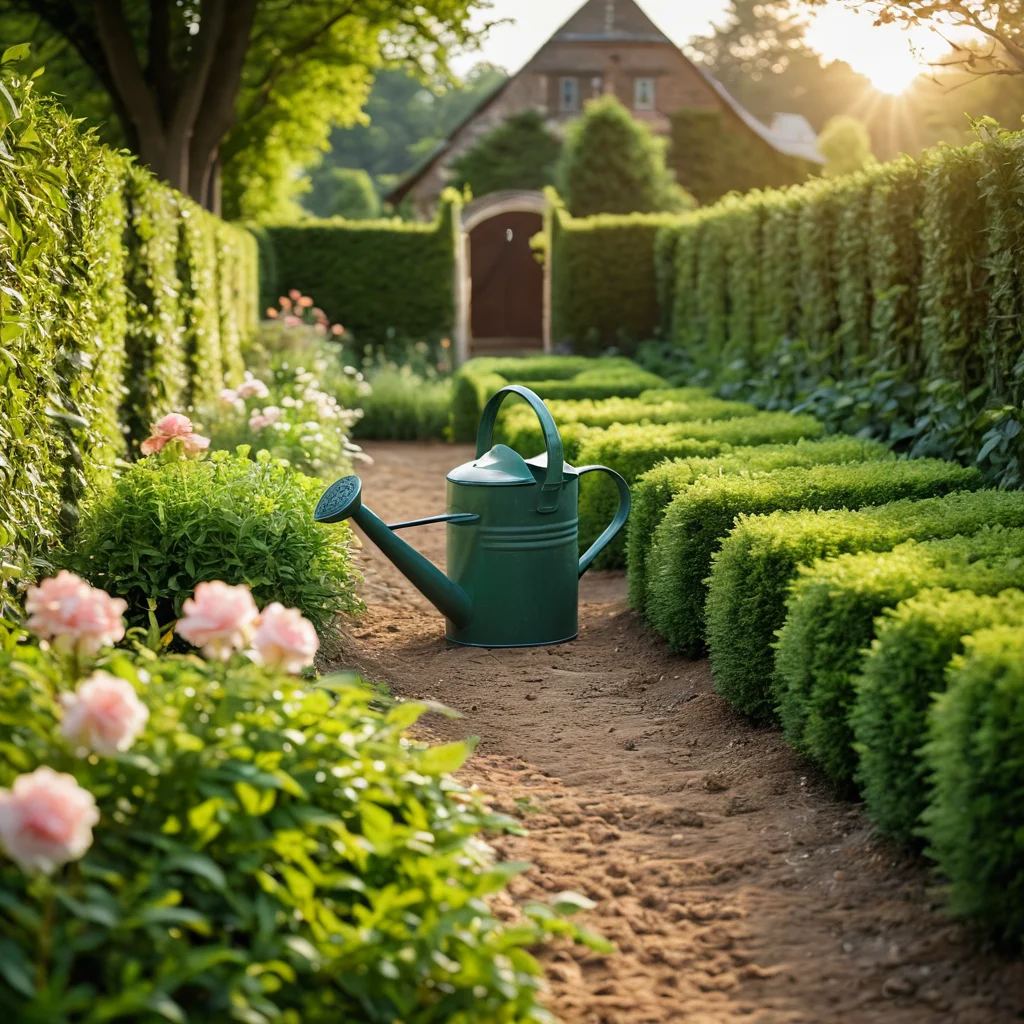
When the plan is ready and the plot is marked, it’s time to get to the most interesting part – planting! Here’s a detailed guide to help you with this task:
- Soil preparation: Before planting, thoroughly dig the soil where the hedge will be. Remove all weeds, stones, and other debris. If the soil is poor, enrich it with compost or humus. For most conifers, such as thuja or juniper, good drainage is important.
- Seedling preparation: If you are using seedlings with an open root system, soak their roots in water for a few hours before planting. For container-grown seedlings, gently remove them from the pot, trying not to damage the root ball.
- Planting:
- Create planting trenches or holes: The depth and width of the trench or hole should correspond to the size of the seedling’s root system. For most conifers, seedlings are planted at the same depth at which they grew in the nursery or container.
- Place the seedlings: Space the seedlings so that they will eventually grow together to form a dense hedge. For most fast-growing shrubs, this distance is 30-50 cm; for slower-growing ones, it’s 20-30 cm.
- Fill with soil: Carefully fill the roots with soil, lightly tamping it down to avoid air pockets.
- Watering: Water the newly planted plants generously. This will help the soil settle and ensure good contact between the roots and the soil.
- Mulching: After watering, mulch the soil around the plants. This will help retain moisture, prevent weed growth, and protect the roots from temperature fluctuations. You can use bark, wood chips, compost, or peat as mulch.
- Initial pruning (if necessary): Some gardeners recommend a light shaping prune immediately after planting to stimulate branching. However, if you are using young, unestablished seedlings, it’s better to wait a year for them to root well.
Tip from an experienced gardener: If you want your maze to grow faster, you can plant plants in two rows, slightly offsetting them from each other. This will create a denser and taller hedge in less time.
Shaping and Pruning Hedges: Creating Clear Lines
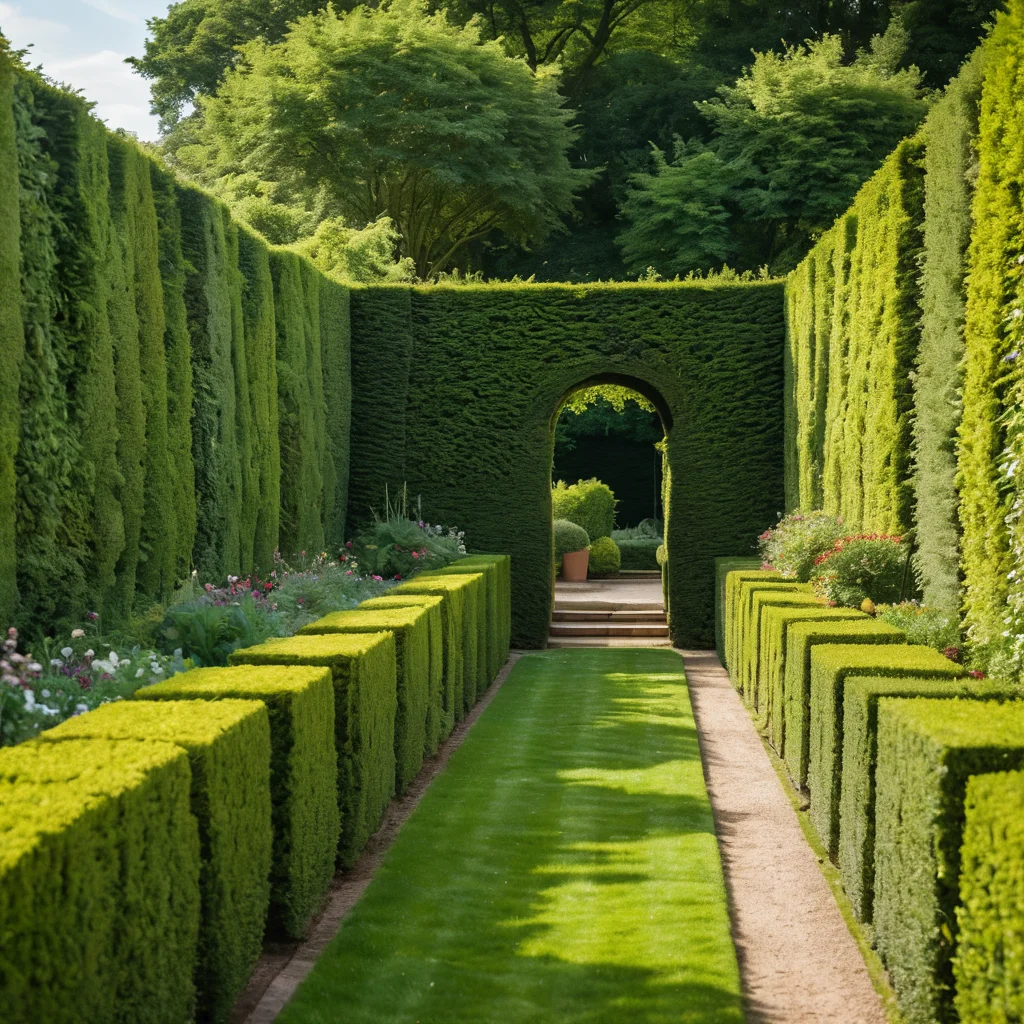
Pruning is the main tool in creating a perfect living maze. It gives it shape, clear lines, and a neat appearance. Don’t be afraid of this process; it’s more creative than difficult.
- When to start pruning? The first pruning is usually done in the second year after planting, when the plants have rooted well and started to grow actively.
- Pruning tools:
- Secateurs: Indispensable for removing individual branches, adjusting shape, and giving a neat finish.
- Garden shears: Suitable for finer work and adding small details.
- Hedge trimmer (electric or petrol): Your best helper for quick and even trimming of long sections of hedge.
- Pruning rules:
- Prune in dry weather: Wet branches prune poorly and can become a breeding ground for diseases.
- Prune from bottom to top: This will help avoid “steps” and ensure a more even cut.
- Strive for straight lines: Use a taut string or special templates to achieve perfect straightness.
- The sides of the hedge should be slightly sloped (trapezoidal shape): This will ensure better illumination of the lower branches and prevent them from becoming bare. The top should be narrower than the bottom.
- Regularity is the key to success: For most plants, it’s optimal to prune 2-3 times per season. The first is in spring, before active growth begins; the second is in mid-summer; and, if necessary, a third in late summer.
- Shaping the paths: It’s important to ensure that the paths remain clear and passable. Periodically trim the lower branches of the hedge that may obstruct movement.
- Pruning in the center of the maze: If you have a central area, pay attention to it as well. You can create a decorative composition there, prune shrubs into balls or other shapes.
Life hack: Before the first pruning, you can do a “rough” prune to set the basic shape, and then more carefully refine the lines with secateurs. Don’t be afraid to experiment! Even if you make a small mistake, most plants can recover their shape over time.
Maze Care: Watering, Fertilizing, and Pest Protection
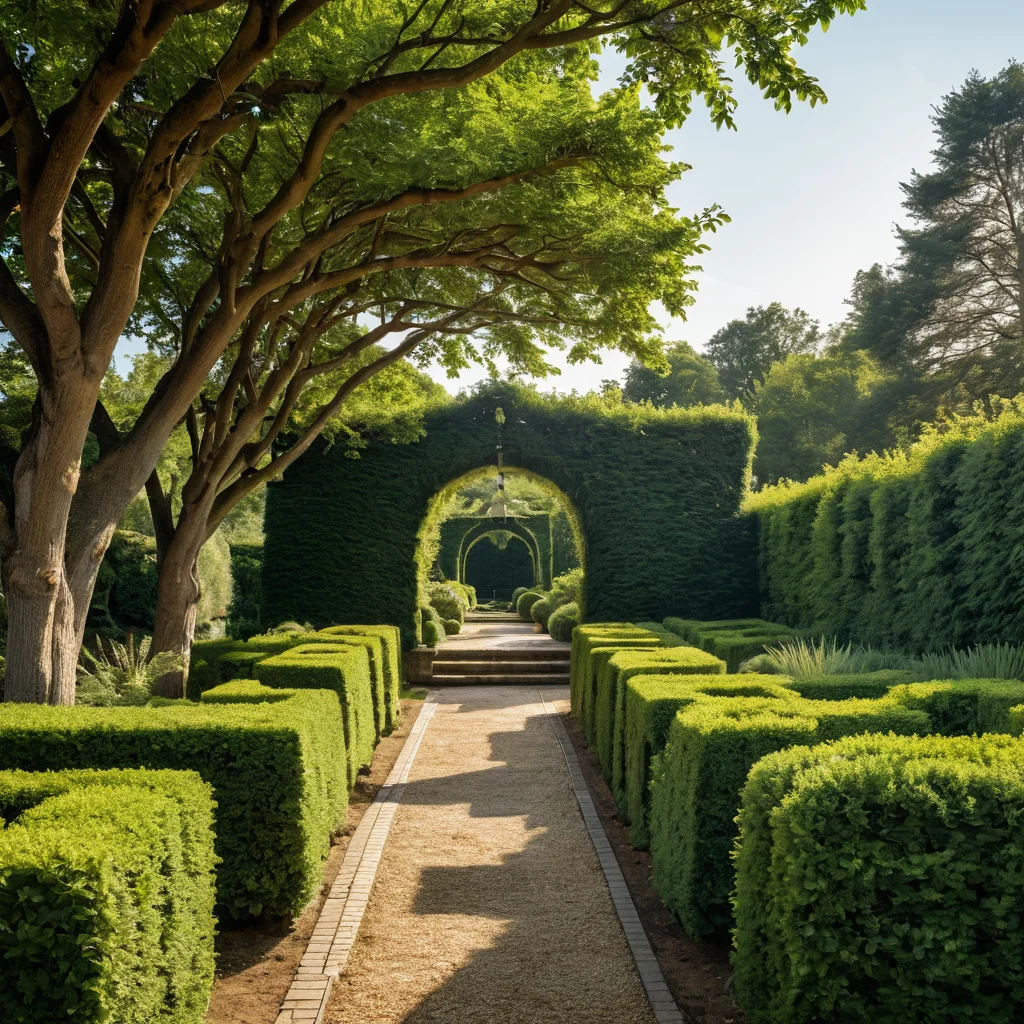
Creating a maze is only half the battle. For it to delight you with its beauty and density for many years, it needs regular and proper care. Believe me, it’s not as difficult as it might seem at first glance.
- Watering:
- Young plants: In the first year after planting, water the plants regularly, especially in hot and dry weather. Ensure the soil is well-moistened.
- Mature plants: Mature, established plants require watering only during periods of prolonged drought. Avoid both drying out and waterlogging the soil.
- Watering methods: It’s best to water plants at the root, avoiding getting water on the foliage, especially in sunny weather, to prevent burns. Using drip irrigation systems is an ideal option for mazes.
- Fertilizing:
- Spring: In early spring, as soon as the snow melts, apply complex mineral fertilizers for conifers or ornamental shrubs. This will help the plants wake up and start active growth.
- Summer: In mid-summer, you can fertilize again, especially if the plants have slowed their growth or look weakened. Use fertilizers with a higher nitrogen content to stimulate green mass growth.
- Autumn: In autumn, a month before the frost, apply phosphorus-potassium fertilizers. They will help the plants prepare for winter and strengthen their root system.
- Pest and disease control:
- Regular inspection: Periodically inspect plants for spots, mold, cobwebs, or other signs of infestation.
- Prevention: Maintain optimal planting density to ensure good air circulation. Remove dry and damaged branches, and prevent crown thickening.
- Pest control: If pests are detected (e.g., aphids, spider mites), use appropriate insecticides or folk remedies (soapy water, garlic infusion).
- Disease control: If fungal diseases appear (e.g., rust, powdery mildew), use fungicides. It’s important to correctly identify the disease and choose the right preparation.
- Weeding: Regularly weed around the hedge, especially in the first few years after planting. Mulching will significantly simplify this task.
- Wintering: Young plants, especially conifers, may need protection from frost and bright spring sun in their first winter. Use spruce branches or special covering material.
Remember that caring for a living maze is a continuation of the creative process. By observing the plants, you will learn to understand their needs and create a truly harmonious space.
Common Mistakes When Creating and Caring for a Living Maze
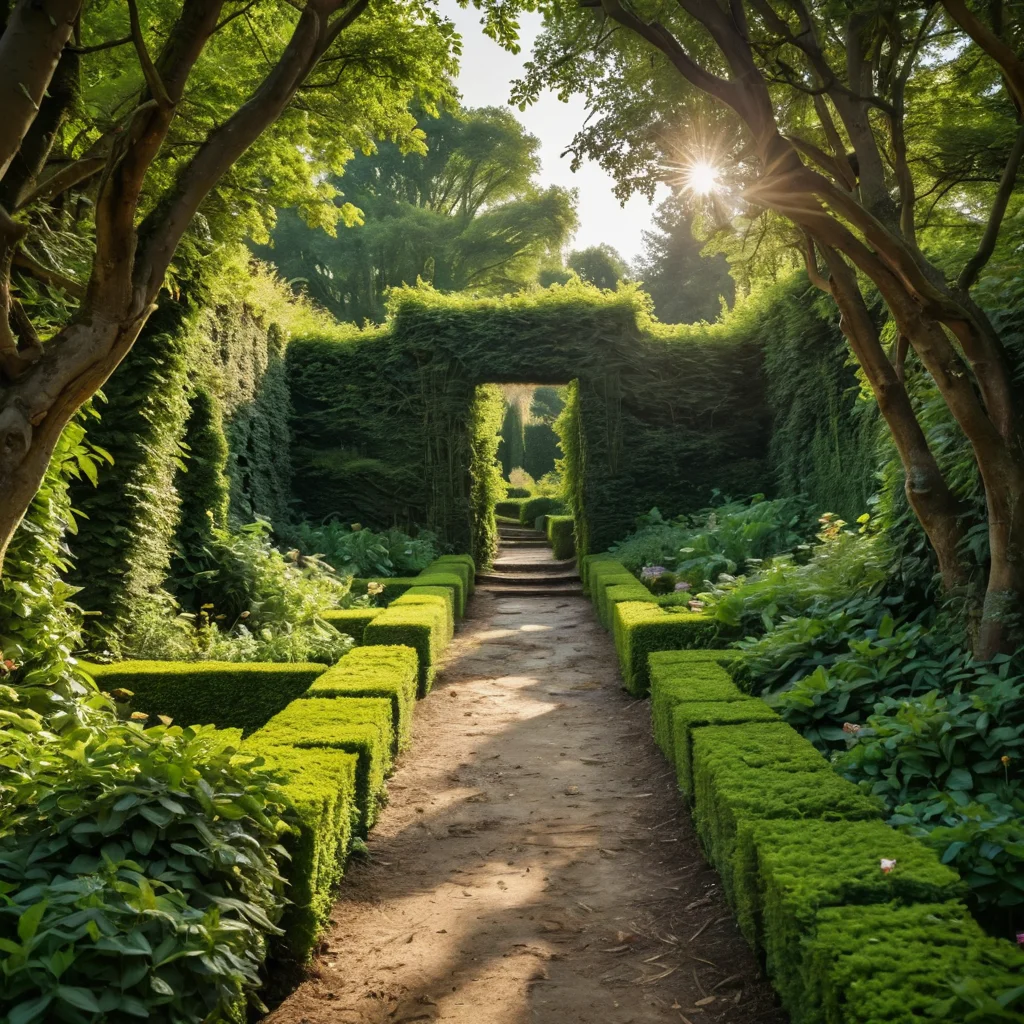
Even the most experienced gardeners make mistakes, and when creating something new like a living maze, errors are almost inevitable. But knowledge is power! Let’s look at the most common pitfalls so you can avoid them:
- Incorrect plant selection:
- Plants chosen that tolerate pruning poorly: As a result, the hedge becomes loose, untidy, and difficult to shape.
- Too slow-growing species used: You’ll have to wait many years for the maze to reach the desired size.
- Light-loving plants chosen for a shady spot: They will stretch, get sick, and lose their decorative appeal.
- Incorrect planning:
- Paths that are too narrow: They are uncomfortable to walk on, and it’s impossible to pass with a stroller or wheelbarrow.
- Hedge that is too low for a multicursal maze: This deprives it of intrigue and complicates orientation.
- Ignoring site conditions: For example, planting moisture-loving plants in a dry, sunny spot or vice versa.
- Planting errors:
- Too much space between plants: The hedge will take a long time to close, and gaps may appear.
- Planting too shallow or too deep: This negatively affects root development.
- Insufficient soil compaction after planting: Leads to air pockets and poor rooting.
- Incorrect pruning:
- Pruning too early or too late: Can harm young plants or weaken them.
- Pruning “by the ruler” without considering the natural growth habit: Plants may start to become bare at the bottom.
- Using dull tools: Torn edges heal poorly and open the door to infections.
- Insufficient care:
- Infrequent watering during dry periods: Especially critical for young plants.
- Ignoring fertilization: Plants weaken, lose their decorative appeal.
- Lack of pest and disease control: Problems can spread quickly and destroy your work.
- Patience: The biggest mistake is a lack of patience! A living maze is not an instant result, but a process that requires time and attention. Don’t be discouraged if it’s not perfect from day one. Enjoy the process of creating and growing it!
Creating a living maze is an exciting adventure that will bring a lot of joy to you and your loved ones. Follow these tips, put your heart into it, and your garden will turn into a true work of art, full of mystery and magic.