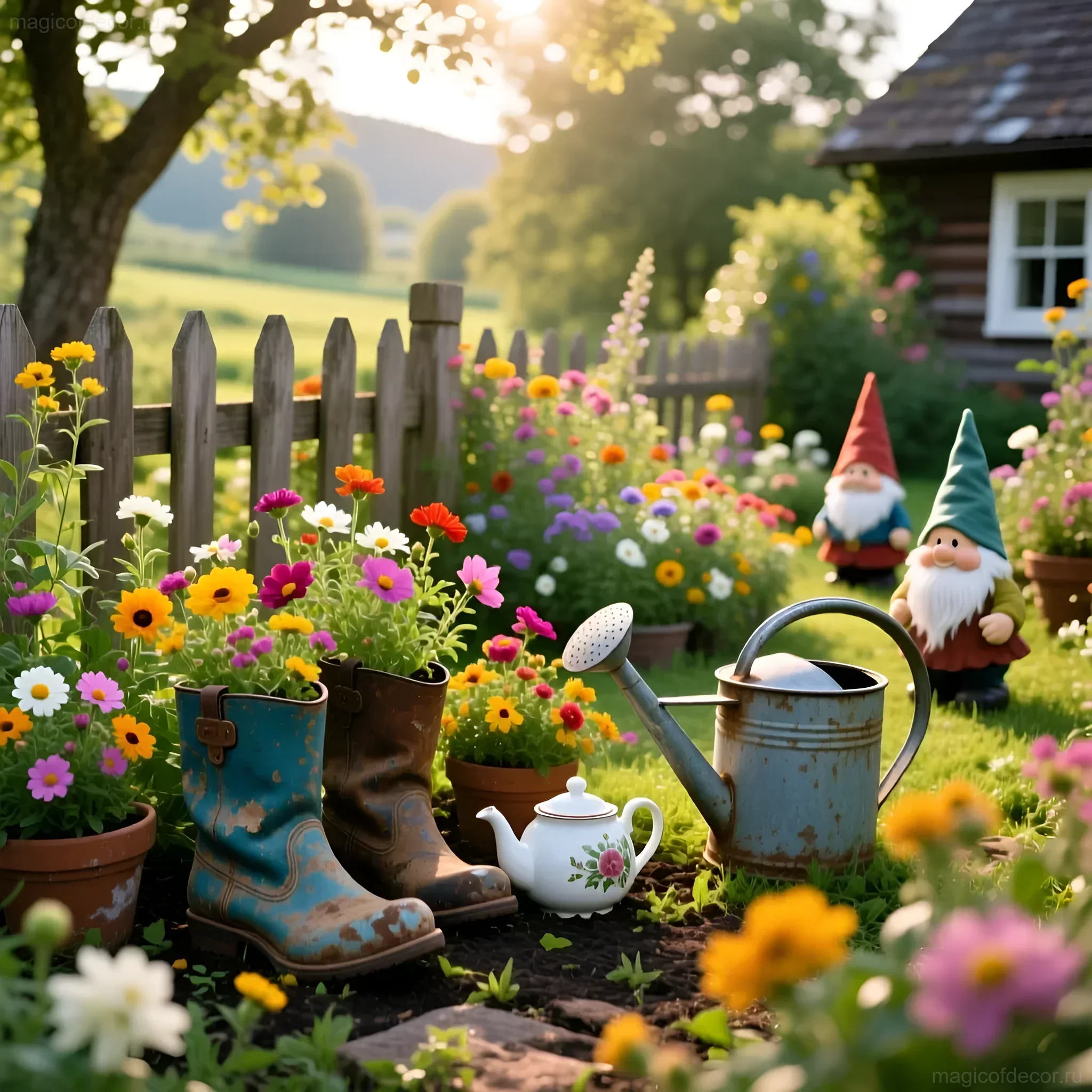
Dear friends, welcome to our cozy portal! If you are reading these lines, it means you, like me, believe in the magic of transformation. We will not be talking about complex construction work and expensive landscape design today. Our mission is to find beauty where it seems to be no longer present. We will work with soul and inspiration, using what others have long written off.
Remember those old rubber boots that have been an eyesore in the corner of the garage for a long time? Or that chipped enamel teapot that is no longer suitable for tea, but you feel sorry to throw away? Today they will become the main stars of your garden plot! We will give forgotten things a second, incredibly stylish life, turning them into unique art objects and mini-flowerbeds.
Inspiration: A Second Life for Old Things in the Garden
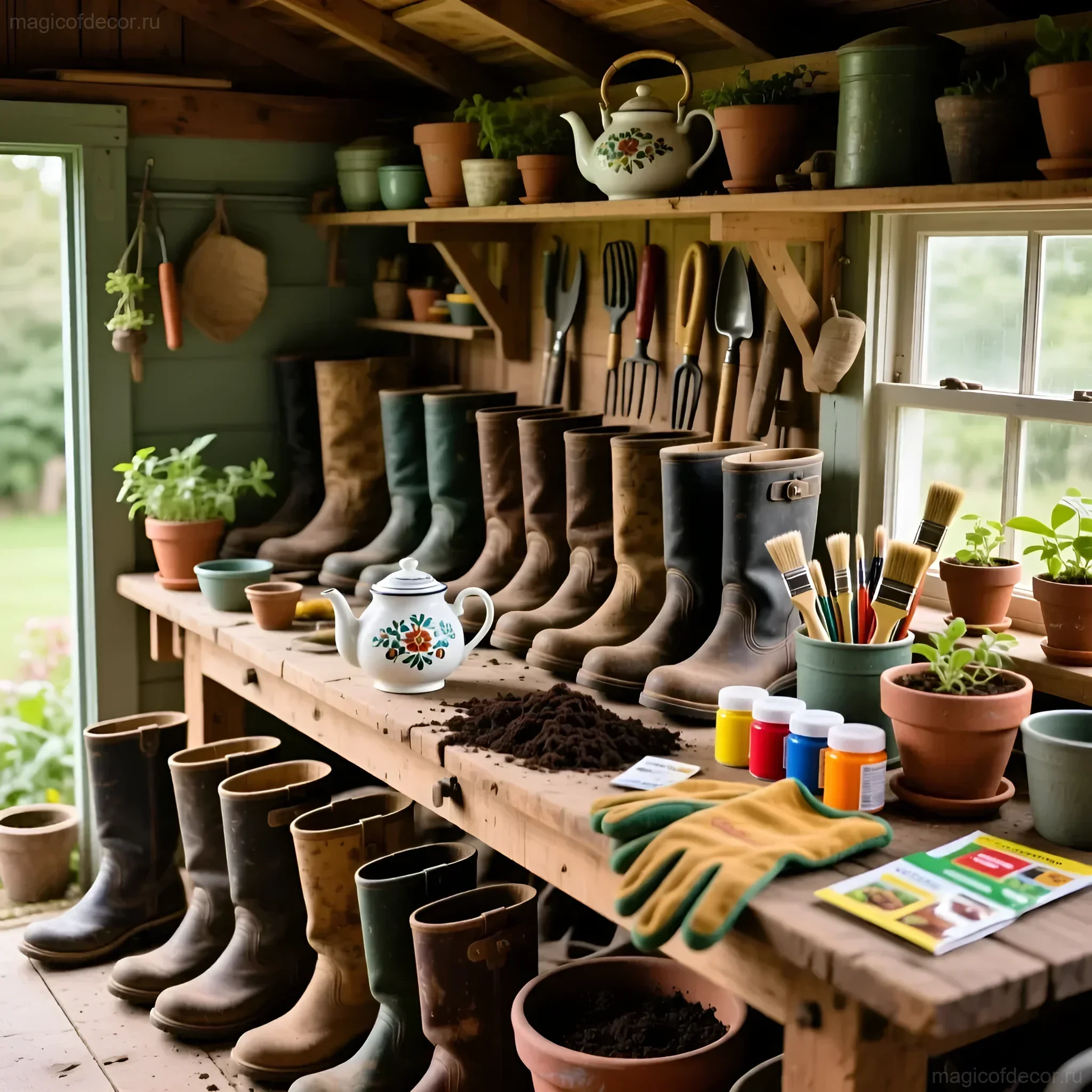
Why old shoes and dishes specifically? The answer is simple: they have a unique shape and texture that cannot be replicated by new garden pots. Each of these items carries its own story and adds character, warmth, and a touch of irony to your garden. This is not just decor, it’s a story that you are telling about your home.
Using such unexpected items as flower pots or decorative elements is a trend called upcycling. It is eco-friendly, budget-friendly, and incredibly creative. Moreover, it’s the perfect way to show your neighbors that you have a sense of humor and a refined taste for unusual things.
What old boots and teapots give us:
- Texture and Color: Worn leather, bright rubber, or old enamel create a perfect vintage contrast with delicate greenery and vibrant flowers.
- Mobility: You can easily move these mini-flowerbeds around the plot, changing the mood of the garden.
- Ideal Drainage: Making drainage holes in a rubber sole or the thin bottom of a teapot is much easier than in a ceramic pot.
- Surprise Effect: The garden stops being boring when a delicate petunia grows out of a brutal army boot!
Boots and Teapots: What We’ll Need for the Transformation

Before we begin the magic, let’s take stock. We need not just old things, but those that can withstand moisture, soil, and sunlight. Don’t worry, we’ll prepare them!
Old Boots: Selection and Preparation
The following types of footwear are best suited for garden beds:
- Rubber Boots (Wellingtons): The most durable option. They are already waterproof and ideal for creating vertical compositions.
- Leather Boots (hiking, army): Create a cool rustic look. They require additional treatment to protect against rot (more on that below).
- Sneakers and Trainers: Great for small succulents or cacti. Can quickly lose their shape if not treated with varnish.
Preparing the footwear:
- Thoroughly clean the shoes of dirt.
- Drainage is everything! Drill or cut several holes in the sole (for rubber boots, use a drill with a thin bit; for leather, use a thick nail). This is critically important to prevent root rot.
- If the boots are leather or fabric, treat them inside and out with a clear waterproof varnish or spray.
Teapots and Coffee Pots: Ideal Containers
Teapots can be metal (enamelled, aluminum) or ceramic. Ceramic looks more delicate but requires more careful handling, while metal is more resistant to garden adversities.
Features of teapot preparation:
- Drainage: If you have a metal teapot, drill several holes in the bottom. If it’s ceramic, be careful; it’s better to use a thick layer of expanded clay at the bottom to avoid cracking it.
- Rust: If the teapot is metal and rusty, lightly sand off the rust and cover it with an anti-corrosion primer before painting.
- Spout: The teapot’s spout is your main design feature! We will use it to create the effect of “pouring” greenery.
Step-by-Step Guide: Creating Flower Beds in Boots
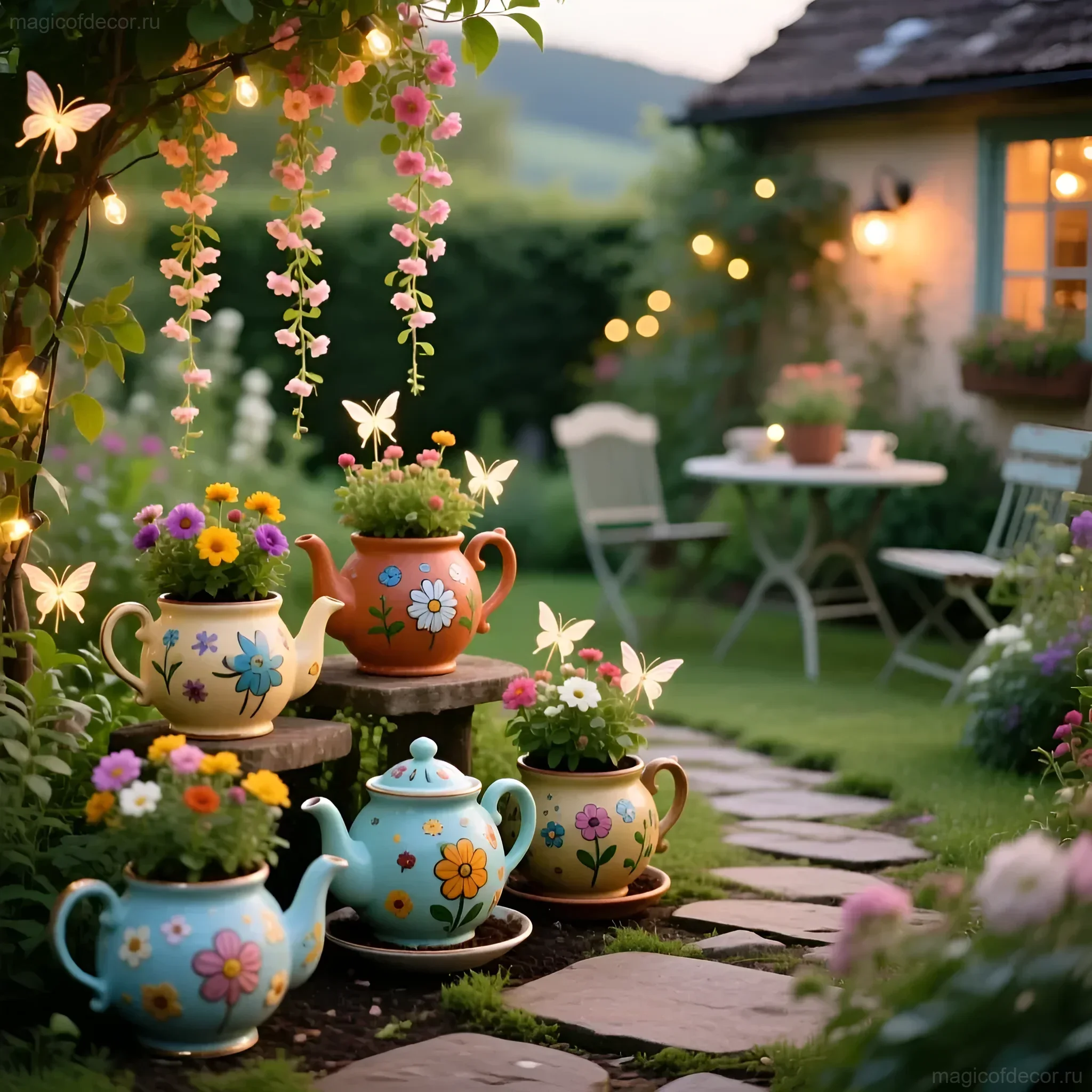
Let’s turn old shoes into a work of garden art. This is a simple and meditative process that will take you no more than an hour.
Step 1: Choosing Plants and Soil
For boots, especially if they are not tall, you need plants with shallow root systems and those that tolerate a limited amount of soil well.
Ideal candidates for “shoe” flowerbeds:
- For sunny spots: succulents (sedum, sempervivum), petunias (trailing), lobelia, alyssum.
- For shady spots: ivy, moss, ferns, impatiens.
Use a light, well-draining soil mix. Do not use heavy garden soil, as it will retain moisture for too long, leading to rot.
Step 2: Filling and Planting
- Drainage layer: Pour a layer of expanded clay, gravel, or broken pottery 2-3 cm thick at the bottom of the boot (directly over the holes). This will ensure excess water drainage.
- Soil: Fill the boot with soil, leaving 1-2 cm to the edge. Lightly compact.
- Planting: Carefully transplant the chosen plants. If you are using trailing petunias, try to position them so they cascade beautifully over the edge.
- Mulching: You can add a little moss or small gravel on top to retain moisture and give the composition a finished look.
Step 3: Placement and Composition
A single boot can look a bit sad. The secret to success is grouping.
- Steps: Arrange a row of boots of different sizes on old wooden steps or a ladder.
- Fence: Nail old boots to a fence or shed wall, creating a vertical gallery. This is an ideal solution for succulents.
- “Walking” Decor: Place boots in pairs, as if someone has just walked along the path.
Decorator’s tip: Don’t worry if the boots are slightly tilted. This gives them a lively feel, as if they are “resting” after a long walk.
Teapots as Art Objects: Ideas for Garden Decorating

A teapot is not just a pot. Thanks to its spout and handle, it has incredible potential for creating dynamic and whimsical compositions.
1. “Pouring” Flower Waterfall
This is perhaps the most popular and striking idea for a teapot. It creates the illusion that not water, but a stream of bright flowers is pouring from the spout.
How to do it:
- Securely mount the teapot at a height (e.g., on a tree branch or a special metal support). It should be tilted forward, as if it’s about to spill its contents.
- Plant trailing plants (e.g., dichondra, verbena, or ipomoea) inside the teapot.
- On the ground, directly under the spout, plant the same plants or create a “stream” of small stones painted blue.
- As the plants grow, they will hang from the spout, creating the impression of a continuous, frozen waterfall.
2. Tea Towers and Vertical Compositions
Old teapots, coffee pots, and even sugar bowls can be used to create vertical “tea towers.”
- Take a metal rod or rebar and drive it deep into the ground.
- Thread the teapots onto the rod, securing them with silicone glue or epoxy resin in a slightly tilted position.
- Each tier can be used for planting different flowers, creating a multi-level flowerbed.
3. Teapot Lamps
If the teapot is metal and has cut-out patterns (or you can make them with a thin drill), it turns into a magical garden lantern. Simply place a solar-powered LED string light inside. In the evening, light will shine through the openings, creating cozy shadows.
Budget Decor: How to Save on Materials

The essence of our project is maximum savings and creative use of existing resources. We don’t need to spend money on expensive materials, as all the most valuable things are already waiting for us!
Where to Find “Treasures”?
If your own supplies are not enough, here are a few places where you can find the perfect boots and teapots for pennies or even for free:
- Flea Markets and Garage Sales: The perfect place to find vintage enamel teapots that look a bit worn by life, which is exactly what we need.
- Second-hand Stores: Here you can find unusual rubber boots or old hiking shoes that are perfect for decor.
- Neighbors and Friends: Ask acquaintances who are decluttering. People are often willing to give away old but still sturdy shoes or dishes rather than throw them away.
- Your Own Attic/Garage: Conduct a thorough inventory. You’ll be surprised how much creative potential is hidden in your home.
Saving on Consumables
The biggest expenses can be related to paints and primers. Here’s how to reduce their cost:
- Use Sample Pots: In large hardware stores, they often sell small cans of tinted paint or trial volumes. This is more than enough for painting one or two teapots.
- Craft Acrylics: Instead of expensive facade paint, use regular craft acrylic paints (they are cheaper), but be sure to cover the finished decor with several layers of waterproof varnish.
- Free Drainage: Instead of buying expanded clay, use broken bricks, crushed stone, or large gravel that you can find on your plot.
DIY Projects: A Masterclass on Painting Boots and Teapots
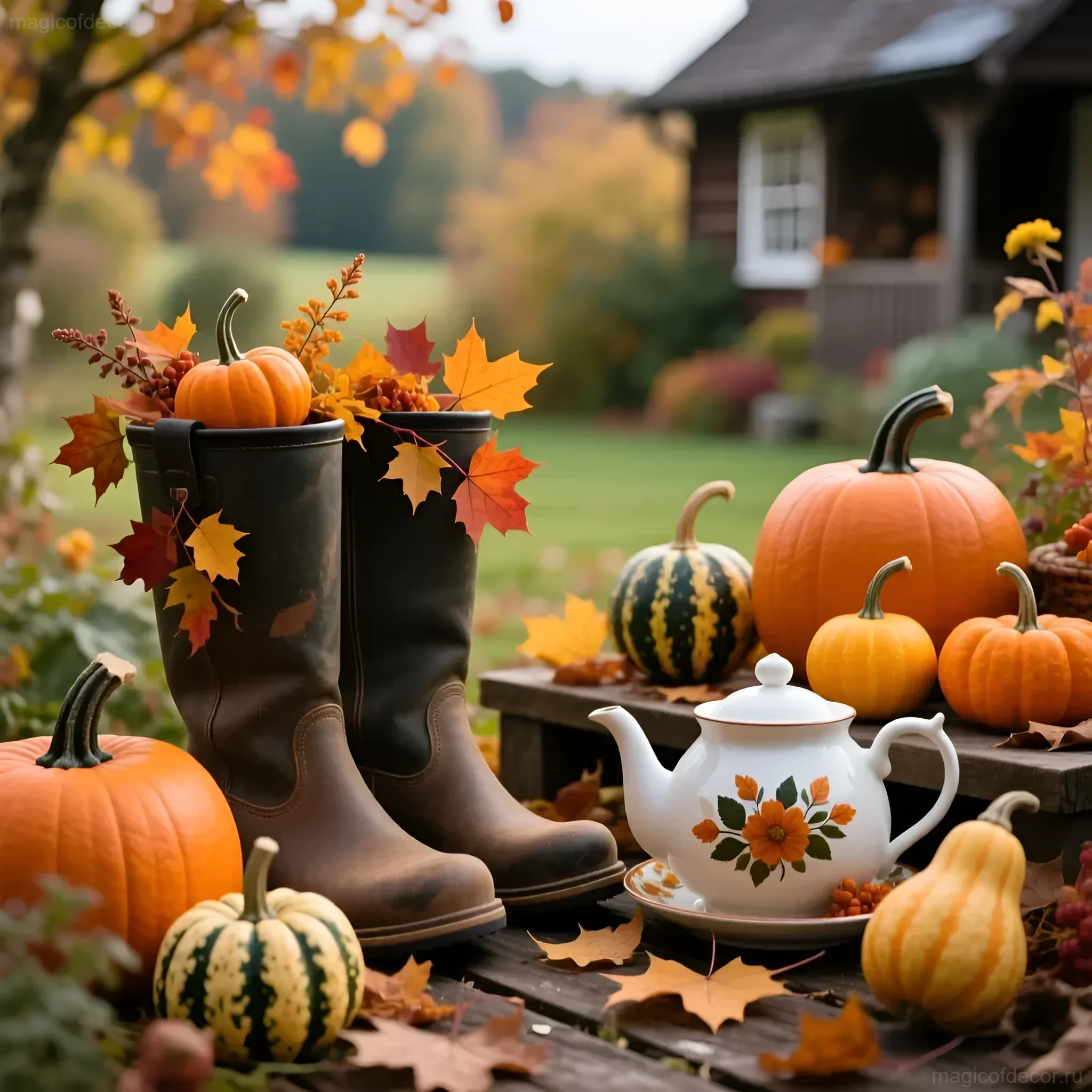
To make your decor look more than just trash filled with dirt, it needs to be stylized! Painting is what transforms an old item into a designer art object.
Painting Rubber Boots: Brightness and Protection
Rubber is a difficult material to paint, and the paint can crack. Use specialized paints or follow this technique:
- Preparation: Degrease the surface of the boots with alcohol or acetone. This is critically important for adhesion.
- Priming: Use a special primer for plastic or rubber. If you don’t have one, apply a thin layer of universal acrylic primer.
- Paint: Acrylic paint for exterior use or spray paint is ideal.
- Design Ideas: Draw polka dots, stripes, Gzhel or Khokhloma patterns on the boots. Or simply cover them in one bright, saturated color (e.g., turquoise or lemon).
- Fixation: Cover the finished painting with 2-3 coats of waterproof exterior varnish.
Decorating Metal Teapots: Vintage and Patina
Metal teapots, especially enamelled ones, look great in a shabby chic or Provence style.
“Aging” Technique (Patina):
- Cover the teapot with a base color (e.g., dark blue or green). Let it dry.
- Rub wax on the areas where you want to achieve a worn effect (handles, lid edges, spout).
- Cover the teapot with a second, lighter color (e.g., white or light blue).
- When the paint dries, use sandpaper or a stiff sponge to rub off the paint in the areas where there was wax. The first layer will show through the second, creating a vintage worn effect.
Tip: If the teapot already has enamel chips, don’t try to paint them perfectly. On the contrary, emphasize them! This gives the item character and the charm of an old thing.
Seasonal Decor: Changing the Garden’s Look with the First Frosts

The beauty of decor made from boots and teapots is that it’s relevant not only in summer. When annual flowers fade, our art objects are ready for winter transformation.
Autumn Collection
Autumn is a time of bright colors and fruits. Don’t rush to put away your boots and teapots, just change their contents:
- Boots with Pumpkins: Place small decorative pumpkins, acorns, chestnuts, or pinecones in the boots.
- Chrysanthemums: Plant frost-resistant potted chrysanthemums or heather in teapots or boots.
- Dried Flowers: Fill teapots with bouquets of dried herbs, ears of wheat, or rowan branches.
Winter Charm
In winter, boots and teapots become ideal containers for creating compositions with evergreen plants and festive elements.
Ideas for winter decor:
- Fill rubber boots with fir or pine branches.
- Add red berries (artificial or natural – viburnum, rowan).
- You can place thick candles or waterproof LED lights in teapots.
- Create an “icy” flowerbed effect: fill a boot with water, add twigs, berries, and leave it in the frost. When the water freezes, remove the ice block and place it near the entrance.
Expert Tips: How to Harmoniously Integrate Decor into the Landscape
To make your garden look stylish, not like a junkyard, you need to follow a few rules of composition and color balance. Remember: decor should complement the landscape, not shout about itself.
1. The Rule of Odd Numbers and Grouping
Compositions always look better if they consist of an odd number of items (3, 5, 7). Group teapots and boots together, creating unified “islands” of decor.
- Size Matters: Arrange items of different heights and sizes. For example, a tall rubber boot, a medium-sized enamel teapot, and a low leather boot.
- Focal Point: Highlight one, the brightest composition (e.g., the teapot waterfall) and make it the central point of view.
2. Color Harmony
When painting decor, consider the overall color scheme of your garden.
- For a Bright Garden: If you have a lot of greenery, use bright, contrasting colors for the decor (red, yellow, turquoise).
- For a Country/Rustic Garden: Opt for muted, natural shades (terracotta, olive, beige) and emphasize the natural wear of the materials.
3. Scale Appropriateness
Do not overload a small plot with too much decor. On a small balcony or a small terrace, one or two teapot compositions are enough. In a large garden, you can afford a whole “shoe alley.”
Table: Ideal Combination of “Item + Plant”
| Item | Recommended Plants | Style |
|---|---|---|
| Rubber Boot (bright) | Petunia, begonia, lobelia | Country, pop art |
| Leather Boot (dark) | Succulents, sedum, thyme | Rustic, eco-style |
| Enamelled Teapot | Ivy, mint, impatiens | Provence, shabby chic |
| Old Sneaker/Trainer | Sempervivum, saxifrage | Youthful, ironic |
In Conclusion: The Magic of Transformation
I hope this article has inspired you to look at old things from a completely new perspective. Decor made from forgotten boots and teapots is not just a way to decorate a plot, it’s a philosophy. It’s proof that beauty and coziness do not require huge investments, but only a little imagination and a desire to create. Open your garage, find your “heroes,” and give them a new, blooming life in your garden!
Frequently Asked Questions (FAQ)
Question: How can I prevent leather boots from rotting in one season?
Answer: The key is treatment and drainage. Before planting, impregnate the leather with linseed oil or a special hydrophobic spray. Be sure to ensure very good drainage so that water does not accumulate inside. In autumn, it’s better to store leather flowerbeds in a dry place.
Question: What kind of soil should I use for teapots so they aren’t too heavy?
Answer: Use a peat-based substrate mixed with perlite or vermiculite. This mixture is light, retains moisture well, but also provides excellent aeration for the roots.
Question: Can I use old children’s rubber boots?
Answer: Not only can you, but you should! They are ideal for creating compositions in a children’s play area or for hanging mini-flowerbeds. Their small size looks incredibly cute and touching.